Eid is one of the most joyous and significant celebrations in the Islamic calendar, marking either the end of the blessed month of Ramadan (Eid al-Fitr) or commemorating Prophet Ibrahim’s devotion (Eid al-Adha). For Muslims worldwide, Eid is not just a religious observance but a cherished cultural celebration filled with prayer, family gatherings, festive meals, gift-giving, and—importantly—dressing in your absolute finest.
The tradition of wearing new or special clothes for Eid has deep religious roots. The Prophet Muhammad (peace be upon him) emphasized wearing one’s best clothes for Eid prayers and celebrations, making beautiful presentation an act of worship and gratitude. This tradition has evolved into one of the most beloved aspects of Eid preparations, with families shopping for special outfits weeks in advance, designers launching exclusive Eid collections, and social media filling with stunning Eid fashion inspiration.
But choosing what to wear on Eid can feel overwhelming. Should you go traditional or modern? What colors are appropriate? How do you balance comfort with style when celebrations can last all day? What’s suitable for Eid prayers versus evening gatherings? How do you dress children who need to look special but also be able to play?
This comprehensive guide will answer all these questions and more. We’ll explore Eid outfit ideas for women, men, and children; discuss traditional versus contemporary styles; provide guidance for different climates and cultural contexts; offer budget-friendly options alongside luxury choices; and help you plan complete Eid looks that make you feel confident, comfortable, and beautifully dressed for this special occasion.
Whether you’re celebrating Eid al-Fitr or Eid al-Adha, whether you prefer traditional shalwar kameez or modern fusion styles, whether you’re dressing one person or an entire family—this guide has everything you need to look and feel your best on Eid.
Understanding Eid Dress Traditions
Religious and Cultural Significance
Islamic Tradition: The Prophet Muhammad (peace be upon him) encouraged Muslims to wear their best clothes for Eid, making it a Sunnah (recommended practice). This emphasis on beautiful presentation for Eid serves multiple purposes:
- Gratitude: Showing thankfulness for blessings through beautiful appearance
- Celebration: Marking the joyous occasion with special attire
- Community: Creating shared experience of dressing festively
- Renewal: Symbolizing new beginnings after Ramadan
- Self-respect: Honoring oneself and the occasion
Cultural Evolution: While the religious encouragement to dress well is universal, how Muslims interpret this varies beautifully across cultures:
- South Asia: Elaborate embroidered shalwar kameez, lehengas, kurta pajamas
- Middle East: Ornate abayas, thobes, traditional Gulf attire
- Southeast Asia: Baju Kurung, Kebaya, Baju Melayu
- Africa: Vibrant Ankara prints, boubous, traditional fabrics
- Western Muslims: Mix of traditional ethnic wear and modest contemporary fashion
Eid al-Fitr vs. Eid al-Adha
Eid al-Fitr (Festival of Breaking the Fast):
- Timing: End of Ramadan (usually March-May, varies with lunar calendar)
- Atmosphere: Celebratory, joyful, often more festive
- Colors: Bright, cheerful, pastels, vibrant hues
- Style: Often more elaborate, fashion-forward
- Weather: Spring/early summer in many regions
Eid al-Adha (Festival of Sacrifice):
- Timing: After Hajj season (usually June-August, varies with lunar calendar)
- Atmosphere: Solemn yet celebratory, focus on sacrifice and charity
- Colors: Rich jewel tones, traditional colors, can be more subdued
- Style: Traditional, respectful, can be slightly less elaborate
- Weather: Summer/early fall in many regions
Practical Difference: Many families invest more in Eid al-Fitr outfits (after Ramadan’s spiritual preparation) and may rewear or opt for simpler attire for Eid al-Adha. However, both occasions deserve special dress.
What Makes an Outfit “Eid-Appropriate”
Essential Elements:
- Special: Distinct from everyday wear
- Modest: Following Islamic principles of modesty
- Clean and new-looking: Fresh, well-maintained
- Comfortable: Must last through long day of prayers and celebrations
- Culturally appropriate: Respecting local customs and norms
- Personal: Reflects your style within traditional framework
Not Required:
- Brand new (beautifully maintained special occasion wear is perfect)
- Expensive (modesty and presentation matter more than price)
- Traditional only (modern modest fashion completely acceptable)
- Matching family outfits (nice but not necessary)
- Latest trends (timeless elegance always appropriate)
What to Wear on Eid: Women’s Complete Guide
Traditional Ethnic Outfits
South Asian Style
Shalwar Kameez (Three-Piece Suit)
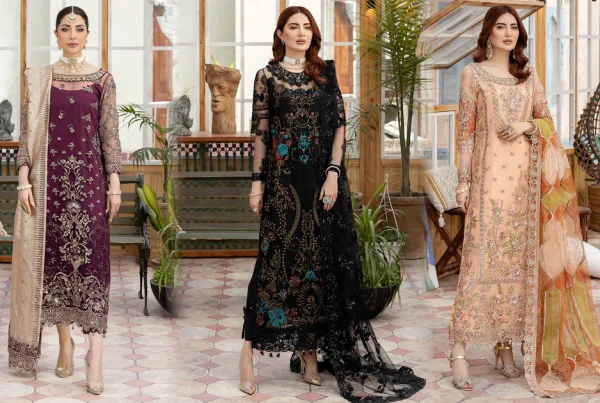
What It Is: A traditional outfit consisting of a long tunic (kameez), loose pants (shalwar), and a scarf/dupatta. For Eid, these are typically heavily embellished with embroidery, sequins, stones, or intricate prints.
Styling for Eid:
- Fabric: Silk, chiffon, lawn (summer), velvet or jamawar (winter)
- Embellishment: Zari work, gota, sequins, thread embroidery, mirror work
- Colors: Pastels (spring Eid), jewel tones (any season), bright cheerful colors
- Dupatta: Often the most ornate piece, draped elegantly
- Length: Knee-length to ankle-length kameez
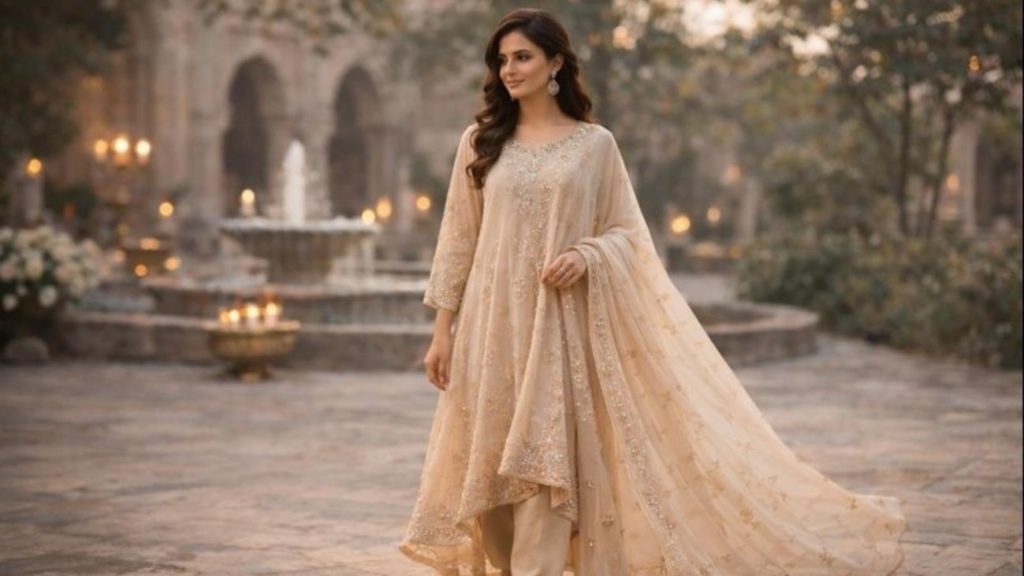
Modern Updates:
- Asymmetric hemlines
- Cape-style dupattas
- Contemporary cuts (straight, A-line, anarkali style)
- Fusion of traditional embellishment with modern silhouettes
Complete Eid Look:
- Embroidered shalwar kameez set
- Statement jewelry (jhumkas, bangles, maang tikka)
- Embellished khussas or heels
- Clutch or potli bag
- Dupatta draped elegantly (one-shoulder or simple over both shoulders)
Budget Range: 3,000-50,000+ PKR / $50-800+ USD
Lehenga Choli (Skirt and Blouse)
What It Is: A long skirt (lehenga) paired with a fitted blouse (choli) and dupatta. This is one of the most festive and elaborate Eid outfit choices.
Styling for Eid:
- Lehenga: Full circular or A-line, heavily embellished
- Choli: Can be traditional fitted, modern crop top style, or long jacket-style
- Dupatta: Often worn over head during prayers, then draped elegantly
- Embellishment: Heavy embroidery, sequins, stonework, zari
When to Wear:
- Eid parties and gatherings
- First day of Eid (in some cultures)
- When you want maximum festive impact
- Special Eid celebrations (milestone Eids, weddings close to Eid)
Complete Eid Look:
- Coordinated lehenga-choli set
- Heavy jewelry (necklace set, earrings, bangles, maang tikka)
- Embellished heels or ornate khussas
- Statement clutch
- Styled hair with possible hair jewelry
Budget Range: 8,000-100,000+ PKR / $150-1,500+ USD
Anarkali Suit
What It Is: A long, flowing frock-style dress worn with fitted pants (churidar) and dupatta. Named after the legendary courtesan Anarkali, this style is elegantly feminine.
Styling for Eid:
- Length: Floor-length or ankle-length
- Silhouette: Fitted bodice, flared skirt portion
- Fabric: Georgette, net, silk, chiffon
- Embellishment: Moderate to heavy, typically focused on neckline and borders
Why It’s Popular for Eid:
- Universally flattering on all body types
- Comfortable for long day of celebrations
- Elegant and modest
- Easy to move and pray in
- Age-appropriate for all ages
Complete Eid Look:
- Embellished anarkali
- Matching churidar or straight pants
- Coordinated dupatta
- Statement earrings (neckline highlights face)
- Elegant footwear
Budget Range: 4,000-40,000 PKR / $70-700 USD
Middle Eastern Style
Designer Abaya
What It Is: A long, flowing robe traditionally in black, but modern Eid abayas come in various colors, fabrics, and embellishments.
Eid-Appropriate Abayas:
- Embellished: Embroidery, sequins, lace, stone work
- Colored: Soft pastels, jewel tones, metallics (beyond black)
- Textured: Lace overlays, pleated details, layered designs
- Cut: Kimono-style, A-line, butterfly sleeves, contemporary cuts
Styling for Eid:
- Pair with elegant outfit underneath (in case abaya is opened)
- Matching or contrasting hijab (if worn)
- Statement accessories (shoes, bag, jewelry visible)
- Often with high heels or embellished flats
Complete Eid Look:
- Designer abaya
- Coordinated undergarments/outfit
- Elegant hijab (if applicable)
- Luxury accessories
- Professional yet festive appearance
Budget Range: 300-5,000+ SAR / $80-1,300+ USD
Kaftan/Jalabiya
What It Is: A long, loose-fitting garment, often elaborately decorated for special occasions.
Eid Styling:
- Luxurious fabrics (silk, satin, embroidered)
- Ornate embellishment
- Often worn with belt for definition
- Can be traditional or contemporary cut
Best For:
- Comfortable elegance
- Hot weather Eids
- At-home Eid celebrations
- When wanting effortless style
Budget Range: 400-3,000 SAR / $100-800 USD
Southeast Asian Style
Baju Kurung (Malaysia/Singapore/Indonesia)
What It Is: Traditional Malay attire consisting of a long tunic and long skirt, known for modest elegance.
Eid Version:
- Luxurious fabrics (silk, songket, brocade)
- Intricate patterns and embroidery
- Often in coordinated family sets
- Paired with selendang (shawl)
Complete Look:
- Embellished baju kurung
- Matching skirt
- Coordinated selendang
- Traditional jewelry
- Elegant low heels
Kebaya (Indonesia/Malaysia)
What It Is: Traditional blouse-dress combination, can be worn with sarong or batik skirt.
Eid Styling:
- Lace or embroidered kebaya
- Batik or silk skirt
- Often with brooch
- Elegant yet modest
- Can be modern or traditional cut
African Style
Ankara/African Print Modest Wear
What It Is: Vibrant African wax prints made into modest Islamic fashion.
Eid Interpretations:
- Long dresses in Ankara print
- Matching head wrap and outfit
- Boubou style in colorful fabrics
- Modern cuts with traditional prints
Why It’s Special:
- Celebrates African Muslim identity
- Vibrant, joyful colors perfect for Eid
- Unique patterns and designs
- Growing modest fashion movement
Modern and Fusion Styles
Contemporary Modest Fashion
Maxi Dresses:
- Long, elegant, modest cuts
- Modern silhouettes with Islamic modesty
- Professional yet festive
- Often with interesting sleeves or details
Jumpsuit Modest Styles:
- Palazzo-style jumpsuits
- Wide-leg, modest cuts
- With kimono or jacket for coverage
- Modern, comfortable, stylish
Coordinates Sets:
- Matching top and bottom in luxurious fabrics
- Can mix traditional and modern elements
- Versatile and current
- Growing trend in modest fashion
Western-Style Modest Formal:
- Long formal gowns (modest neckline, full coverage)
- Tailored suits with long tunics
- Modest evening wear
- Perfect for Western Muslims or contemporary tastes
What Makes Fusion Work for Eid:
- Maintains modesty principles
- Incorporates cultural elements
- Feels special and celebratory
- Respects tradition while being modern
- Personal style expression
Complete Women’s Eid Outfit Ideas
Outfit 1: Classic Elegance
- Pastel pink embroidered shalwar kameez
- Heavy silver jewelry (jhumkas, bangles)
- Embellished silver khussas
- Embroidered clutch
- Soft makeup, elegant hairstyle
Outfit 2: Modern Modest
- Teal maxi dress with embellished sleeves
- Statement belt
- Gold accessories
- Nude heels
- Minimal jewelry, modern styling
Outfit 3: Traditional Glam
- Burgundy velvet lehenga (winter Eid)
- Heavy gold jewelry
- Gold embellished heels
- Gold clutch
- Dramatic makeup, styled hair
Outfit 4: Contemporary Fusion
- Printed jumpsuit with embroidered jacket
- Modern jewelry
- Metallic accessories
- Heeled sandals
- Fashion-forward styling
Outfit 5: Effortless Chic
- Designer colored abaya (soft lavender)
- Elegant hijab
- Statement earrings
- Luxury bag
- Understated elegance
What to Wear on Eid: Men’s Complete Guide
Traditional Ethnic Outfits
Kurta Pajama
What It Is: A long tunic (kurta) paired with loose pants (pajama), the classic Eid outfit for men in South Asia.
Eid Styling:
- Fabric: Cotton (summer), silk, linen, wool blend (winter)
- Embellishment: Embroidery on collar, cuffs, placket (button area)
- Colors: White/cream (classic), pastels, jewel tones, traditional colors
- Length: Knee-length to mid-calf
- Collar: Various styles (Mandarin, traditional, contemporary)
Modern Updates:
- Contemporary cuts (fitted, tailored)
- Interesting collar designs
- Side buttons or asymmetric closures
- Designer details while maintaining tradition
Complete Eid Look:
- Embroidered kurta
- Matching or contrasting pajama
- Waistcoat (optional, adds elegance)
- Traditional footwear (khussa, peshawari chappal)
- Watch or minimal accessories
Budget Range: 2,000-25,000 PKR / $35-400 USD
Sherwani
What It Is: A long coat-like garment, more formal than kurta, often reserved for weddings but increasingly popular for Eid, especially among grooms or for special celebrations.
Eid-Appropriate Sherwani:
- Lighter embellishment than wedding sherwani
- Elegant fabrics (silk, brocade, jamawar)
- Can be shorter (knee-length) for modern look
- Often paired with churidar or straight pants
When to Wear on Eid:
- First day Eid prayers (in some cultures)
- Eid parties and formal gatherings
- When wanting to make special impression
- Milestone Eids (first Eid after marriage, etc.)
Complete Eid Look:
- Sherwani in festive color
- Matching churidar or pants
- Traditional footwear
- Minimal jewelry (watch, ring)
- Styled with confidence
Budget Range: 5,000-50,000+ PKR / $90-800+ USD
Thobe/Dishdasha (Gulf Arab Style)
What It Is: A long robe, typically white or light colors, traditional in Arabian Gulf countries.
Eid Version:
- High-quality fabric (premium cotton, linen)
- Perfect tailoring (crisp, clean lines)
- Sometimes subtle embroidery or details
- Often white for prayers, colored for celebrations
Complete Eid Look:
- Perfectly tailored thobe
- Ghutrah and iqal (headscarf) – optional based on custom
- Quality sandals or formal shoes
- Watch
- Subtle cologne
Cultural Note: Most traditional in Gulf countries but worn by some Muslims elsewhere
Shalwar Kameez
What It Is: Similar to kurta pajama but with shalwar (looser, gathered pants) instead of pajama.
Eid Styling:
- Kameez with interesting neckline or embroidery
- Loose, comfortable shalwar
- Waistcoat for added style
- Traditional or contemporary cuts
Why Popular for Eid:
- Extremely comfortable
- Traditional and respected
- Suitable for all ages
- Easy to move and pray in
Modern and Contemporary Styles
Modern Fusion
Contemporary Kurta with Jeans:
- Stylish kurta
- Well-fitted dark jeans
- Fusion of traditional and modern
- Young, current, comfortable
Designer Pathani Suit:
- Fitted, modern cut
- Contemporary fabrics and colors
- Young professional style
- Traditional roots, modern execution
Long Coat Over Kurta:
- Traditional kurta
- Modern long coat/jacket
- Layered, sophisticated
- Winter Eid perfect
Waistcoat Sets:
- Embroidered waistcoat
- Simple kurta
- Straight pants
- Layered elegance without full sherwani formality
Complete Men’s Eid Outfit Ideas
Outfit 1: Classic Traditional
- White cotton kurta with subtle embroidery
- Matching white pajama
- Beige waistcoat
- Traditional khussas
- Watch, minimal cologne
Outfit 2: Modern Sophistication
- Navy blue fitted kurta
- Cream churidar
- Tailored look
- Leather shoes
- Contemporary styling
Outfit 3: Festive Formal
- Maroon sherwani
- Gold churidar
- Embellished khussas
- Traditional yet special
- Makes statement
Outfit 4: Contemporary Fusion
- Printed kurta
- Dark fitted jeans
- Casual loafers
- Modern watch
- Young, trendy
Outfit 5: Traditional Gulf
- Crisp white thobe
- Traditional headscarf
- Quality sandals
- Subtle fragrance
- Classic elegance
What to Wear on Eid: Children’s Complete Guide
Girls’ Eid Outfits
Mini Traditional Wear
Little Lehengas:
- Adorable mini versions of adult lehengas
- Bright colors, fun embellishments
- Comfortable for playing while looking special
- Age 2-12 typically
Frilly Anarkalis:
- Twirl-worthy dresses
- Girls love the flowy skirt
- Pretty and practical
- Comfortable for all-day wear
Matching Sets:
- Kurta with lehenga skirt (instead of pants)
- Fun for young girls
- Easy to move and play
- Often with matching accessories
Modern Modest:
- Long dresses with cute details
- Age-appropriate modesty
- Comfortable fabrics
- Fun colors and prints
Complete Girls’ Eid Look:
- Special outfit (lehenga, anarkali, or dress)
- Fun jewelry (bangles, small earrings)
- Pretty shoes (sandals or flats)
- Hair accessories (clips, flowers)
- Age-appropriate makeup (older girls, if desired)
Practical Tips:
- Choose comfortable fabrics (they’ll be wearing all day)
- Avoid too-heavy embellishments (uncomfortable for kids)
- Make sure they can move and play
- Have backup outfit for messy moments
- Let them have input (they’ll wear it happily)
Budget Range: 1,500-15,000 PKR / $25-250 USD
Boys’ Eid Outfits
Mini Kurta Sets
What Works:
- Kurta pajama in miniature
- Comfortable, traditional
- Age 2-14 typically
- Can match father’s outfit
Colors:
- White/cream (classic)
- Pastels (young boys)
- Bright colors (fun for kids)
- Matching family if desired
Styling:
- Simple kurta
- Comfortable pajama or pants
- Optional waistcoat (looks adorable)
- Comfortable footwear
Pathani Suits:
- Slightly more structured
- Older boys (8+)
- Looks very smart
- Traditional yet modern
Modern Options:
- Kurta with jeans (older boys)
- Shirt and pants (Western style but festive)
- Smart casual Eid look
- Comfortable and current
Complete Boys’ Eid Look:
- Kurta pajama or pathani suit
- Waistcoat (optional, very cute)
- Comfortable shoes (they’ll run around)
- Cap or topi for prayers (optional)
- Neat, clean appearance
Practical Tips:
- Comfort is crucial (they won’t sit still)
- Avoid very light colors (gets dirty fast)
- Make sure fits well (not too big “to grow into”)
- Let them feel special
- Have play clothes for later
Budget Range: 1,000-10,000 PKR / $18-170 USD
Coordinating Family Outfits
Matching vs. Coordinating:
Matching (Identical outfits):
- Same color, same style
- Very traditional in some cultures
- Looks coordinated in photos
- Can feel overly matchy
Coordinating (Complementary but not identical):
- Same color palette, different styles
- Same embellishment style, different garments
- More sophisticated, still cohesive
- Everyone has their own style
Family Coordination Ideas:
- All in shades of blue (different outfits)
- Same embellishment pattern (different garment types)
- Complementary colors (navy + cream + gold)
- Similar style but different executions
Eid Outfit Planning by Climate
Hot Weather Eid (Summer)
Best Fabrics:
- Lawn cotton (South Asia)
- Linen
- Light chiffon
- Breathable georgette
- Cotton silk (lightweight)
Color Strategy:
- Light colors (reflect heat)
- Pastels
- Soft whites and creams
- Avoid very dark colors
Style Considerations:
- Lighter embellishments
- Less layers
- Breathable cuts
- Natural fabrics when possible
Complete Summer Eid Outfit Example (Woman):
- Mint green lawn shalwar kameez
- Light embroidery
- Chiffon dupatta
- Minimal jewelry
- Comfortable sandals
- Light makeup (won’t melt!)
Cool Weather Eid (Winter)
Best Fabrics:
- Velvet
- Jamawar
- Wool blends
- Heavy silk
- Brocade
Color Strategy:
- Rich jewel tones
- Deep colors
- Warm hues
- Luxurious darks
Style Considerations:
- Heavier embellishments
- Layering options
- Longer sleeves
- Warmer fabrics
Complete Winter Eid Outfit Example (Woman):
- Burgundy velvet lehenga
- Heavy embroidery
- Long-sleeved choli
- Statement jewelry
- Warmer footwear
Moderate Climate
Versatile Choices:
- Medium-weight fabrics
- Cotton silk blends
- Georgette
- Moderate embellishments
- Layering options
Eid Accessories and Finishing Touches
Jewelry
Women:
- Traditional: Jhumkas, bangles, maang tikka, necklace sets
- Modern: Statement earrings, delicate necklaces, contemporary pieces
- Considerations: Match formality to outfit, don’t overwhelm
Men:
- Minimal: Watch, ring if worn
- Traditional: None beyond watch
- Cultural note: Simplicity is elegant for men
Children:
- Girls: Bangles, small earrings, hair accessories
- Boys: Usually none, maybe watch for older boys
Footwear
Women:
- Traditional: Khussas, mojaris, embellished sandals
- Modern: Heels, elegant flats, embellished footwear
- Practical: Consider how much walking (prayers, visiting)
Men:
- Traditional: Khussas, peshawari chappals
- Modern: Formal shoes, loafers
- Cultural: Appropriate to location and style
Children:
- Comfortable: They’ll run around!
- Cute: Still special-looking
- Practical: Easy on/off for mosque visits
Bags and Accessories
Women:
- Embellished clutch (evening)
- Small crossbody (practical daytime)
- Potli bag (traditional, festive)
Finishing Touches:
- Perfume/Attar (sunnah for Eid)
- Fresh flowers in hair (some cultures)
- Neat, clean appearance
- Confidence!
Budget-Friendly Eid Outfit Ideas
Smart Shopping Strategies
When to Shop:
- Mid-Ramadan sales (best selection, good prices)
- End-of-season sales (previous year’s Eid collections)
- Throughout year (spread cost)
Where to Save:
- Buy unstitched fabric, tailor yourself
- Shop at local bazaars (vs. designer boutiques)
- Choose simpler embellishments
- Accessorize existing outfits differently
Where to Invest:
- One quality piece you’ll rewear
- Good footwear (comfort and longevity)
- Timeless styles (not trendy)
Budget Outfit Examples
Women – Budget $50-100:
- Simple printed lawn suit
- Minimal accessories
- Basic footwear
- Fresh styling makes it special
Men – Budget $30-60:
- Cotton kurta pajama
- Simple waistcoat
- Traditional footwear
- Pressed and pristine
Children – Budget $20-50:
- Ready-made festive outfits
- Simple accessories
- Comfortable shoes
- They’ll outgrow anyway!
Rewearing and Restyling
Make Last Year’s Eid Outfit New:
- Different accessories
- New dupatta or scarf
- Change jewelry completely
- Different hairstyle
- New shoes
- Add embellished belt or jacket
Cultural Considerations by Region
South Asia (Pakistan, India, Bangladesh)
Expectations:
- Traditional ethnic wear most common
- Bright colors encouraged
- Heavy embellishments appropriate
- Family coordination common
Popular Choices:
- Shalwar kameez, lehengas, kurta pajamas
- Designer lawn suits (summer Eid)
- Embroidered and embellished pieces
Middle East (Saudi Arabia, UAE, etc.)
Expectations:
- Conservative modesty important
- Quality over quantity
- Elegant, refined styles
- Abayas and thobes very common
Popular Choices:
- Designer abayas for women
- Pristine thobes for men
- Luxury fabrics and subtle embellishments
Southeast Asia (Malaysia, Indonesia, Singapore)
Expectations:
- Traditional wear highly valued
- Often matching family outfits
- Batik and traditional fabrics
- Modest, elegant styles
Popular Choices:
- Baju Kurung, Baju Melayu
- Kebaya
- Songket fabrics
Western Countries (US, UK, Canada, Europe)
Expectations:
- Mix of traditional and modern
- Diverse styles reflecting varied origins
- Modest fashion trending
- Individual interpretation
Popular Choices:
- Traditional ethnic wear from heritage culture
- Modern modest fashion
- Mix of Eastern and Western elements
- Personal style within modesty framework
Africa (Nigeria, Kenya, South Africa, etc.)
Expectations:
- Colorful, vibrant expression
- Traditional African fabrics
- Modest Islamic fashion
- Cultural pride reflected
Popular Choices:
- Ankara prints in modest styles
- Boubous and traditional garments
- Bright colors and bold patterns
- African Muslim identity celebration
Eid Outfit Etiquette and Traditions
What to Avoid
Don’t Wear:
- Overly revealing clothing
- Very casual/everyday clothes
- Dirty, torn, or unkempt clothing
- Clothes that restrict prayer movement
- Excessive perfume (can disturb others in prayer)
Cultural Sensitivity:
- Very tight clothing (not modest)
- All black (in some cultures, associated with mourning)
- Western party wear (clubbing style inappropriate)
- Overly flashy/showing off (modesty in behavior too)
Dressing for Different Eid Activities
Eid Prayer (Morning):
- Modest, comfortable
- Easy to pray in
- Nothing too heavy or restrictive
- Appropriate for mosque environment
- Can be same as rest of day or change after
Family Visits (Daytime):
- Special but comfortable
- Can be slightly more relaxed than prayers
- Practical for eating, sitting, moving
- Should last all day without discomfort
Eid Parties (Evening):
- Can be more elaborate
- Heavier embellishments appropriate
- More formal styling
- Statement jewelry and accessories
Frequently Asked Questions
Do I have to wear new clothes on Eid?
No, you don’t have to wear brand new clothes. The sunnah is to wear your best clothes, which can be well-maintained special occasion wear. That said, many Muslims buy new clothes for Eid as a tradition and to mark the special occasion.
What colors are best for Eid?
There’s no religious requirement for specific colors. Traditionally, bright, cheerful colors are popular for Eid al-Fitr (pastels, vibrant hues), while richer jewel tones work for Eid al-Adha. White is always appropriate and classic. Avoid all black in some cultures where it’s associated with mourning.
Can I wear Western clothes on Eid?
Yes, as long as they meet modesty requirements (full coverage, loose-fitting, appropriate). Many Western Muslims wear modest contemporary fashion or formal Western wear. The key is ensuring the outfit is special, modest, and respectful of the occasion.
Should our family wear matching outfits?
Matching family outfits are a beautiful tradition in many cultures but not required. Coordinating colors or styles can look cohesive without being identical. It’s a personal choice based on your family’s preferences.
How much should I spend on Eid clothes?
This varies greatly based on budget. You can celebrate beautifully on any budget—from $20 for a simple outfit to $2000+ for luxury designer wear. What matters is wearing your best within your means. Modesty and cleanliness matter more than cost.
Can children wear comfortable play clothes instead of formal outfits?
For Eid prayers and initial celebrations, children should wear special clothes to participate in the tradition. However, having a change of comfortable clothes for playing later in the day is practical. Many families do prayers and visits in formal wear, then change to comfortable clothes.
What if I can’t afford new Eid clothes this year?
Wear your best existing clothes, beautifully maintained and styled. Add new accessories (a scarf, jewelry, shoes) to refresh the look. Remember, Eid is about gratitude and celebration, not materialism. Wearing clean, pressed special occasion wear is perfectly appropriate.
Is it okay to wear all black for Eid?
This varies by culture. In some cultures, black is associated with mourning and avoided for Eid. In others, especially Middle Eastern countries, black abayas are completely normal and elegant. When in doubt, add colorful accessories to black outfits.
What should I wear if I’m attending someone else’s Eid celebration?
Dress similarly to how you would for your own Eid—modest, special, respectful. If visiting a community with specific cultural norms different from yours, lean towards more conservative/modest choices. You can ask the host if unsure.
Can I rewear my Eid outfit from last year?
Absolutely! If it still fits, is in good condition, and makes you feel special, rewear it. Style it differently with new accessories, different dupatta, changed hairstyle, or new shoes to make it feel fresh.
Conclusion: Dressing Joyfully for Eid
Choosing what to wear on Eid is about more than just fashion—it’s about participating in a beautiful tradition that connects you to Muslims worldwide, honoring the significance of the occasion, expressing gratitude through beautiful presentation, and creating joyful memories with loved ones.
Key Takeaways
Remember:
- Modesty matters: Follow Islamic principles of modest dress
- Your best is enough: Wear your best within your means
- Comfort is crucial: You’ll be wearing it all day
- Cultural context: Respect local norms and traditions
- Personal expression: Find your style within the framework
- It’s about celebration: Not competition or showing off
- Family involvement: Make outfit selection part of Eid joy
Your Eid Outfit Planning Checklist
Start Early (2-4 weeks before): □ Decide on style (traditional, modern, fusion)
□ Set budget
□ Browse for inspiration
□ Shop or order online
□ Allow time for tailoring if needed
Final Preparations (1 week before): □ Try on complete outfit
□ Ensure everything fits
□ Gather all accessories
□ Check shoes are comfortable
□ Plan hair/makeup if applicable
□ Iron/steam outfit
Eid Eve: □ Lay out complete outfit
□ Double-check all pieces
□ Prepare accessories
□ Iron if needed
□ Get good rest!
Eid Morning: □ Dress with intention and gratitude
□ Feel confident and beautiful
□ Enjoy the celebration!
The True Essence
While this guide has focused on the outward aspects of Eid dress, remember that the true beauty of Eid comes from the spiritual preparation during Ramadan, the joy of gathering with loved ones, the gratitude in your heart, and the worship and celebration of this blessed day.
Your Eid outfit should make you feel confident, comfortable, and beautifully dressed—but it’s the inner joy, the spiritual fulfillment, and the love you share that truly makes Eid special.
May your Eid be blessed, your celebrations joyful, and yes—may you look absolutely beautiful!
Eid Mubarak!
About This Guide: This comprehensive resource combines Islamic tradition, cultural diversity, fashion guidance, and practical advice to help Muslims worldwide choose Eid outfits that honor the occasion while expressing personal style. From traditional ethnic wear to contemporary modest fashion, from budget-friendly options to luxury choices, this guide celebrates the beautiful diversity of Eid fashion globally.