Pakistani women have always been quietly brilliant at this. Long before “modest fashion” became a global industry buzzword, long before Western runways started sending models down the catwalk in draped layers and covered shoulders, Pakistani women had already mastered the art of dressing with both intention and style. The ability to absorb global fashion movements — filter them through cultural values, climatic realities, body type diversity, and aesthetic sensibility — and emerge with something that feels entirely, confidently their own: this is a Pakistani fashion superpower.
In 2026, the global fashion landscape is particularly rich with trends worth translating. From the runways of Paris and Milan to the streets of New York and Seoul, the year’s biggest movements include brut denim (raw, utilitarian, oversized), cape silhouettes (dramatically structured outerwear and overlay pieces), animal prints (leopard, snakeskin, and abstract fauna patterns), sheer layering, ballet-core softness, cargo utility dressing, and metallic everything. Each of these trends, taken as-is from a Western context, may feel incongruous with Pakistani cultural norms, climate, and everyday reality. But each one, when thoughtfully adapted, becomes something electric.
This guide is your definitive, deeply practical manual for doing exactly that. We’ll take the biggest global 2026 trends and show you — in granular, occasion-specific detail — how to wear them the Pakistani way. Not as pale imitations of Western looks, but as fully realised, culturally grounded expressions of who you are.
Understanding the Framework: What Does “The Pakistani Way” Actually Mean?
Before diving into individual trends, it’s worth establishing what “adapting for Pakistani sensibilities” actually involves. It is not a single prescription — Pakistani women are not a monolith, and the spectrum from deeply conservative to avant-garde fashion risk-taker is as wide here as anywhere in the world. Rather, adapting for Pakistani sensibilities typically involves navigating some combination of the following considerations:
Modesty Parameters
For many Pakistani women, certain modesty parameters are non-negotiable: covered shoulders, covered midriff, longer hemlines, and sleeves of varying lengths. The degree varies enormously — from full coverage to simply avoiding midriff-baring silhouettes — but the adaptation principle is consistent: how do we achieve the trend’s aesthetic impact while honouring these parameters?
Climate Reality
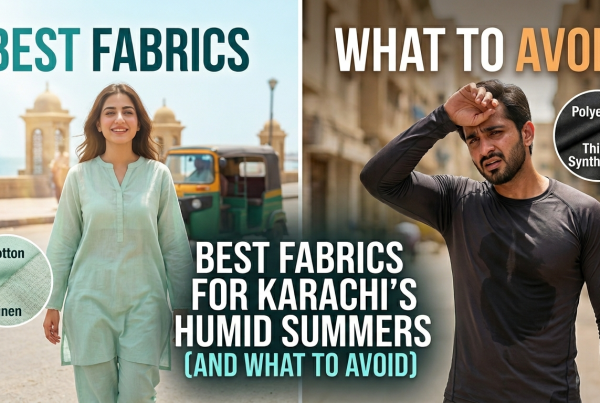
Pakistan’s summers are brutal. Temperatures in Karachi, Lahore, Multan, and Islamabad routinely exceed 40°C from May through September. Any Western trend that involves heavy layering, thick fabrics, or tight construction needs climate engineering — lighter fabrics, strategic ventilation, and breathable construction.
Fabric Vocabulary
Pakistani fashion has its own rich fabric vocabulary — lawn, chiffon, karandi, khaddar, organza, silk, georgette, tissue — that doesn’t always map directly to Western trend fabrics. A successful adaptation finds the Pakistani-fabric equivalent that delivers the same visual effect while working with local sourcing, climate, and dressing conventions.
Occasion Architecture
Pakistani social life is organised around a distinct set of occasions — office, home, university, casual outings, family gatherings, mehndis, weddings, Eid, Ramadan iftar dinners, formal events — each with its own implicit dress codes. Western trend styling is often occasion-agnostic; Pakistani adaptation requires thinking carefully about which occasions a trend serves and tailoring the look accordingly.
The Dupatta Equation
The dupatta — that singular, endlessly versatile length of fabric — is the great adapter. In nearly every case, incorporating a dupatta (whether traditionally draped, loosely styled, or used as a creative accessory) is the most elegant mechanism for making a Western-influenced look feel grounded in Pakistani aesthetic culture.
South Asian Body Type Considerations
South Asian body types — typically characterised by broader hips, shorter torsos, and more generous curves than the sample sizes Western fashion is often designed for — interact differently with certain silhouettes. Effective adaptation accounts for proportionality, fit, and the specific ways different cuts fall on different bodies.
With this framework in mind, let’s get into the trends.
Trend 1: Brut Denim — Raw, Utilitarian, Oversized
The Global Trend Explained
Brut denim — named after the French word for “raw” or “unrefined” — is 2026’s definitive denim direction. Characterised by oversized, deconstructed silhouettes, raw unfinished hems, heavy-weight selvedge denim, workwear-inspired construction details (contrast stitching, utility pockets, exposed rivets), and a deliberately rough, unstudied aesthetic, brut denim is a direct rejection of the polished, skinny-jean denim of the previous decade.
On Western runways, this translates into: oversized trucker jackets with raw hems, wide-leg jeans with frayed bottoms, double-denim co-ords, denim maxi skirts, denim cargo trousers, and even denim shirting worn as outerwear.
The Pakistani Translation
Denim has long been a staple of Pakistani casual wardrobes, particularly among urban youth. But the brut denim trend offers significantly more styling versatility than its predecessors — and translates beautifully to Pakistani fashion contexts with some thoughtful adaptation.
The Denim Kurta
The single most impactful Pakistani adaptation of the brut denim trend is the denim kurta. A loose, oversized, raw-hem denim shirt cut in the silhouette of a traditional Pakistani kurta — falling to the thigh or knee, with a modest neckline, and either three-quarter or full-length sleeves — is simultaneously on-trend globally and entirely appropriate in Pakistani contexts. Pair with wide-leg white or ecru cotton trousers, a thin dupatta in a complementary neutral, and flat kolhapuri sandals. This look works for university, casual outings, and weekend errands.
The Denim Co-ord with a Twist
Double denim — a denim top and denim bottom in the same or intentionally clashing washes — is a brut denim staple. The Pakistani adaptation: a denim short kurta (hip-length) paired with denim wide-leg trousers in a slightly contrasting wash. The kurta provides the modest coverage a plain denim jacket-and-jeans combo may lack, while the wide leg adds movement and a silhouette that flatters South Asian proportions. Finish with white sneakers, a white or cream dupatta draped loosely around the shoulders, and small hoop earrings.
The Denim Sharara Combination
For the more fashion-forward Pakistani dresser, pair a loose denim Western-cut blouse — slightly cropped but worn over a tucked-in fitted camisole for coverage — with wide-legged denim sharara trousers. Sharara trousers have extraordinarily wide, almost palazzo-like legs that flare from the waist — they are a traditional Pakistani silhouette that maps perfectly onto the brut denim aesthetic’s love of voluminous bottoms. This is fashion-editorial-worthy.
The Denim Jacket Over Shalwar Kameez
Perhaps the most widely practised Pakistani denim adaptation already: wearing an oversized denim jacket — especially a raw-hem, slightly distressed brut denim version — over a simple shalwar kameez. In 2026, size up significantly (the oversized trucker silhouette is key), choose a heavy-weight indigo or black denim, and leave it unbuttoned. This is especially effective over a plain or minimally printed kameez in a contrasting tone.
The Denim Maxi Skirt + Kurta
The denim maxi skirt is one of brut denim’s breakout pieces globally. In Pakistani styling, pair a raw-hem, wide denim maxi skirt with a short, fitted or boxy kurta top. The skirt provides full coverage while the kurta satisfies the modest silhouette requirement. A printed or embroidered chunni tucked into the skirt waist and flowing down adds a cultural element to what could otherwise read as purely Western.
Colour and Wash Guide for Brut Denim
- Indigo/dark wash: Most versatile, works with earthy tones, whites, and pastels.
- Light/ice wash: Summer-appropriate, pairs beautifully with botanical prints and sage greens.
- Black denim: Elevated and sleek; works for evening casual.
- Raw/undyed selvedge: The purist’s choice; pairs with neutrals and natural tones.
- Avoid: heavy distressing or rips, which tend to undermine modesty and look dated.
Pakistani Brands Delivering Denim in 2026
Several Pakistani brands have incorporated brut denim sensibilities into their 2026 pret offerings. Look to Khaadi for denim kurtas and co-ords, Bonanza Satrangi for accessible denim basics, and independent designer labels on Instagram for more avant-garde denim pieces.
Trend 2: Cape Silhouettes — Drama, Structure, and Layered Grandeur
The Global Trend Explained
The cape silhouette is having its most significant fashion moment in a generation in 2026. From Valentino’s floor-sweeping silk capes to high-street versions of structured capelet blazers, the cape offers drama, elegance, and — crucially — an ease of wear that suits modern life. Key versions include: the caped blazer (a blazer with an attached cape panel at the back or shoulders), the floor-length evening cape, the structured capelet (a short, shoulder-skimming cape), the cape dress, and the deconstructed cape as a styling layer over simpler pieces.
The cape’s appeal is its ability to create extraordinary visual impact through silhouette alone — without requiring embellishment, print, or complex construction. It is pure shape-making.
The Pakistani Translation
Here is a remarkable truth about the cape silhouette: it is, in its deepest formal DNA, already present in Pakistani and South Asian fashion. The angrakha — a traditional wrap-front Pakistani garment with asymmetric layered panels — and the frock-style kurta with tiered or overlay panels share structural ancestry with the cape. The Pakistani fashion industry is extraordinarily well-positioned to adopt and subvert the cape trend, because it already speaks this visual language.
The Cape Dupatta
The most elegant and culturally seamless Pakistani cape adaptation is the cape dupatta — a dupatta that has been cut, structured, and styled as a cape layer rather than a traditional drape. Several Pakistani couture and luxury pret houses have been developing cape-cut dupattas for several seasons; in 2026, they’ve gone fully mainstream. A structured organza or karandi cape dupatta worn over a simple column-silhouette kurta and straight trousers transforms an understated outfit into something architectural. This requires zero Western wardrobe pieces — it is purely Pakistani in construction and cultural reference, but delivers the global cape aesthetic impeccably.
The Angrakha Cape Kurta
The angrakha-inspired cape kurta — a kurta with an exaggerated, flared overlay panel at the front or an attached cape layer at the shoulders — is the Pakistani luxury pret interpretation of the 2026 cape trend. Brands like Sana Safinaz, Élan, and Zara Shahjahan have produced stunning versions of this silhouette in their 2026 pret collections. Worn with straight or cigarette trousers and pointed-toe heels, this is one of the most powerful looks in Pakistani fashion this year.
The Structured Capelet Over a Shalwar Kameez
For a more accessible, everyday adaptation: layer a structured capelet — available from Western retailers or made to order by Pakistani tailors from fabric of your choice — over a plain, fitted shalwar kameez. Choose a capelet in a fabric that complements the kameez: a raw silk capelet over a silk shalwar kameez, or a cotton canvas capelet over a lawn suit. This layers a Western silhouette directly over traditional Pakistani clothing in a way that reads as intentionally fashion-forward rather than confused.
The Floor-Length Cape as an Evening Layer
For formal events — weddings, gala dinners, award ceremonies — a floor-length cape in silk, chiffon, or embroidered net worn over an embellished column kurta or palazzo set is breathtaking. This is Pakistani formal wear at its most architecturally ambitious. The cape replaces the dupatta in formal function while dramatically amplifying visual impact. Several Pakistani bridal and luxury pret designers are offering this silhouette in 2026.
The Utility Cape Jacket
For a more casual, streetwear-adjacent interpretation: a structured denim or canvas cape jacket — loose, slightly boxy, with a cape-cut back — worn over a plain T-shirt and wide-leg trousers. This is the brut denim and cape trends fused into a single piece. Urban, edgy, and entirely wearable for a weekend out.
Styling the Cape Silhouette: Key Principles
- Proportion: Capes add volume at the top. Balance with slim or straight-cut bottoms. Wide-leg trousers can work if the cape is relatively short (capelet length).
- Fabric weight: Heavy capes (wool, structured canvas) work for cooler seasons; go for chiffon, organza, or fine cotton for Pakistan’s summer.
- Colour: The cape is a silhouette statement — let shape do the work. Tonal dressing (cape and base in similar hues) is sophisticated. Contrast capes (a white cape over a black outfit) are dramatic and modern.
- Avoid: Excessive embellishment on both the cape and the base outfit simultaneously. If the cape is embroidered, keep the base simple and vice versa.
Trend 3: Animal Prints — Wild, Wearable, and Completely Unstoppable
The Global Trend Explained
Animal prints have been cycling in and out of fashion for decades, but 2026’s iteration feels different — more expansive, more artistic, and more culturally aware than previous rounds. The dominant animal prints of 2026 include classic leopard (reimagined in non-traditional colourways — dusty rose, sage green, navy, and ivory rather than the classic ochre-on-brown), snakeskin (particularly python and anaconda-inspired scale patterns), zebra stripes (bold, graphic, maximalist), abstract animal print (painterly, impressionistic interpretations that read as animal-inspired without literal fidelity), and cheetah spots (smaller, more delicate than leopard).
The 2026 difference: animal print is no longer treated as inherently provocative or “loud.” It is being handled with genuine design sophistication — in muted palettes, in unexpected fabric contexts (velvet, organza, lawn), and in combination with other prints (the print-mixing trend) rather than as a standalone statement.
The Pakistani Translation
Animal print has a complicated history in Pakistani fashion — it has existed at the periphery of mainstream taste for years, used selectively in certain social circles while feeling too “Western” or “bold” to others. In 2026, the trend’s maturation globally creates a perfect opportunity for Pakistani fashion to embrace it fully, on distinctly Pakistani terms.
The key insight: animal print in Pakistani fashion works best when treated as a neutral, not as a statement. This reframe is transformative.
Animal Print Lawn: The Gateway Piece
The most accessible entry point for animal print in Pakistani wardrobes is through lawn fabric. A leopard-print lawn suit — particularly in one of the muted, non-traditional colourways (dusty mauve spots on a cream ground, for instance) — reads as a sophisticated print rather than a provocative statement. Pakistan’s major lawn brands have incorporated abstract animal-inspired prints into their 2026 collections, and they sell out quickly precisely because this format feels familiar and wearable to Pakistani buyers.
How to style it: Pair an animal-print lawn shirt with a solid bottom in one of the print’s secondary colours. A plain dupatta in a tonal neutral (ivory, taupe, soft blush) keeps the look grounded. Small gold jewellery and flat sandals complete the look. The result is chic, not flashy.
The Animal Print Dupatta as a Statement Neutral
Use an animal-print dupatta as the statement element of an otherwise simple outfit. A plain white or cream lawn suit with a leopard-print chiffon dupatta is quietly revolutionary — the animal print adds personality and edge without dominating the silhouette. This styling technique is highly effective because the dupatta is a culturally familiar element; its presence anchors the look in Pakistani aesthetic convention even as the print pushes boundaries.
The Snake-Print Trouser Co-ord
For the urban, trend-forward Pakistani dresser: a snake-print wide-leg trouser paired with a plain silk or satin-look blouse in a colour lifted from the print. Snake print in 2026 is frequently rendered in navy, burgundy, or olive — all deep, sophisticated tones that pair beautifully with solid Pakistani separates. Add a plain short kurta over the blouse for modesty and cultural grounding. This is a thoroughly modern, globally relevant look that requires nothing more than a trouser purchase.
Abstract Animal Print for Formal Occasions
The most adventurous Pakistani adaptation: an abstract animal-print formal suit. A three-piece in abstract leopard-spot organza or cheetah-pattern silk net — particularly in a couture-adjacent colourway like gold-on-ivory, dusty rose-on-blush, or black-on-charcoal — is a formal wear statement that works for evening weddings, gala events, and high-profile social gatherings. The abstraction of the print places it in the same visual register as traditional Pakistani brocades and jaccquard patterns; it doesn’t read as Western or provocative but as bold and considered.
The Zebra Stripe Styling Challenge
Zebra stripes are the loudest and most graphic of 2026’s animal prints. The Pakistani adaptation approach: use zebra stripe as a suiting print. A zebra-stripe lawn or cotton fabric tailored into a crisp, structured kurta-and-straight-trouser suit — with clean lines, minimal embellishment, and precise tailoring — transforms what could feel chaotic into something geometric and architectural. The structure of the tailoring tames the boldness of the print. Pair with monochrome accessories in black or white only.
The Animal Print Colour Palette Guide for Pakistani Wardrobes
| Traditional Western Palette | Pakistani Adaptation Palette | |
|---|---|---|
| Leopard | Ochre, brown, black | Dusty mauve, sage green, navy, ivory, burnt sienna |
| Snakeskin | Olive, tan, cream | Burgundy, forest green, midnight blue, slate |
| Zebra | Black and white | Black and ivory, navy and cream, blush and white |
| Cheetah | Tan, caramel, black | Blush, terracotta, champagne |
| Abstract Animal | Varies | Monochrome, deep jewel tones, earthy naturals |
Trend 4: Sheer Layering — Transparency as Technique
The Global Trend Explained
Sheer layering — the deliberate use of transparent or semi-transparent fabrics as design elements, creating visual depth through layering — is one of 2026’s most nuanced and technically demanding trends. In Western fashion, it manifests as sheer blouses worn with visible bralettes, sheer midi skirts over fitted base layers, translucent trench coats, organza ruffled layers, and see-through mesh overlays.
The Pakistani Translation
Sheer fabrics are, of course, utterly native to Pakistani fashion. Chiffon, organza, net, tissue, and georgette are the sheer workhorses of Pakistani wardrobes, deployed constantly in dupattas, formal kurtas, and evening wear. The 2026 sheer layering trend therefore requires almost no cultural translation — it simply amplifies and intensifies a technique Pakistani dressers already use instinctively.
The Sheer Organza Overlay Kurta
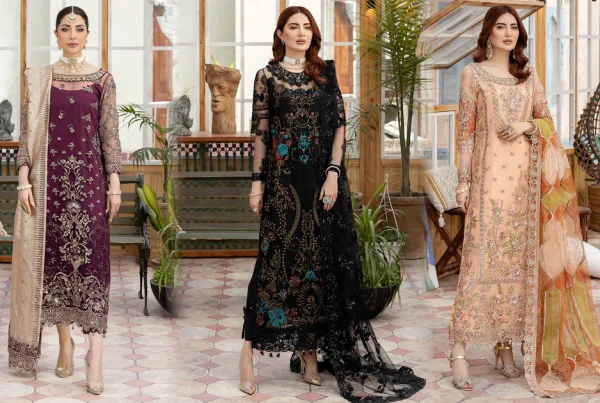
A kurta with a sheer organza overlay — where the outer layer is transparent, revealing a richly embroidered or printed underkurta — is the definitive 2026 Pakistani sheer layering statement. This construction creates extraordinary visual depth. The sheer layer may carry its own embroidery, sequin work, or print, creating a palimpsest effect. The underkurta provides full coverage and modesty; the sheer overlay provides the trend-forward transparency. This technique is present in nearly every luxury Pakistani pret collection this season.
Sheer Palazzo Trousers Over Fitted Bottoms
Wear sheer wide-leg palazzo trousers — in printed chiffon or plain georgette — over fitted straight trousers or churidar bottoms in a complementary colour. The sheer layer creates the visual impression of flowing, ethereal volume while the fitted layer underneath provides coverage. This is a highly effective Pakistani adaptation that allows full participation in the sheer trend without compromising modesty parameters.
The Sheer Dupatta as a Layering Tool
The most culturally seamless Pakistani sheer layering tool is the printed chiffon or organza dupatta worn as a layering piece over a solid or embellished kurta. When the dupatta is treated as a deliberate fashion layer — not merely an accessory — and chosen for its sheer fabric’s interaction with the outfit beneath, it becomes the Pakistani equivalent of the Western sheer overlay. The colour interplay between a printed sheer dupatta and a solid base kurta is stunning.
Trend 5: Cargo and Utility Dressing — Functional Fashion Gets Elevated
The Global Trend Explained
Cargo and utility dressing — functional pockets, utilitarian construction details, military-adjacent colour palettes (olive, khaki, stone, black), and workwear silhouettes — has been building for several seasons and reached full mainstream saturation in 2026. Cargo trousers, utility vests, multi-pocket shirts, and technical fabrics dominate street style globally.
The Pakistani Translation
Utility dressing maps beautifully to Pakistani fashion because function and fabric practicality are already central values in everyday Pakistani dress. The adaptation focuses primarily on silhouette and detail translation rather than wholesale wardrobe replacement.
The Cargo Shalwar
This is perhaps the most imaginative Pakistani adaptation in this guide: the traditional shalwar — with its gathering at the waist and comfortable drop-crotch construction — reimagined with cargo-inspired utility pockets and functional details. Several forward-thinking Pakistani designers have already explored this territory, producing shalwars with side pockets, adjustable hem tabs, and utility-belt-style waistbands. Pair with a plain, slightly boxy kurta and chunky sandals for a look that is entirely new but unmistakably Pakistani.
Utility Pocket Kurta
A kurta with deliberate utility pocket details — chest pockets with contrast stitching, side patch pockets, a utility belt loop at the waist — in olive, khaki, or stone cotton or linen translates the cargo aesthetic into Pakistani dressing naturally. This is effortlessly wearable for university, weekend errands, and casual outings.
The Utility Vest as an Outerwear Layer
An olive or khaki utility vest — multi-pocket, structured — worn over a simple white or cream shalwar kameez adds instant utilitarian edge to an otherwise traditional outfit. This is an easy purchase from Western high-street retailers that integrates seamlessly over Pakistani clothing.
Trend 6: Ballet-Core Softness — The Art of Feminine Restraint
The Global Trend Explained
Ballet-core — soft blush pinks, ivory, and white; floaty skirts and layers; ribbon and bow details; delicate flat shoes; wrapped and draped silhouettes; an overall aesthetic of graceful, feminine softness — continues its cultural dominance in 2026, evolving from its 2024-2025 origins into something more mature and less literal. The references are still ballet and classical dance, but the execution is more sophisticated: less tutus, more fluid silk wraps and draped layers.
The Pakistani Translation
Ballet-core is perhaps the easiest global 2026 trend to translate into Pakistani fashion, because its aesthetic values — softness, delicacy, graceful draping, pastel colour stories, wrapped silhouettes — are deeply congruent with the aesthetic vocabulary of Pakistani formal and semi-formal dressing.
The Wrap-Style Angrakha in Ballet Palette
An angrakha-style kurta — with its wrapped, draped front panel — in soft blush, ivory, or pale petal pink lawn or chiffon is a perfect ballet-core Pakistani piece. The wrap silhouette mirrors ballet’s draped aesthetic; the pale palette is completely on-trend. Pair with white churidar bottoms and ballet flat-style khussa shoes (which already exist in Pakistani craft traditions — simple, slip-on, flat-soled embroidered shoes). A pale organza or tissue dupatta in blush or champagne completes this look with the precise softness ballet-core demands.
Ribbon and Bow Embellishments on Pakistani Silhouettes
The bow detail — a defining ballet-core accessory globally — translates to Pakistani fashion through ribbon-tie necklines and cuff details on kurtas, dupatta pins and brooches in bow forms, and thin satin ribbon woven through embroidered borders. These are small but highly effective details that signal the trend without disrupting the overall Pakistani silhouette.
The Floaty Palazzo in Ballet Tones
Wide-leg palazzo trousers in pale pink, blush, or ivory crinkle chiffon — worn with a slightly more structured kurta — deliver the ballet-core floaty skirt aesthetic in a Pakistani-appropriate way. The palazzo replaces the tulle skirt; the cultural propriety is maintained while the aesthetic spirit is fully honoured.
Trend 7: Metallics and Mirror Shine — Dressing for Maximum Impact
The Global Trend Explained
Metallics — gold, silver, copper, bronze, and mirror-shine fabrications — have graduated from evening-only status to all-day, every-day wear in 2026. Silver especially has had a breakout moment: silver maxi skirts, gold liquid-look tops, mirror-shine wide-leg trousers, and metallic tailoring are everywhere globally.
The Pakistani Translation
Pakistani fashion has always had an intimate relationship with metallic and reflective surfaces — gota, zardozi, mirror work (shisha), tilla embroidery, and sequin work are integral to the craft tradition. The 2026 metallics trend is therefore less an adaptation challenge and more an opportunity to celebrate and amplify what Pakistani fashion already does brilliantly.
Metallic Fabric as Base, Embroidery as Accent
Globally, the trend is metallic fabric as a statement base. In Pakistani fashion, try a liquid gold or silver tissue fabric kurta — a fabric already used in Pakistani festive wear — in a simple, unembellished silhouette. Let the fabric’s inherent shine do the work; resist adding heavy embroidery on top. Pair with matte, plain trousers in a deep tonal shade (navy with silver, burgundy with gold) to ground the metallics.
The Mirror Work Amplification
Shisha mirror embroidery — already a cornerstone of Pakistani and particularly Sindhi craft traditions — is the Pakistani equivalent of the mirror-shine global metallic trend. In 2026, wear pieces with dense shisha work unapologetically and in full force, styled simply. A heavily mirror-worked kameez over plain white wide-leg trousers and minimal gold jewellery is simultaneously globally on-trend and rooted in Pakistani craft heritage.
Metallic Accessories as the Trend Entry Point
For those not ready for metallic clothing, add the trend through metallic accessories: gold metallic sandals, a silver metallic clutch, a mirror-work embellished belt, or a gold-foil-print dupatta. These pieces bring the metallic moment into any outfit without requiring a wardrobe overhaul.
The Fusion Dressing Masterclass: Mixing Western Trends with Pakistani Elements
The most sophisticated Pakistani fashion approach in 2026 is not wholesale adoption of Western trends, nor wholesale rejection — it is deliberate, intelligent fusion. Here are the core fusion dressing principles:
Principle 1: One Trend Element Per Outfit
When incorporating Western trend elements into a Pakistani outfit, choose one trend element and let it be the hero. Don’t layer animal print + cape silhouette + metallic accessories simultaneously. Pick the trend element, execute it well, and anchor everything else in familiar Pakistani dressing.
Principle 2: The Dupatta as Cultural Anchor
No matter how Western the other elements of your outfit, a dupatta — in any form, worn in any way — instantly grounds the look in Pakistani aesthetic culture. The dupatta is your cultural anchor. Use it deliberately, not as an afterthought.
Principle 3: Pakistani Craft as Global Fashion Language
Pakistani embroidery, mirror work, block printing, and hand-woven fabrics are globally recognised as luxury craft techniques. They speak the same language as the most expensive Western fashion. Incorporating them into trend-adjacent outfits doesn’t make the look less current — it makes it more distinctive.
Principle 4: Tailor Everything
Western trend pieces purchased off-the-rack are designed for Western body proportions and style conventions. The Pakistani fashion superpower is tailoring — the ability to have anything custom-made to precisely your measurements and stylistic requirements. Replicate the trend’s silhouette, not its exact garment. A Pakistani tailor working from reference images can produce a cape kurta, a utility-pocket shalwar, or an animal-print suit that outperforms anything available in a high-street store.
Principle 5: Trust the Mix
The most common mistake when adapting Western trends is hedging — half-committing to the trend while simultaneously undermining it with overly traditional styling choices. When you’ve decided to wear the animal-print dupatta or the brut denim kurta, commit fully. Style the rest of the outfit in support of that choice. Trust the mix.
Building Your 2026 Western-Trend-Adapted Pakistani Wardrobe: A Capsule Guide
If you want to incorporate 2026’s global trends into your Pakistani wardrobe without starting from scratch, here’s a practical capsule approach:
Three Core Investment Pieces:
- An oversized brut denim jacket in heavy indigo wash — wearable over virtually any shalwar kameez, transforming casual looks instantly.
- An animal-print chiffon dupatta in a muted, non-traditional colourway (dusty mauve or sage leopard) — the quickest and cheapest way to bring the animal print trend into your existing wardrobe.
- A cape-cut organza dupatta or capelet in ivory or black — a versatile piece that elevates any formal or semi-formal look.
Three Styling Add-Ons:
- Ballet flat khussas in blush or ivory — the Pakistani ballet-core shoe, already in existence, now globally relevant.
- A metallic gold or silver clutch — brings the metallic trend to any occasion.
- Wide-leg cargo trousers in olive or stone — wearable with long kurtas, modern, practical, and trend-forward.
One Tailoring Project: Commission your tailor to produce one experimental fusion piece this season — perhaps an angrakha-style cape kurta in a bold fabric, or a utility-pocket shalwar in olive cotton. Tailoring a bespoke fusion piece is deeply Pakistani in process and globally forward-looking in result.
Pakistani Women Doing Fusion Fashion Brilliantly in 2026
The Pakistani fashion landscape in 2026 features a growing cohort of stylists, influencers, and designers who are executing exactly this kind of culturally intelligent global fashion adaptation:
Designers to Watch:
- Independent labels on Instagram pioneering denim kurta designs and utility-inspired shalwar kameez.
- Luxury pret houses producing cape silhouette angrakhas and metallic tissue kurtas that are globally trend-relevant.
- New-generation Pakistani-diaspora designers in the UK and USA creating fusion pieces that explicitly bridge both aesthetics.
The Conversation to Have with Your Tailor: The single most powerful tool in the fusion fashion toolkit is a productive conversation with your tailor. Bring reference images from Western runway coverage and global street style alongside Pakistani fashion references. Ask: “Can we achieve this silhouette in this fabric?” Most skilled Pakistani tailors will say yes — and the result will be uniquely yours.
Frequently Asked Questions: Western Trends, Pakistani Style
Q: Do I need to completely change my wardrobe to be fashion-forward in 2026? A: Absolutely not. Most Western trends can be incorporated through targeted, single-piece purchases (a denim jacket, an animal-print dupatta) or styling choices that work with your existing wardrobe. Fashion-forward dressing is about intention, not volume.
Q: Can animal print ever look modest and appropriate for conservative Pakistani sensibilities? A: Yes, when the silhouette is fully covered and the colourway is muted. A fully covered three-piece suit in a dusty-toned abstract animal print with a plain dupatta is an inherently modest outfit that happens to carry a trend-forward print.
Q: How do I find Pakistani designers who are working with these fusion aesthetics? A: Instagram is your best discovery tool. Search hashtags like #PakistaniFashion2026, #FusionDesi, #DeniKurta, and browse the accounts of Pakistan’s younger generation of designers. Many of the most exciting fusion work is being produced by independent labels with no physical store presence.
Q: Is it culturally appropriate for Pakistani women to wear Western trends? A: Fashion choices are personal, and Pakistani women have always navigated global trends through the lens of their own values, circumstances, and tastes. The framework in this guide — adaptation rather than adoption — is about enabling meaningful choice, not prescribing it. Every woman finds her own point on the spectrum between tradition and global fashion engagement.
Q: What about Pakistani men — do these trends translate for them too? A: Many do. Brut denim (oversized denim jackets, wide-leg denim trousers over shalwar) and utility dressing (cargo detailing on shalwars, utility-pocket kurtas) translate almost directly for Pakistani men. The cape silhouette has historical Pakistani male dress precedents in the sherwani and achkan. Metallics and animal prints require more adventurous personal taste but are increasingly present in Pakistani men’s fashion as well.
Conclusion: The Pakistani Way Is the Most Interesting Way
There is a particular thrill in the fashion equation that Pakistani women navigate every season — taking a global trend, running it through the prism of cultural identity, climatic reality, craft tradition, and personal values, and producing something that is simultaneously of-the-moment and deeply rooted. The result, when done well, is not compromise. It is creative synthesis at its finest.
In 2026, brut denim becomes the denim kurta and the double-denim sharara. The cape silhouette becomes the angrakha cape and the structured organza dupatta. Animal print becomes the muted-palette lawn suit and the leopard chiffon dupatta. These are not lesser versions of their Western originals. They are distinct, evolved, original expressions of what happens when one of the world’s richest fashion cultures engages seriously and confidently with global trends on its own terms.
That is the Pakistani way. And in 2026, the Pakistani way is setting the global standard.