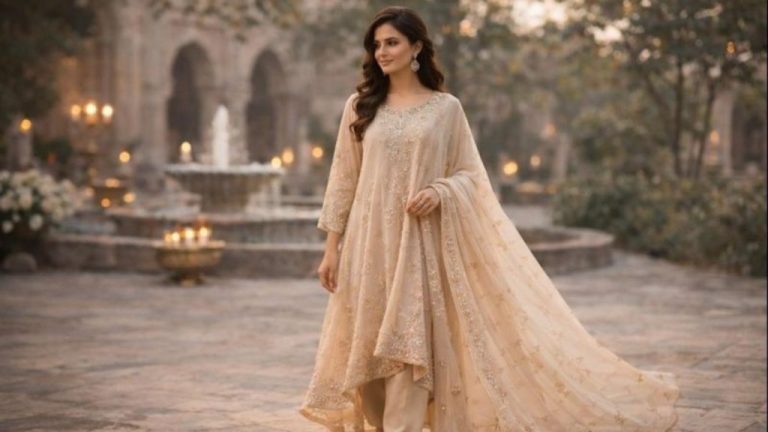
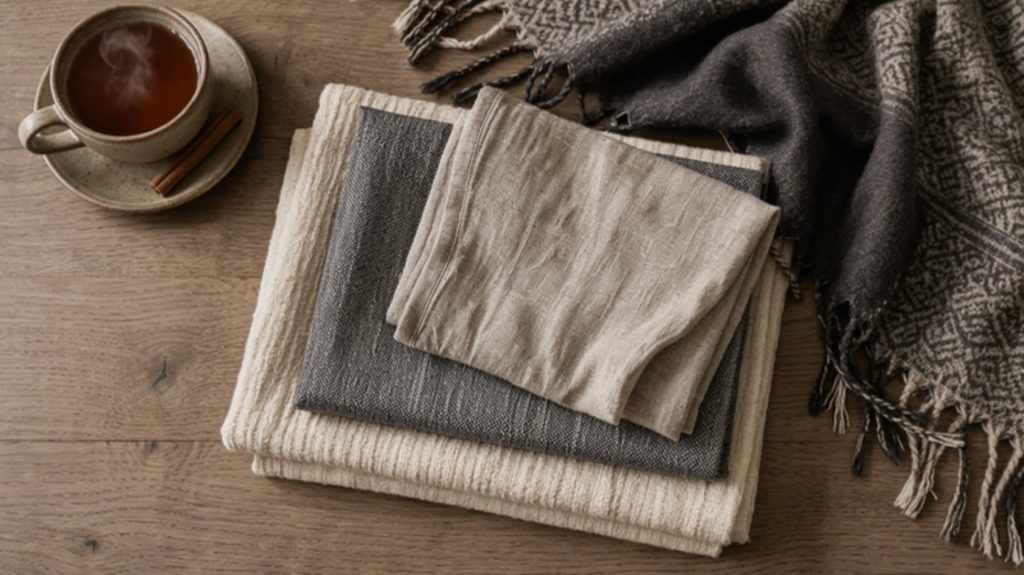
Every winter the same question comes up in fabric shops and online carts across Pakistan: khaddar vs karandi, and where does winter linen fit in? All three sit side by side in the winter collections of most Pakistani brands, they often cost a similar amount, and the product photos can look almost identical. But they feel very different once you wear them on a cold Lahore morning or a mild Karachi evening. This guide explains what each fabric is, how warm it really is, and which one to buy for your city, your routine and your budget.
The images in this guide are illustrations. Fabric descriptions vary from brand to brand, so always read the product label before you buy.
In This Guide
- The quick answer
- What is khaddar?
- What is karandi?
- What is winter linen?
- Khaddar vs karandi vs linen: comparison table
- Which fabric should you buy?
- Buying and care tips
- FAQs
The Quick Answer
- Khaddar is the warmest and most rugged of the three. Pick it for properly cold days, daily wear in Punjab and the north, and anything you want to wear for several winters.
- Karandi is finer and dressier, with a soft, slightly textured or lustrous surface. Pick it for office wear, dinners and embroidered suits, and for cities where winter is cool rather than freezing.
- Winter linen is the lightest option. It works for mild winters (Karachi, Hyderabad) or for layering under a coat or shawl, but on its own it is the least warm.
If you only buy one winter suit this year and you live somewhere that actually gets cold, khaddar is the safest choice. If you already own khaddar and want something smarter, add karandi.
What Is Khaddar?
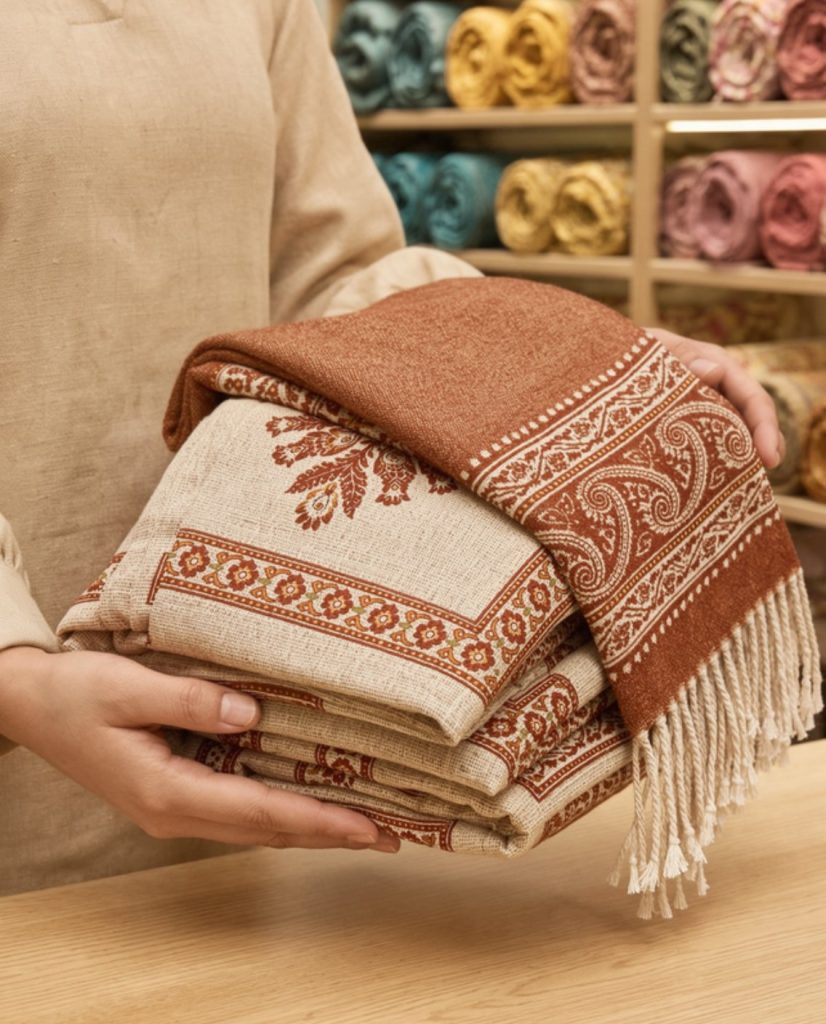
Khaddar takes its name from khadi, the traditional hand-spun, hand-woven cotton cloth of South Asia. Today most khaddar sold in Pakistan is machine-woven, but it keeps the same character: thicker cotton yarns, a dense weave and a slightly rough, textured surface you can see and feel. Some brands describe their khaddar as pure cotton, while others use cotton blends, so the label matters.
The thick yarns are what make khaddar warm. They trap a layer of air close to the body, which is why khaddar has been the go-to winter fabric in Pakistan for generations. Because it is cotton-based, it still breathes, so you don’t feel clammy indoors the way you can in synthetic fabrics. Good khaddar also softens with washing while keeping its shape.
Where you’ll see it: printed and embroidered unstitched suits, ready-to-wear (pret) kurtas, men’s winter shalwar kameez, and khaddar shawls. Many brands also sell a “light khaddar” made for warmer regions, which is thinner and less warm than regular khaddar.
- Good for: real cold, daily wear, university and errands, people who want a durable fabric.
- Less good for: very formal events, warm indoor offices, and people who dislike a coarse texture against the skin.
What Is Karandi?
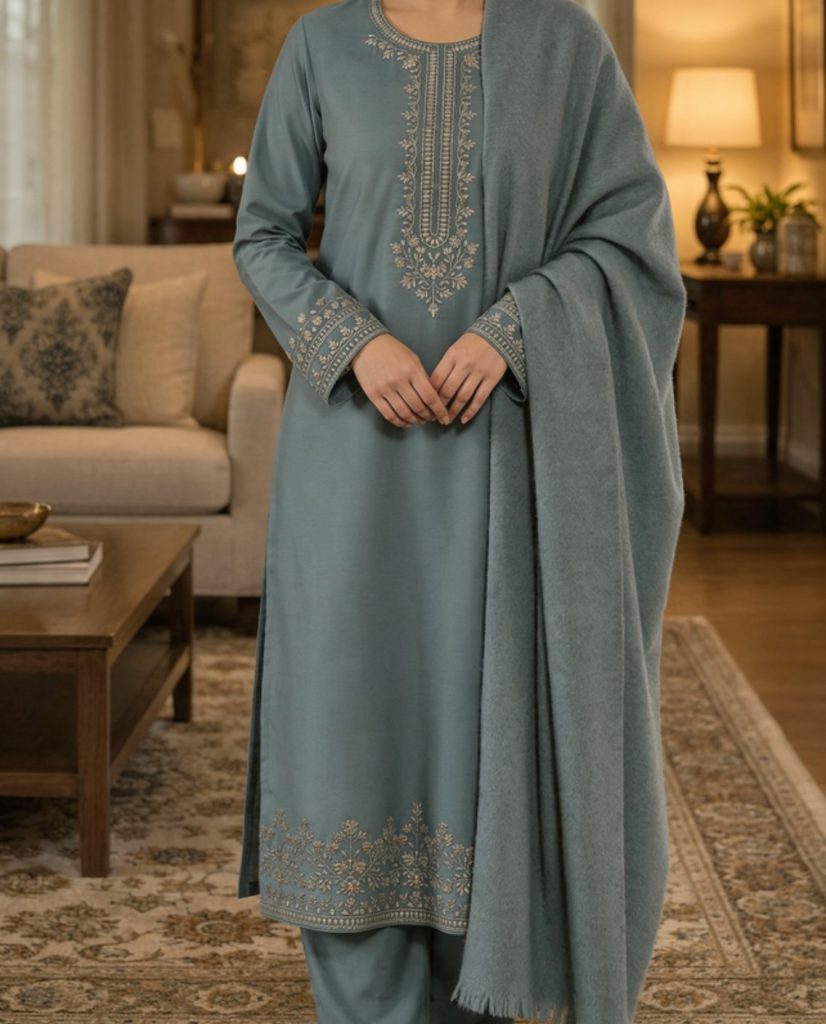
Karandi is a woven winter fabric that sits between khaddar and lighter cottons. It is thicker than lawn or plain cotton but usually finer and smoother than khaddar, with a soft hand-feel and a gentle texture. Some karandi has a slight sheen, which is why it often looks more polished in photos. Brands are not consistent about what goes into it: some describe it as cotton, others as a cotton or wool blend, so check the fibre content on the label.
Because it is a little lighter, karandi is comfortable through the whole day: warm enough for cold mornings and evenings, but not stuffy at midday. That makes it popular for mid-season and winter wear. Its smoother surface also takes embroidery and prints well, so you will find many embroidered three-piece karandi suits, sometimes paired with chiffon or shawl dupattas for more formal looks.
- Good for: office wear, dinners, family visits, embroidered suits, and cool-but-not-freezing cities.
- Less good for: the coldest weeks in the north unless you layer a shawl, sweater or coat.
What Is Winter Linen?
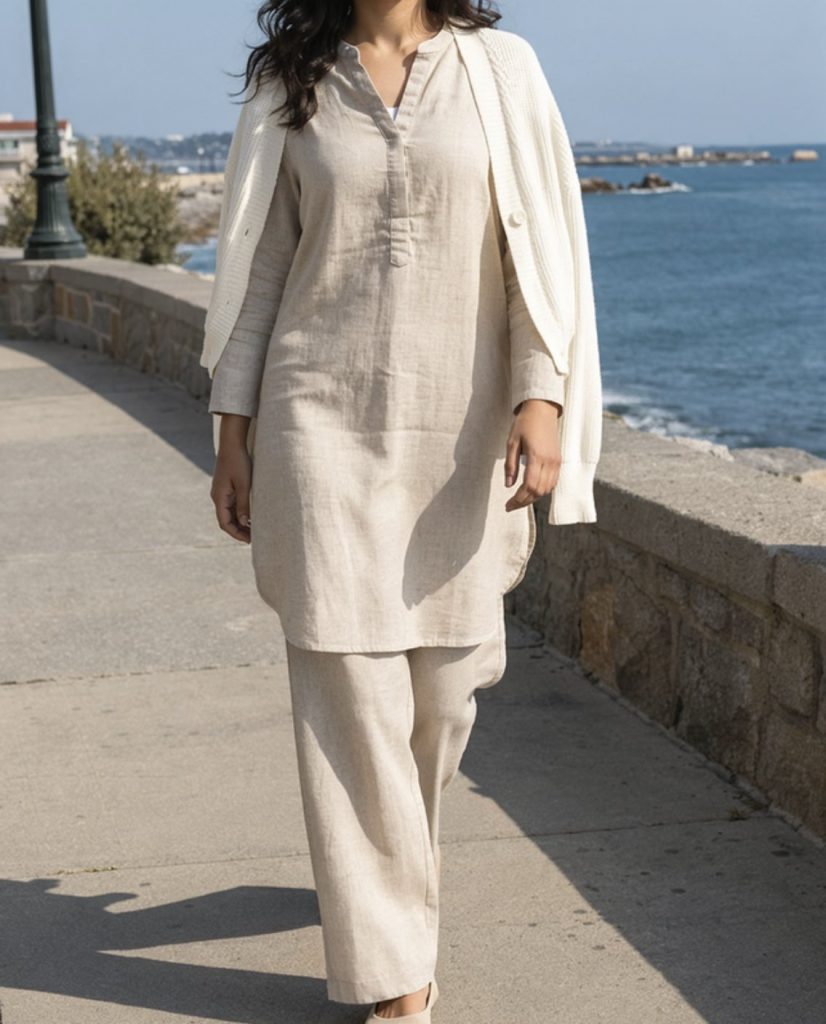
Classic linen is woven from flax fibres. It is famous for being breathable, durable and cool, which is exactly why it is so loved in summer. Pakistani brands also release “linen” in their winter collections, usually a slightly heavier weave or a blend, sold as a lighter alternative to khaddar.
Opinions differ on how warm winter linen is. Some brands market it as warm enough for winter, while others point out that linen on its own does not give much warmth in truly cold weather. A practical way to think about it: winter linen is fine for mild winters, sunny days and heated rooms, and it works well as a base layer under a shawl, cardigan or coat. It is the least warm of the three fabrics here. Linen also creases more easily than khaddar or karandi, so expect to iron it more often.
- Good for: Karachi and other mild-winter cities, people who run warm, layering, and the transition weeks in November and February.
- Less good for: cold mornings in Lahore, Islamabad, Peshawar or the northern areas without extra layers.
Khaddar vs Karandi vs Linen: Comparison Table
| Feature | Khaddar | Karandi | Winter linen |
|---|---|---|---|
| Usual fibre | Cotton or cotton blend | Cotton, or cotton/wool blend (varies by brand) | Flax, or linen blend |
| Feel | Thick, textured, slightly coarse | Soft, finer, sometimes slightly lustrous | Smooth to slightly crisp, light |
| Warmth | Highest | Medium | Lowest |
| Breathability | Good | Good | Very good |
| Creasing | Low to medium | Low to medium | High |
| Look | Casual, earthy | Polished, dressy | Clean, relaxed |
| Best for | Cold days, daily wear | Office, dinners, embroidered suits | Mild winters, layering |
| Best cities | Lahore, Islamabad, Peshawar, Quetta, north | Lahore, Multan, Faisalabad, Islamabad (with layers) | Karachi, Hyderabad, coastal areas |
Which Fabric Should You Buy?
By city and weather
Winters in Pakistan vary enormously. Karachi stays mild, so winter linen or light khaddar is usually enough, with karandi for evenings. Lahore, Faisalabad and Multan have foggy, chilly December and January mornings, so khaddar is the workhorse and karandi works for indoor days. Islamabad, Peshawar and Quetta get properly cold, and places like Murree, Abbottabad and Gilgit are colder still: choose khaddar and plan to layer with wool shawls, sweaters or coats whatever you wear.
By occasion
- Daily wear, college, errands: printed khaddar.
- Office: karandi or a neat, plain khaddar kurta.
- Dinners and family events: embroidered karandi with a shawl.
- Winter weddings: none of these is a true formal fabric. For mehndi or dholki, embroidered karandi can work; for baraat and walima most people move to velvet, silk or formal wear. See our winter wedding guest outfit ideas.
- Travel: khaddar, because it hides creases better than linen.
For men
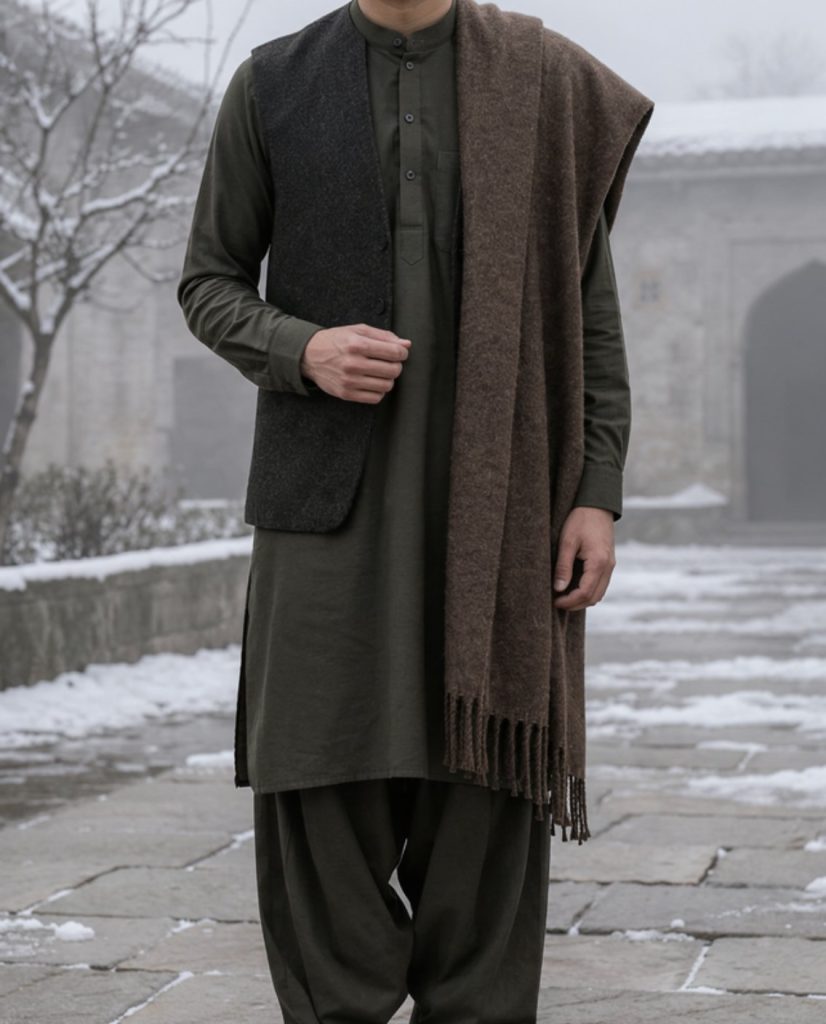
For men’s shalwar kameez, the same logic applies. Khaddar is the classic winter choice and pairs well with a waistcoat or a wool shawl. Karandi-style finer winter weaves look smarter for Friday prayers, office or family dinners. Winter linen and cotton suit men in Karachi or anyone who finds khaddar too heavy. Our guide to men’s clothing brands in Pakistan covers where to shop.
Buying and Care Tips
- Read the fibre content, not just the name. “Khaddar”, “karandi” and “linen” are used loosely. The label will tell you whether it is cotton, a blend, or includes wool or polyester.
- Check “light” versions. Light khaddar is thinner and less warm. Good for Karachi, not ideal for Islamabad in January.
- Feel it if you can. In a shop, hold the fabric up to the light. A dense weave lets less light through and will usually be warmer.
- Allow for shrinkage when stitching. Cotton-based fabrics can shrink a little in the first wash. Many tailors recommend soaking or pre-washing unstitched cotton fabric before cutting; ask yours.
- Wash gently. Wash in cool or lukewarm water, inside out, and dry in shade to protect prints and colours. Always follow the care label first.
- Iron on the reverse side. This protects embroidery and stops shine on darker khaddar and karandi. Linen irons best while slightly damp.
- Buy online carefully. Colours and texture can look different on screen. Check the return policy and read our guide on choosing the right fabric online.
FAQs
Which is warmer, khaddar or karandi?
In most cases khaddar is warmer, because it uses thicker yarns and a denser weave. Karandi is lighter and finer, so it suits cool weather and indoor wear better than very cold days. A heavy karandi with wool in the blend can be warmer than a light khaddar, so check the label.
Is karandi good for winter?
Yes, for mild to moderate winters. It is warm enough for chilly mornings and evenings and comfortable through the day. In very cold cities, layer it with a shawl, cardigan or coat.
Can I wear linen in winter in Pakistan?
You can, especially in Karachi and other places with mild winters, or as a layer under warmer clothes. On its own, linen is the least warm of the three fabrics in this guide.
Does khaddar shrink after washing?
Cotton-based fabrics like khaddar can shrink slightly, mostly in the first wash, especially in hot water. Washing in cool water and asking your tailor to allow a little extra length helps.
Which fabric is best for embroidered winter suits?
Karandi is a popular choice for embroidered suits because its finer, smoother surface shows thread work well. Khaddar is also widely embroidered, but its texture gives a more casual, earthy look.