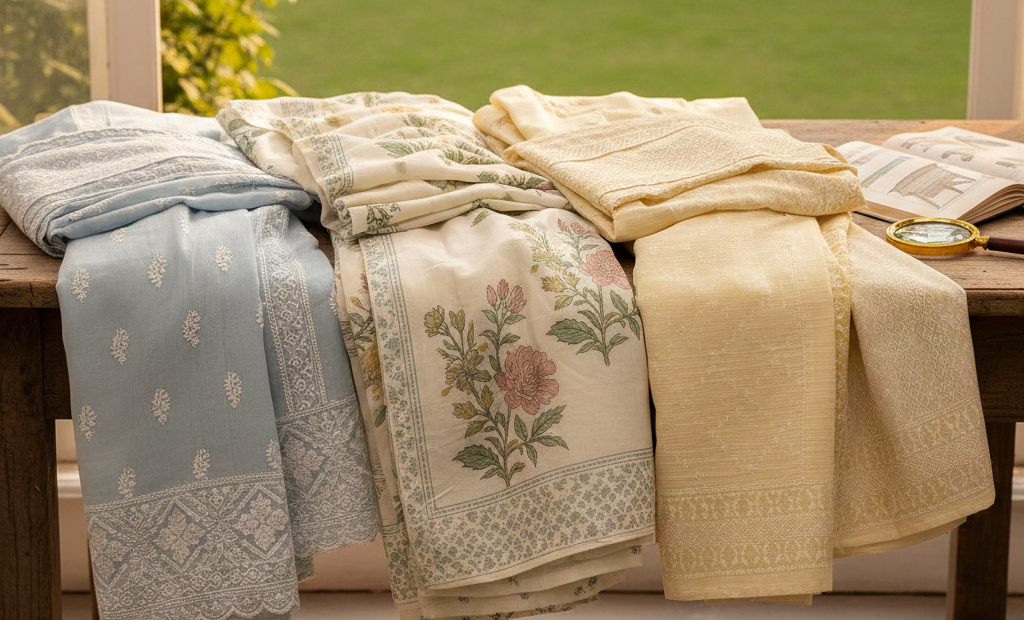
If you’ve spent any time browsing Pakistani or Indian fashion, you’ve undoubtedly come across the term “lawn suits” or “lawn collections.” These terms dominate summer fashion conversations across South Asia, with major brands launching highly anticipated lawn collections every spring. But what exactly does “lawn” mean in this context? Why is it so popular? And most importantly, how can you tell the difference between high-quality lawn and cheaper alternatives?
Lawn fabric has become synonymous with summer style in South Asia, offering the perfect combination of comfort, elegance, and affordability. However, not all lawn is created equal. The market is flooded with varying qualities, from premium designer lawn to budget options, and knowing how to distinguish quality can save you money, disappointment, and uncomfortable summer days.
This comprehensive guide will demystify lawn suits, explain what makes lawn fabric special, teach you how to identify quality lawn, and help you make informed purchasing decisions. Whether you’re shopping for your first lawn suit or you’re a seasoned lawn enthusiast looking to refine your selection skills, this guide has everything you need to know.
What is Lawn Fabric? Understanding the Basics
The Definition of Lawn
Lawn is a lightweight, fine, plain-woven fabric traditionally made from cotton or linen, though modern versions may incorporate synthetic blends. The name “lawn” comes from the French city of Laon, where linen lawn was originally produced in the Middle Ages. However, the lawn fabric popular in South Asian fashion today is primarily cotton-based.
Key Characteristics of Lawn Fabric:
- Fine, closely woven texture
- Lightweight and breathable
- Smooth, crisp finish
- Slightly translucent (depending on quality)
- Holds prints exceptionally well
- Comfortable in hot weather
The Technical Specifications
Lawn fabric is defined by specific technical characteristics:
Thread Count: Typically 60-80 threads per square inch, though premium lawn can go higher. This high thread count creates the smooth, fine texture lawn is known for.
Yarn Count: Usually made from 60s to 80s cotton yarn (the higher the number, the finer the yarn). Premium lawn uses even finer yarns (100s or higher).
Weight: Ranges from 50-90 GSM (grams per square meter), making it one of the lightest cotton fabrics available.
Weave: Plain weave (also called tabby weave), which creates a simple crisscross pattern.
Finish: Can be crisp or soft depending on treatment, often has a slight sheen.
History of Lawn in South Asian Fashion
While lawn originated in Europe, it found its true fashion home in South Asia, particularly Pakistan, where it has become the fabric of choice for summer wear since the mid-20th century.
The Evolution:
- Pre-1990s: Lawn was a basic, utility fabric for summer clothing
- 1990s-2000s: Brands began recognizing lawn’s potential for fashion
- 2000s-2010s: Designer lawn collections emerged, elevating the fabric to fashion status
- 2010s-Present: Lawn has become a multi-billion dollar industry with seasonal launches, celebrity endorsements, and cult followings
Today, lawn collections from brands like Khaadi, Sapphire, Gul Ahmed, Alkaram, Maria B, Sana Safinaz, and Nishat Linen are major fashion events, with customers lining up (or crashing websites) to purchase the latest designs.
What Are Lawn Suits?
Understanding the Term “Lawn Suits”
A “lawn suit” refers to a complete outfit made from lawn fabric, typically consisting of three pieces:
- Kameez/Kurta (top/tunic): The main garment, usually knee-length or longer
- Shalwar/Trouser (bottom): Loose or fitted pants to pair with the top
- Dupatta (scarf/stole): A long scarf that completes the ensemble
In Pakistani and Indian fashion markets, lawn suits are sold as coordinated sets, either:
- Unstitched: Three pieces of fabric (kameez fabric, shalwar fabric, dupatta) that you take to a tailor
- Semi-stitched: Partially stitched, requiring final fitting
- Ready-to-wear: Completely stitched and ready to wear
Types of Lawn Suits
Printed Lawn Suits:
- Feature digital or screen prints
- Most common type
- Range from simple florals to intricate designs
- Prints applied after weaving
Embroidered Lawn Suits:
- Include embroidery on neckline, sleeves, or hem
- More formal and expensive
- Combine lawn’s comfort with embellishment
- Popular for semi-formal occasions
Plain/Dyed Lawn Suits:
- Solid colors without prints
- Can be embellished or left simple
- Versatile base for styling
- Often less expensive
Jacquard Lawn:
- Woven patterns in the fabric itself
- More textured than regular lawn
- Premium category
- Subtle, elegant patterns
Lawn with Chiffon/Organza Dupatta:
- Lawn kameez and shalwar
- Different fabric for dupatta (adds variety)
- Popular combination
- More formal appearance
Why Lawn Suits Are So Popular
Climate Appropriateness: South Asia experiences extreme summer heat, often exceeding 40°C (104°F). Lawn’s lightweight, breathable nature makes it ideal for these conditions.
Comfort Meets Style: Unlike synthetic summer fabrics that can feel suffocating, lawn offers comfort without sacrificing style. You can look elegant while staying cool.
Affordability: Lawn suits range from budget-friendly to premium, but even designer lawn is more affordable than formal silk or heavily embellished outfits.
Versatility: Lawn suits work for various occasions: office wear, casual outings, semi-formal events, and even some formal occasions (with embroidery).
Print Quality: Lawn’s smooth surface takes digital and screen prints beautifully, allowing for intricate, vibrant designs that don’t fade quickly.
Easy Care: Most lawn is machine washable and easy to maintain, making it practical for daily wear.
Cultural Tradition: Lawn suits have become a cultural staple, particularly in Pakistan, where wearing lawn in summer is simply what you do.
The Quality Spectrum: From Budget to Premium Lawn
Not all lawn is created equal. Understanding the quality spectrum helps you make informed choices and set appropriate expectations.
Budget/Economy Lawn ($10-25 per suit)
Characteristics:
- Lower thread count (40-60 threads per inch)
- Coarser yarn (lower count)
- Thinner, sometimes see-through
- Prints may fade after few washes
- Less soft texture
- May have loose weave
- Shorter lifespan (1-2 seasons)
Common Sources:
- Local markets and bazaars
- Unknown or generic brands
- Mass-market retailers
- Online budget stores
Best For:
- Everyday casual wear
- When you need quantity over quality
- Trial purchase (first time buying lawn)
- Very hot weather (thinner fabric)
What to Expect: Budget lawn serves its purpose but won’t last multiple seasons. Colors may fade, fabric may develop holes or wear thin quickly. Fine for practical, daily use when appearance longevity isn’t priority.
Mid-Range Lawn ($25-50 per suit)
Characteristics:
- Decent thread count (60-70 threads per inch)
- Good quality prints
- Moderate durability (2-3 seasons)
- Comfortable texture
- Colors fade slowly
- Balanced weight (not too thin)
- Good value for money
Common Sources:
- Established Pakistani brands (Khaadi, Sapphire, Alkaram Studio, Nishat Linen)
- Reputable Indian brands
- Mid-tier designers
- Branded outlets and stores
Best For:
- Regular wear with good appearance
- Office and professional settings
- Social gatherings
- Best value-to-quality ratio
What to Expect: Mid-range lawn offers the best balance for most buyers. Quality is consistently good, prints are well-executed, and fabric lasts multiple seasons with proper care. This is the sweet spot for most lawn enthusiasts.
Premium/Designer Lawn ($50-150+ per suit)
Characteristics:
- High thread count (70-90+ threads per inch)
- Finest yarn quality (80s-100s+)
- Exceptional print quality
- Long-lasting (3-5+ seasons)
- Luxuriously soft texture
- Perfect color fastness
- Often includes embroidery or embellishments
- Exclusive designs
Common Sources:
- Designer brands (Maria B, Sana Safinaz, Elan, Zaha)
- Limited edition collections
- Designer boutiques
- Luxury fashion houses
Best For:
- Special occasions
- Investment pieces
- When quality is priority
- Fashion enthusiasts
- Professional photography
What to Expect: Premium lawn feels noticeably different—softer, smoother, more substantial despite being lightweight. Prints are artwork-quality, colors remain vibrant for years, and fabric maintains its integrity season after season. The higher price reflects superior quality.
How to Identify Quality Lawn: The Expert’s Checklist
Now for the most practical part: how to actually tell if lawn fabric is high quality when you’re shopping. These tests and observations can be done in-store or when ordering online.
Visual Inspection Tests
1. The Light Test
Hold the fabric up to a light source (window or bright light):
High-Quality Lawn:
- Even, consistent translucency throughout
- Uniform weave with no thick or thin patches
- Light passes through evenly
- No visible gaps in weave
Poor-Quality Lawn:
- Uneven translucency (patches of thicker/thinner areas)
- Visible weave inconsistencies
- Obvious gaps in the fabric
- Some areas more see-through than others
2. The Weave Examination
Look closely at the fabric’s weave:
High-Quality Lawn:
- Extremely tight, consistent weave
- Threads barely visible to naked eye
- Even, regular pattern throughout
- No loose or missing threads
- Smooth surface appearance
Poor-Quality Lawn:
- Visible loose weave
- Irregular spacing between threads
- Obvious individual threads
- Patchy appearance
- Rough or uneven surface
3. The Print Quality Check
Examine printed designs carefully:
High-Quality Lawn:
- Sharp, crisp design edges
- Vibrant, rich colors
- No bleeding or smudging
- Print visible clearly on both sides
- Intricate details well-defined
- Colors properly registered (aligned)
Poor-Quality Lawn:
- Blurry or fuzzy edges
- Washed-out colors
- Bleeding between color areas
- Faint on reverse side
- Lost details in intricate areas
- Misaligned colors
4. The Color Consistency Test
Check color uniformity:
High-Quality Lawn:
- Consistent color throughout entire piece
- No shade variations
- Even dye penetration
- Rich, saturated colors
- Whites are crisp white (not gray or yellow)
Poor-Quality Lawn:
- Color variations across fabric
- Patchy dyeing
- Dull or muddy colors
- Off-white instead of pure white
- Uneven color intensity
Touch and Feel Tests
5. The Texture Test
Feel the fabric with your hands:
High-Quality Lawn:
- Soft, smooth hand feel
- Slight crispness (but not stiff)
- Luxurious drape
- Substantial feel despite being lightweight
- Cool to the touch
- Silky smooth surface
Poor-Quality Lawn:
- Rough, coarse texture
- Overly stiff or too limp
- Papery feel
- Flimsy, insubstantial
- Scratchy surface
- Uneven texture
6. The Crumple Test
Crumple a small section in your fist, then release:
High-Quality Lawn:
- Recovers shape relatively well
- Minimal permanent creasing
- Fabric has body and resilience
- Bounces back to some extent
- Wrinkles are soft, not sharp
Poor-Quality Lawn:
- Stays crumpled or heavily creased
- Forms sharp, permanent wrinkles
- Limp, no recovery
- Loses shape easily
- Looks permanently damaged
7. The Weight Test
Assess the fabric weight:
High-Quality Lawn:
- Feels substantial despite being lightweight
- Has “body” and presence
- Not flimsy or papery
- Balanced weight (not too heavy, not too light)
Poor-Quality Lawn:
- Extremely thin and flimsy
- Feels like it might tear easily
- No substance or body
- Either too heavy (adulterated) or too light
8. The Stretch Test
Gently pull fabric in different directions:
High-Quality Lawn:
- Minimal stretch (it’s woven, not knit)
- Returns to original shape after light stretching
- No distortion of weave
- Maintains integrity under tension
Poor-Quality Lawn:
- Excessive stretch or distortion
- Weave visible shifts or gaps appear
- Doesn’t recover shape
- Feels like it might tear
- Loses structure when pulled
Advanced Quality Tests
9. The Fade Test (If Possible)
If buying from a brand you’ve purchased before, or if you can check with existing owners:
High-Quality Lawn:
- Colors remain vibrant after multiple washes
- Minimal to no fading over season
- Prints stay crisp and clear
- Fabric maintains integrity
Poor-Quality Lawn:
- Colors fade noticeably after 2-3 washes
- Prints become dull or disappear
- Fabric thins out quickly
- Overall degradation
10. The Edge Examination
Look at the fabric edges (selvedge or cut edges):
High-Quality Lawn:
- Clean, neat edges
- Minimal fraying
- Tightly finished selvedge
- Even fabric all the way to edge
- Professional cutting
Poor-Quality Lawn:
- Excessive fraying at edges
- Loose threads
- Uneven or sloppy cutting
- Weave loosens at edges
- Poor finishing
11. The Water Drop Test (If Allowed)
Place a small drop of water on fabric:
High-Quality Lawn:
- Water beads slightly before absorbing
- Absorbs evenly
- Dries relatively quickly
- No water marks or stains
- Fabric recovers well
Poor-Quality Lawn:
- Water immediately spreads
- Uneven absorption (pooling in areas)
- Takes long time to dry
- Leaves water marks
- Fabric looks damaged when wet
Brand and Label Indicators
12. Brand Reputation Check
Research the brand:
Reliable Indicators:
- Established brands with years of presence
- Consistent customer reviews
- Physical stores (not just online)
- Clear contact information
- Transparent pricing
- Good return policies
- Active customer service
Warning Signs:
- Unknown brand with no history
- No customer reviews or only positive reviews
- Online-only presence (no physical verification)
- Vague contact information
- Suspiciously low prices
- No return policy
- Poor grammar in descriptions (suggests unreliable source)
13. Label and Tag Information
Check garment labels carefully:
Quality Indicators on Labels:
- Fiber content clearly stated (100% cotton, or specific blend)
- Care instructions provided
- Brand name and logo
- Country of origin
- Size information
- Batch or style number
- Contact information
Warning Signs:
- No labels or tags
- Vague fiber content (“mixed fibers”)
- Missing care instructions
- Poorly printed or attached labels
- Misspellings
- No brand identification
Smell Test
14. The Fabric Scent
Smell the fabric (sounds odd, but effective):
High-Quality Lawn:
- Fresh, clean scent or neutral
- Slight cotton smell (natural)
- No chemical odors
- Pleasant or no smell
Poor-Quality Lawn:
- Strong chemical smell
- Musty or moldy odor
- Formaldehyde scent (sharp, unpleasant)
- Kerosene or diesel smell
- Any unpleasant odor
Chemical smells often indicate poor dyeing processes, excessive formaldehyde treatment, or improper storage.
Fabric Composition: Pure Cotton vs. Blends
Understanding what your lawn is made of helps assess quality and set expectations.
100% Pure Cotton Lawn
Advantages:
- Maximum breathability
- Softest feel
- Most absorbent
- Best for hot weather
- Hypoallergenic
- Natural and eco-friendly
- Improves with washing (becomes softer)
Disadvantages:
- Wrinkles easily
- May shrink slightly (1-3%)
- Can fade over time
- Requires ironing
- More expensive
How to Verify:
- Check label for “100% cotton”
- Burn test (if possible): pure cotton burns steadily with paper smell, leaves soft gray ash
- Feel test: Softer, more natural feel
- Water absorption: Absorbs quickly
Cotton-Polyester Blends
Common blends include 70/30 or 60/40 cotton-polyester ratios.
Advantages:
- Less wrinkling
- More color-fast
- Less shrinkage
- Easier care (often machine washable)
- More affordable
- Better shape retention
- Longer lasting in some aspects
Disadvantages:
- Less breathable
- Can feel warmer
- Less soft than pure cotton
- Not as absorbent
- May pill over time
- Less eco-friendly
- Can have slight sheen
How to Identify:
- Label will state blend ratio
- Slightly shinier than pure cotton
- Less absorbent
- Feels slightly slippery
- Doesn’t wrinkle as easily
When Blends Might Be Better
Choose Blends For:
- Easy-care needs
- Frequent washing
- Travel (less wrinkling)
- Shape retention
- Budget considerations
- Color vibrancy priority
Choose Pure Cotton For:
- Maximum comfort
- Hot weather
- Sensitive skin
- Natural fiber preference
- Traditional lawn experience
- Best breathability
Thread Count and Yarn Quality Explained
Thread count and yarn quality are technical specifications that significantly impact lawn quality, but they’re often misunderstood.
Understanding Thread Count
What It Means: Thread count refers to the number of threads woven into one square inch of fabric (both warp and weft threads combined).
Lawn Thread Count Ranges:
- Budget Lawn: 40-60 threads per inch
- Standard Lawn: 60-70 threads per inch
- Premium Lawn: 70-80 threads per inch
- Luxury Lawn: 80-100+ threads per inch
Why It Matters:
- Higher thread count = finer, smoother fabric
- Better durability and longevity
- Superior print quality
- Softer hand feel
- More expensive to produce
Important Note: Thread count isn’t everything. A fabric with inflated thread count using poor quality yarn won’t perform as well as moderate thread count with excellent yarn.
Yarn Count Explained
What It Means: Yarn count indicates the fineness of the yarn used. Higher numbers mean finer yarn.
Common Lawn Yarn Counts:
- Basic Lawn: 40s-50s yarn
- Standard Lawn: 60s yarn
- Premium Lawn: 70s-80s yarn
- Luxury Lawn: 100s+ yarn
Why It Matters:
- Finer yarn = softer, smoother fabric
- Better drape and hand feel
- More expensive to produce
- Superior quality perception
The Relationship: High thread count with fine yarn = Best quality lawn Low thread count with coarse yarn = Poor quality lawn The combination matters more than either factor alone.
How to Ask About Specifications
When shopping, ask:
- “What’s the thread count?”
- “What yarn count is used?”
- “Is this pure cotton or blend?”
- “What’s the GSM (fabric weight)?”
Reputable sellers should know these specifications. If they can’t answer or seem evasive, it’s a red flag.
Seasonal Lawn Collections: What You Need to Know
Understanding seasonal releases helps you buy at the right time for best selection and prices.
Spring/Summer Collections (Main Season)
Timing: February-April (launches), Available through summer
Characteristics:
- Brightest, most vibrant collections
- Largest variety of designs
- New trends introduced
- Maximum marketing and hype
- Often includes celebrity collaborations
Pricing:
- Full retail prices at launch
- High demand may lead to quick sellouts
- Limited discounts initially
Best For:
- Latest designs
- Complete size availability
- Widest selection
- Trendy, current styles
Shopping Strategy:
- Pre-order if possible
- Shop launches online (avoid crowds)
- Know your measurements (things sell out)
- Set budget beforehand (easy to overspend)
Mid-Season Sales
Timing: May-July
Characteristics:
- Remaining stock from spring launches
- Some designs may be picked over
- Limited sizes in popular prints
- Good selection still available
Pricing:
- 10-30% discounts common
- Better deals as season progresses
- Outlet stores offer bigger discounts
Best For:
- Budget-conscious shoppers
- Less trendy, more classic designs
- Finding hidden gems
- Value shopping
Shopping Strategy:
- Be flexible with designs
- Check multiple stores
- Online often has better stock
- Outlet malls offer best prices
End-of-Season Clearance
Timing: August-September
Characteristics:
- Deep discounts (40-70% off)
- Limited selection
- Sizes and designs picked over
- Last chance for season’s collection
Pricing:
- Massive discounts
- Clearance pricing
- Stock-clearing deals
Best For:
- Next year’s wardrobe
- Budget shopping
- Basics and classics
- Stocking up
Shopping Strategy:
- Buy for next summer
- Focus on timeless designs
- Check condition (may be tried on multiple times)
- Perfect for staple colors
Winter/Transitional Collections
Timing: October-January
Characteristics:
- Limited lawn availability
- Focus shifts to khaddar, karandi, linen
- Clearance of remaining lawn
- Some stores stock year-round basics
Pricing:
- Clearance prices on lawn
- Focus on winter fabrics
Best For:
- Planning ahead
- Warm climate regions
- Year-round lawn wearers
Price vs. Quality: Setting Realistic Expectations
Understanding the price-quality relationship helps you set appropriate expectations and avoid disappointment.
What You Should Expect at Different Price Points
Under $15 (Basic/Budget):
- Thin fabric, lower thread count
- Prints will fade after several washes
- 1-2 season lifespan
- Practical daily wear
- May develop holes or thin spots
- Colors less vibrant
- Suitable for home wear or very casual use
Realistic Expectations: This is budget fabric. Don’t expect it to look great after many washes or last multiple seasons. Buy for immediate use, not longevity.
$15-30 (Economy-Mid Range):
- Decent quality for price
- 2-3 season lifespan
- Moderate print quality
- Good for regular wear
- Some fading over time
- Fair durability
Realistic Expectations: Good value for money. Will serve you well for normal wear but won’t be heirloom quality. Perfect for building a working wardrobe.
$30-60 (Mid-Range Branded):
- Good to excellent quality
- 3-4 season lifespan
- Strong print quality
- Comfortable and durable
- Minimal fading
- Best value-to-quality ratio
Realistic Expectations: This is the sweet spot. Quality is consistently good, you’ll get significant wear, and prints remain nice. Excellent choice for most buyers.
$60-100 (Premium):
- Excellent quality fabric
- 4-5+ season lifespan
- Superior print and design
- Very comfortable
- Color-fast
- Investment piece quality
Realistic Expectations: Noticeably superior quality. Worth the investment if budget allows. These pieces remain wardrobe staples for years.
$100+ (Designer/Luxury):
- Exceptional quality
- 5+ season lifespan (with care)
- Museum-quality prints
- Often includes embroidery
- Luxurious feel
- Statement pieces
Realistic Expectations: This is luxury. You’re paying for superior fabric, exclusive designs, craftsmanship, and brand prestige. These pieces should last many years and remain special.
Red Flags: When Price Doesn’t Match Quality
Warning Signs:
- “Designer” prices ($80+) but fabric feels thin or rough
- Very cheap prices ($10) claiming “premium” quality
- Suspiciously low prices for known designer brands (likely fake)
- High prices but poor print quality
- Expensive but label says “mixed fibers” (should be cotton at that price)
Trust Your Instincts: If price seems too good to be true for claimed quality, it probably is.
Where to Buy Quality Lawn: Shopping Guide
Physical Stores
Advantages:
- Touch and feel before buying
- Immediate purchase
- Personal assistance
- Try before buying (if stitched)
- See true colors
- Verify quality in person
Disadvantages:
- Limited to local availability
- May have limited stock
- Crowds during launches
- Time-consuming
- Pressure sales tactics
Best Stores:
- Brand flagship stores (Khaadi, Sapphire, etc.)
- Department stores with dedicated sections
- Established fabric markets (Liberty Market Lahore, Anarkali Bazaar)
- Designer boutiques
Shopping Tips:
- Go on weekdays to avoid crowds
- Bring fabric samples if matching
- Ask about return policies
- Check entire piece for flaws
- Negotiate in traditional markets
Online Shopping
Advantages:
- Convenience
- Wider selection
- Easy price comparison
- Avoid crowds
- Shop anytime
- Access to international brands
- Often better stock
Disadvantages:
- Can’t feel fabric
- Colors may vary from screen
- Sizing issues (if stitched)
- Return hassles
- Shipping costs
- Delivery delays
- Risk of receiving different quality
Reputable Online Platforms:
- Brand websites (most reliable)
- Established e-commerce (Daraz, Khaadi.com, Sapphire.pk)
- Multi-brand platforms (Know your brands)
- Instagram businesses (research thoroughly)
Online Shopping Tips:
- Read Reviews: Check multiple sources
- Verify Authenticity: Ensure official site or authorized seller
- Check Return Policy: Before purchasing
- Ask Questions: About fabric specifications
- Request Additional Photos: If needed
- Check Size Charts: Carefully
- Use Secure Payment: Credit cards offer protection
- Screenshot Everything: Descriptions, images, conversations
- Track Your Order: Keep confirmation emails
- Inspect Upon Arrival: Check immediately, document issues
International Shopping
For those outside South Asia wanting authentic lawn:
Options:
- Brand international shipping (some brands ship worldwide)
- Specialty South Asian stores in your country
- Online platforms with international shipping
- Personal shoppers/buying services
- Shopping during visits to Pakistan/India
Considerations:
- Shipping costs (can be significant)
- Customs duties and taxes
- Longer delivery times
- Return difficulties
- Currency exchange
Caring for Your Lawn: Maintenance and Longevity
Proper care ensures your quality lawn suits last multiple seasons.
Washing Guidelines
First Wash (Critical):
- Wash separately (colors may bleed initially)
- Use cold water
- Gentle cycle or hand wash
- Add salt (1-2 tablespoons) or vinegar (1/4 cup) to set colors
- Turn inside out
- Don’t wring or twist
Regular Washing:
- Wash in cold to lukewarm water (hot water fades prints)
- Use mild detergent (harsh chemicals damage fabric)
- Turn inside out to protect prints
- Wash dark and light colors separately
- Don’t overload washing machine
- Gentle cycle preferred
- Remove promptly after washing
Hand Washing (Recommended for Premium Lawn):
- Fill basin with cold water
- Add mild detergent
- Gently agitate
- Don’t scrub prints roughly
- Rinse thoroughly
- Don’t wring—press water out gently
Drying Tips
Best Practices:
- Line dry in shade (sun fades colors)
- Hang by shoulders (prevents stretching)
- Smooth out wrinkles while damp
- Don’t use dryer (heat damages fabric and prints)
- Remove while slightly damp for easier ironing
- Avoid direct sunlight
- Don’t dry completely on line (becomes stiff)
Ironing Guidelines
Temperature:
- Medium heat (cotton setting)
- Too hot: Scorches fabric, damages prints
- Too cold: Doesn’t smooth wrinkles
Technique:
- Iron while slightly damp
- Iron on reverse side (protects prints)
- Use pressing cloth on print side if needed
- Iron in direction of fabric grain
- Don’t leave iron in one spot too long
- Starch lightly if you prefer crisp finish (optional)
Steam:
- Steam iron works well for lawn
- Hanging steam for quick refresh
- Steaming better than dry ironing for prints
Storage
Short-Term (In Season):
- Hang in closet (prevents wrinkles)
- Use padded hangers (prevents shoulder marks)
- Keep away from direct sunlight
- Ensure closet is dry (prevent mildew)
Long-Term (Off-Season):
- Wash before storing
- Fold carefully with tissue paper
- Store in breathable cotton bags (not plastic)
- Add lavender or cedar to prevent moths
- Keep in cool, dry place
- Check periodically for moisture or pests
Stain Removal
For Fresh Stains:
- Act immediately
- Blot, don’t rub
- Cold water first
- Gentle stain remover for stubborn stains
- Test stain remover on hidden area first
For Set Stains:
- Soak in cold water with oxygen bleach (color-safe)
- Apply mild stain remover
- Gentle hand washing
- Multiple treatments may be needed
- Consider professional cleaning for valuable pieces
Extending Longevity
Best Practices:
- Rotate your wardrobe: Don’t wear same piece repeatedly
- Spot clean: When possible instead of full wash
- Air out: Between wears before washing
- Fix immediately: Repair small tears or loose threads right away
- Proper storage: Prevents damage
- Gentle handling: Treat delicately
- Quality hangers: Prevent shape loss
- Avoid chemicals: Perfumes, deodorants can stain or damage
- Remove jewelry: Before wearing (prevents snags)
- Careful wearing: Avoid rough surfaces
Common Lawn Buying Mistakes to Avoid
Mistake 1: Buying Based on Photos Alone
The Problem: Online photos can be heavily edited, showing colors and prints that don’t match reality.
The Solution:
- Check multiple photos from different sources
- Read customer reviews with photos
- Ask for fabric swatches if possible
- Check brand reputation for color accuracy
- Accept that screens vary (colors may differ slightly)
Mistake 2: Impulse Buying During Sales
The Problem: Sales create urgency, leading to purchases you don’t need or quality compromises.
The Solution:
- Make a list before sales
- Set a budget
- Know what you actually need
- Don’t buy just because it’s discounted
- Quality over quantity always
Mistake 3: Ignoring Fabric Care Requirements
The Problem: Buying lawn that requires hand-wash only when you need machine-washable.
The Solution:
- Check care labels before buying
- Consider your lifestyle
- Hand-wash only suits for special occasions
- Machine-washable for regular wear
- Be realistic about care commitment
Mistake 4: Not Checking for Flaws
The Problem: Discovering flaws after purchase, when returns are difficult.
The Solution:
- Inspect entire piece in-store
- Check for printing errors
- Look for holes, tears, or thin spots
- Verify color consistency
- Document issues immediately if online purchase
Mistake 5: Falling for “Designer” Labels
The Problem: Paying premium prices for fake or poor-quality “designer” lawn.
The Solution:
- Buy from authorized retailers only
- Check brand authentication features
- Research typical prices for that brand
- Verify store legitimacy
- When in doubt, skip it
Mistake 6: Buying Wrong Size
The Problem: Unstitched fabric in wrong quantity or wrong size in ready-to-wear.
The Solution:
- Know standard unstitched measurements (typically 2.5m kameez, 2.5m shalwar, 2.5m dupatta)
- Check size charts carefully for stitched
- Measure yourself properly
- When between sizes, size up (easier to alter)
- Keep a measurement card in your wallet
Mistake 7: Ignoring Season Appropriateness
The Problem: Buying heavy lawn for peak summer or very thin lawn for transitional weather.
The Solution:
- Consider when you’ll wear it
- Check fabric weight (GSM)
- Feel fabric thickness
- Think about your climate
- Buy appropriate weight for season
Mistake 8: Not Considering Total Cost
The Problem: Forgetting tailoring costs when buying unstitched or accessory costs.
The Solution:
- Budget for tailoring ($10-30+ depending on complexity)
- Consider accessory needs (shoes, jewelry)
- Account for special care costs if needed
- Think about alteration costs
- Factor in everything before purchase
Frequently Asked Questions
Is lawn suitable for all seasons?
Lawn is primarily a summer fabric designed for hot weather. However, it can be worn in transitional seasons (spring, fall) with appropriate layering. In winter, lawn is generally too light unless you’re in a warm climate or wearing it indoors with heating.
How can I tell if lawn is pure cotton?
Check the label first. For additional verification, the burn test works (burn a small thread—pure cotton burns steadily with paper smell and soft gray ash). Pure cotton also feels softer, more natural, and absorbs water quickly. When in doubt, ask the seller for fabric composition details.
Why do some lawn suits cost $20 and others cost $200?
Price differences reflect fabric quality (thread count, yarn quality), design exclusivity, brand prestige, embellishment level, and production costs. Designer brands invest heavily in original designs, superior fabric, quality control, and brand building, which reflects in pricing.
Can lawn be worn for formal occasions?
Embroidered lawn suits can be appropriate for semi-formal occasions like small parties, dinners, or cultural events. However, for very formal events (weddings, galas), silk, chiffon, or organza are typically more appropriate. Lawn is generally considered casual to semi-formal.
How many washes does quality lawn last?
High-quality lawn should last 50-100+ washes over 3-5 seasons if properly cared for. Mid-range lawn typically lasts 30-50 washes over 2-3 seasons. Budget lawn may show wear after 10-20 washes. Proper care significantly extends lifespan.
Should I buy unstitched or ready-to-wear lawn?
Unstitched Pros: Custom fit, personal style choices, traditional approach, often cheaper Unstitched Cons: Requires tailoring, additional time and cost, need to know measurements
Ready-to-Wear Pros: Immediate use, no tailoring needed, try before buying Ready-to-Wear Cons: Limited sizes, may not fit perfectly, usually more expensive, less customization
Choose based on your needs, timeline, and budget.
Does lawn shrink after washing?
Pure cotton lawn may shrink 1-3% after first wash. This is normal and expected. To minimize shrinkage:
- Wash in cold water
- Don’t use dryer
- Air dry
- Account for slight shrinkage when buying/tailoring
What’s the difference between lawn and cotton?
Lawn IS cotton, but specifically refers to fine, lightweight, plain-woven cotton with high thread count. Not all cotton is lawn—cotton encompasses many fabric types (denim, canvas, twill, lawn, voile, etc.). Lawn is a specific type of cotton fabric with particular characteristics.
Can I wear lawn to office?
Yes! Lawn is excellent for office wear, especially in hot climates. Choose:
- Solid colors or subtle prints
- Well-tailored, professional styles
- Appropriate lengths and modesty
- Quality fabric (not too sheer)
- Paired with professional accessories
How do I store lawn long-term?
Wash and dry completely, fold carefully with tissue paper between layers, store in breathable cotton bags (not plastic), add moth deterrents (cedar, lavender), keep in cool, dry place away from sunlight, and check periodically for moisture or pests.
Conclusion: Your Lawn Shopping Strategy
Armed with comprehensive knowledge about lawn suits and quality identification, you’re now ready to shop with confidence.
Your Quick Quality Checklist
When evaluating lawn, remember:
✅ Visual: Even weave, sharp prints, consistent color ✅ Touch: Soft, smooth, substantial feel ✅ Light Test: Even translucency, tight weave ✅ Crumple Test: Recovers shape reasonably well ✅ Brand: Reputable with good reviews ✅ Label: Clear fiber content and care info ✅ Price: Matches quality expectations ✅ Smell: Fresh, no chemical odors
Final Recommendations
For First-Time Buyers: Start with mid-range branded lawn ($30-50). This gives you good quality to understand what lawn should feel like without major investment. Once you experience good lawn, you’ll easily identify lower and higher quality.
For Budget-Conscious Shoppers: Wait for mid-season or end-of-season sales from reputable brands. You’ll get much better quality for similar prices as budget options. Quality mid-range lawn on sale beats full-price budget lawn every time.
For Quality Seekers: Invest in premium lawn from established designers. While expensive, cost-per-wear over multiple seasons makes it worthwhile. These pieces remain wardrobe staples for years.
For Practical Daily Wear: Mid-range branded lawn offers the best value. It’s comfortable, durable, attractive, and reasonably priced. Build your wardrobe here.
For Special Occasions: Splurge on designer lawn with embroidery. These pieces are investment items you’ll treasure and re-wear for years.
Remember
Lawn suits have become a cultural phenomenon for good reason—when chosen well, they offer unbeatable comfort, style, and value for warm weather dressing. Quality lawn is an investment in comfort and appearance that pays dividends through multiple seasons of wear.
By understanding what lawn is, how to identify quality, what to expect at different price points, and how to care for your purchases, you’re empowered to make smart buying decisions that you won’t regret.
Whether you’re building your first lawn wardrobe or you’re a seasoned enthusiast looking to refine your choices, the principles in this guide will serve you well. Trust your instincts, do your research, buy from reputable sources, and don’t compromise on quality for basic wardrobe pieces.
Happy lawn shopping, and may your summer wardrobe be filled with comfortable, beautiful, high-quality lawn that lasts season after season!