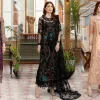
Choosing the right fabric for formal wear can make the difference between looking simply dressed up and absolutely stunning. When it comes to elegant, ethereal fabrics that create that coveted formal look, three materials consistently reign supreme: chiffon, organza, and net. These sheer, lightweight fabrics are staples in formal fashion—from wedding lehengas and evening gowns to formal shalwar kameez and party wear sarees.
But here’s where many people get confused: these three fabrics often look similar at first glance, especially to the untrained eye. They’re all sheer, they all have that luxurious drape, and they’re all commonly used in formal and bridal wear. So how do you choose between them? Which one is best for your specific needs?
This comprehensive guide will break down everything you need to know about chiffon, organza, and net. We’ll explore their unique characteristics, compare their properties side-by-side, discuss their ideal uses in formal wear, and help you make an informed decision based on your specific event, body type, climate, and budget. By the end of this guide, you’ll be able to confidently choose the perfect fabric for your formal occasion, ensuring you look and feel your absolute best.
Understanding Fabric Basics: What Makes Formal Fabrics Special
Before diving into the specifics of each fabric, let’s understand what makes these materials so popular for formal wear.
Key Characteristics of Formal Fabrics
Sheer Quality: All three fabrics offer varying degrees of transparency, creating an elegant, sophisticated look. This sheerness allows for layering and creates depth and dimension in garments.
Lightweight Nature: Despite their luxurious appearance, these fabrics are remarkably light, making them comfortable to wear for extended periods—important for events like weddings that can last several hours.
Drape and Flow: How a fabric falls and moves is crucial for formal wear. Each of these fabrics has a distinct drape that creates different silhouettes and visual effects.
Visual Appeal: The way these fabrics interact with light—whether they shimmer, create crisp lines, or flow softly—contributes significantly to their formal aesthetic.
Versatility: All three can be used alone or in combination with other fabrics, embroidered, embellished, or printed.
Now, let’s dive deep into each fabric individually before comparing them.
Chiffon: The Flowing Romantic
What is Chiffon?
Chiffon is a lightweight, plain-woven fabric traditionally made from silk, though modern versions commonly use polyester, nylon, or rayon. The name comes from the French word for “rag” or “cloth,” but don’t let that fool you—there’s nothing raggedy about this luxurious material.
How Chiffon is Made
Chiffon is created using a specific weaving technique called a “plain weave” or “tabby weave,” using twisted yarns (called crepe yarns). This twist gives chiffon its slightly rough texture and distinctive appearance. The yarns are twisted in alternating S-twist and Z-twist directions, creating the fabric’s characteristic pebbled surface.
Types of Chiffon
Silk Chiffon:
- Most luxurious and expensive
- Soft, smooth hand feel
- Natural fiber with breathability
- Subtle sheen and elegant drape
- Delicate and requires special care
- Price range: $20-$60+ per meter
Polyester Chiffon:
- Most common and affordable
- More durable than silk
- Easier to care for (machine washable)
- Slightly less breathable
- Holds color well
- Price range: $5-$15 per meter
Nylon Chiffon:
- Very lightweight and strong
- Elastic and recovers from wrinkles well
- Less luxurious than silk but more durable
- Good for structured designs
- Price range: $8-$20 per meter
Pearl Chiffon:
- Features a subtle shimmery finish
- Popular for evening wear
- Catches light beautifully
- Slightly more structured than regular chiffon
- Price range: $10-$25 per meter
Jacquard Chiffon:
- Features woven patterns
- More textured and dimensional
- Heavier than plain chiffon
- Statement-making for formal wear
- Price range: $15-$40 per meter
Characteristics of Chiffon
Texture and Hand Feel:
- Soft and slightly rough to the touch
- Delicate and slippery
- Pebbled or slightly grainy texture
- Flowing and fluid
Drape and Movement:
- Exceptional drape—flows like water
- Moves gracefully with body movement
- Creates soft, romantic silhouettes
- No stiffness or structure
- Falls in soft folds and gathers
Transparency:
- Highly sheer and transparent
- Always requires lining for modesty
- Multiple layers create beautiful depth
- Sheerness varies by weight (weight measured in momme for silk)
Weight:
- Very lightweight (typically 50-80 GSM)
- Barely feels like you’re wearing anything
- Comfortable in warm weather
- Multiple layers don’t feel heavy
Sheen and Appearance:
- Subtle, soft sheen (especially silk)
- Matte finish compared to organza
- Elegant without being overly shiny
- Slightly dull surface that catches light softly
Pros of Chiffon for Formal Wear
- Romantic and Feminine: Creates the most flowing, romantic silhouettes perfect for formal events
- Comfortable: Lightweight and breathable, comfortable for long events
- Flattering Drape: Soft drape is forgiving on various body types
- Versatile: Works for various formal styles from traditional to contemporary
- Movement: Beautiful movement when walking or dancing
- Layering: Layers beautifully without looking bulky
- Color Retention: Polyester versions hold dye exceptionally well
- All Seasons: Works year-round with appropriate layering
Cons of Chiffon for Formal Wear
- Delicate: Snags easily and requires careful handling
- Difficult to Sew: Slippery nature makes it challenging for tailors
- Requires Lining: Always needs underlining for opacity
- Wrinkles: Shows wrinkles easily (especially silk)
- Fraying: Edges fray easily when cut
- No Structure: Won’t hold structured shapes or silhouettes
- See-Through: High transparency requires strategic design
- Care Requirements: Especially silk chiffon needs delicate care
Best Uses for Chiffon in Formal Wear
Lehengas and Skirts:
- Creates flowing, voluminous skirts
- Beautiful for twirling and movement
- Multiple layers add dimension without weight
- Perfect for Mehendi and Sangeet events
Dupattas and Shawls:
- The ultimate dupatta fabric
- Drapes beautifully over shoulders
- Stays in place better than stiffer fabrics
- Elegant for weddings and formal events
Sarees:
- Classic choice for formal sarees
- Drapes in soft, elegant pleats
- Comfortable for extended wear
- Timeless and sophisticated
Evening Gowns:
- Creates flowing, goddess-like silhouettes
- Beautiful for A-line and empire waist styles
- Romantic and ethereal for formal events
Overlays and Capes:
- Adds dimension without bulk
- Creates ethereal layering effects
- Perfect for contemporary fusion wear
Not Ideal For:
- Highly structured garments
- Outfits requiring crisp lines
- Very embellished heavy work (fabric too delicate)
- Situations requiring complete opacity in single layer
Organza: The Crisp Statement-Maker
What is Organza?
Organza is a thin, plain-woven fabric traditionally made from silk, though modern versions use polyester or nylon. Unlike chiffon’s soft flow, organza is known for its crisp, stiff hand and lustrous appearance. It’s the fabric of choice when you want structure and drama.
How Organza is Made
Organza is created using a plain weave with tightly twisted yarns, but unlike chiffon, it’s woven more tightly and often treated with a stiffening agent. This creates its characteristic crisp texture. The yarns are continuous filament (not crepe twisted), giving organza its smooth, shiny surface.
Types of Organza
Silk Organza:
- Most luxurious and expensive
- Natural sheen and crisp hand
- Breathable despite stiffness
- Holds shape exceptionally well
- Ages beautifully (softens over time)
- Price range: $25-$80+ per meter
Polyester Organza:
- Most common in formal wear
- More affordable than silk
- Maintains stiffness well
- Less breathable
- Excellent for embroidery base
- Price range: $6-$20 per meter
Crystal Organza:
- Extra sheer with high shine
- Very crisp and structured
- Popular for overlays
- Catches light dramatically
- Price range: $8-$25 per meter
Mirror Organza:
- Highest sheen of all organzas
- Almost metallic appearance
- Very formal and dramatic
- Perfect for evening wear
- Price range: $12-$30 per meter
Shot Organza (Two-Tone):
- Woven with different colored warp and weft
- Creates iridescent color-changing effect
- Adds visual interest
- Popular for formal occasions
- Price range: $10-$35 per meter
Embroidered Organza:
- Pre-embroidered with patterns
- Often features cutwork or threadwork
- Ready for tailoring
- Premium pricing
- Price range: $20-$100+ per meter
Characteristics of Organza
Texture and Hand Feel:
- Crisp and stiff to the touch
- Smooth surface (not grainy like chiffon)
- Paper-like texture
- Can feel scratchy against skin
Drape and Movement:
- Minimal drape—stands away from body
- Creates structured, voluminous shapes
- Doesn’t flow like chiffon
- Holds pleats and gathers with structure
- Creates dramatic silhouettes
Transparency:
- Sheer but less transparent than chiffon
- Stiffness creates air pockets that reduce see-through effect
- Still requires lining for most applications
- Multiple layers create dimensional opacity
Weight:
- Lightweight but feels substantial due to stiffness
- Typically 60-100 GSM
- Comfortable despite structure
- Multiple layers can feel bulky
Sheen and Appearance:
- High sheen and lustrous finish
- Reflective surface catches light
- Slightly shiny appearance
- More formal and dramatic than chiffon
Pros of Organza for Formal Wear
- Structural Integrity: Holds shapes, pleats, and volume exceptionally well
- Dramatic Impact: Creates statement-making formal looks
- Luxurious Appearance: High sheen looks expensive and formal
- Embroidery Base: Perfect foundation for heavy embroidery work
- Volume Without Weight: Creates fullness without heaviness
- Versatile: Can be used for structure or overlay
- Crisp Lines: Perfect for modern, architectural designs
- Photo-Worthy: Catches light beautifully in photographs
Cons of Organza for Formal Wear
- Stiffness: Can feel uncomfortable or scratchy
- Noise: Makes rustling sounds when moving
- Less Breathable: Stiffness reduces air circulation
- Limited Drape: Won’t create soft, flowing looks
- Wrinkles: Shows creases and wrinkles
- Bulky: Multiple layers can look and feel bulky
- Crushing: Can crush and lose shape if sat on
- Care: Requires careful pressing and storage
Best Uses for Organza in Formal Wear
Lehengas:
- Creates dramatic volume and flare
- Holds pleats and gathers beautifully
- Perfect for bridal lehengas requiring structure
- Base for heavy embroidery work
Formal Gowns:
- Ball gowns and A-line styles
- Structured bodices and corsets
- Dramatic sleeves (puff, bell, statement)
- Architectural contemporary designs
Overlays and Jackets:
- Creates dimension over fitted garments
- Statement jackets and capes
- Structured overlay effects
- Contemporary fusion pieces
Ruffles and Frills:
- Holds shape in ruffled details
- Dramatic statement sleeves
- Tiered designs
- Architectural embellishments
Dupattas (with caveats):
- Creates structured, dramatic draping
- Stands away from body for visual impact
- Less practical for head draping
- Better for decorative draping
Not Ideal For:
- Soft, romantic looks
- Body-skimming silhouettes
- Head covering (too stiff)
- Hot weather events (less breathable)
- Comfortable long-term wear
Net: The Versatile Middle Ground
What is Net?
Net fabric, also called tulle or netting, is a mesh fabric with a geometric grid pattern of holes. It’s available in various hole sizes, stiffnesses, and qualities. Net sits between chiffon and organza in terms of both structure and drape, offering versatility that makes it incredibly popular in formal wear.
How Net is Made
Net is created using a variety of techniques including knitting, knotting, or weaving to create an open mesh structure. The holes can be hexagonal (like honeycomb), square, or diamond-shaped. The spacing and size of holes determine the net’s stiffness and appearance.
Types of Net
Soft Net (Tulle):
- Fine mesh with small holes
- Soft drape similar to chiffon
- Most comfortable against skin
- Used for soft volume
- Price range: $4-$15 per meter
Hard/Stiff Net:
- Larger holes and stiffer structure
- Stands away from body
- Creates maximum volume
- Can feel scratchy
- Price range: $5-$12 per meter
Bridal Net:
- Fine quality, soft hand
- Small, tight mesh
- Luxurious appearance
- Often slightly sheer between holes
- Price range: $8-$25 per meter
Russian Net:
- Extremely fine mesh
- Very soft and drapeable
- Hexagonal pattern
- Expensive and luxurious
- Price range: $15-$50+ per meter
Glitter/Shimmer Net:
- Metallic or glitter coating
- Catches light dramatically
- Popular for evening wear
- Festive and glamorous
- Price range: $8-$20 per meter
Embroidered Net:
- Pre-embroidered patterns
- Machine or hand embroidery
- Ready for garment construction
- Premium quality
- Price range: $20-$150+ per meter
Stretch Net:
- Contains elastane/spandex
- Fitted applications
- Comfortable and flexible
- Modern and contemporary
- Price range: $10-$25 per meter
Characteristics of Net
Texture and Hand Feel:
- Mesh texture with visible holes
- Ranges from soft to scratchy (depending on type)
- Lightweight and airy
- Textured surface
Drape and Movement:
- Moderate drape (between chiffon and organza)
- Can be soft and flowing (soft net) or structured (stiff net)
- Creates volume while allowing movement
- Versatile for different silhouettes
Transparency:
- Transparent due to mesh structure
- Opacity created by layering
- “See-through” but in a textured way
- Holes create interesting visual effect
Weight:
- Very lightweight (40-80 GSM typically)
- Multiple layers remain manageable
- Air pockets between holes reduce weight
- Comfortable for extended wear
Sheen and Appearance:
- Generally matte finish (unless shimmer/glitter net)
- Textured appearance due to holes
- Can be plain or enhanced with glitter/metallic
- Less shiny than organza
Pros of Net for Formal Wear
- Versatility: Available in soft to stiff versions for different needs
- Volume Creation: Excellent for creating fullness and volume
- Lightweight: Multiple layers don’t feel heavy
- Embroidery Base: Perfect foundation for embellishment
- Affordable: Generally less expensive than chiffon or organza
- Variety: Huge range of types and finishes
- Layering: Works beautifully in layers
- Structure Options: Can provide structure or softness depending on type
- Visual Interest: Mesh texture adds dimension
Cons of Net for Formal Wear
- Rough Texture: Can be scratchy (especially stiff net)
- Snagging: Catches on jewelry, zippers, and rough surfaces
- Delicate: Holes can enlarge or tear
- Limited Standalone Use: Almost always needs other fabrics
- Less Refined: Can look cheap if low quality
- Care Difficulty: Mesh can catch in washing machines
- Crushing: Loses shape when compressed
- Heat Retention: Some types can be warm despite sheerness
Best Uses for Net in Formal Wear
Lehenga Volume:
- Creates flare and volume in skirts
- Used as underlayers (cancan/petticoat)
- Adds body without extreme weight
- Multiple layers create drama
Veils and Head Pieces:
- Bridal veils and dupatta overlays
- Soft net for comfortable head draping
- Traditional choice for veils
- Creates ethereal effect
Sleeves and Overlays:
- Sheer sleeves over fitted bases
- Overlay panels for modest coverage
- Statement puff sleeves
- Contemporary mesh details
Embellishment Base:
- Foundation for heavy embroidery
- Base for stone work, sequins, beads
- Sheer embroidered panels
- Formal evening wear details
Ruffles and Tiers:
- Creates structured ruffles
- Tiered skirts and details
- Frills and decorative elements
- Statement architectural details
Petticoats and Undergarments:
- Creates volume under skirts
- Traditional petticoat fabric
- Foundation for structured silhouettes
- Not visible but essential
Not Ideal For:
- Primary garment fabric (usually)
- Soft, flowing drapes (unless soft net)
- Direct skin contact in large areas
- Minimalist, simple designs
Head-to-Head Comparison: Chiffon vs Organza vs Net
Now that we understand each fabric individually, let’s compare them directly across key factors.
Comparison Table
| Feature | Chiffon | Organza | Net |
|---|---|---|---|
| Drape | Soft, flowing, fluid | Stiff, structured, stands away | Moderate, varies by type |
| Texture | Slightly rough, pebbled | Smooth, crisp, paper-like | Mesh with holes |
| Transparency | Very sheer | Sheer with some opacity | Sheer with textured transparency |
| Weight | Very light, floaty | Light but feels substantial | Very light, airy |
| Sheen | Soft, subtle sheen | High sheen, lustrous | Generally matte |
| Structure | No structure, very soft | Maximum structure | Moderate structure |
| Comfort | Very comfortable | Can be scratchy | Varies (soft to scratchy) |
| Breathability | High (especially silk) | Moderate | High (holes allow airflow) |
| Movement | Flows beautifully | Rustles, minimal flow | Moderate movement |
| Price Range | $5-$60+ per meter | $6-$80+ per meter | $4-$150+ per meter |
| Care Difficulty | Moderate to high | Moderate to high | Moderate |
| Wrinkling | Wrinkles easily | Shows creases | Less prone to wrinkles |
| Best For | Romantic, flowing looks | Structured, dramatic styles | Volume, embellishment base |
| Longevity | Delicate, requires care | Durable if stored properly | Can snag but generally durable |
Visual Differences at a Glance
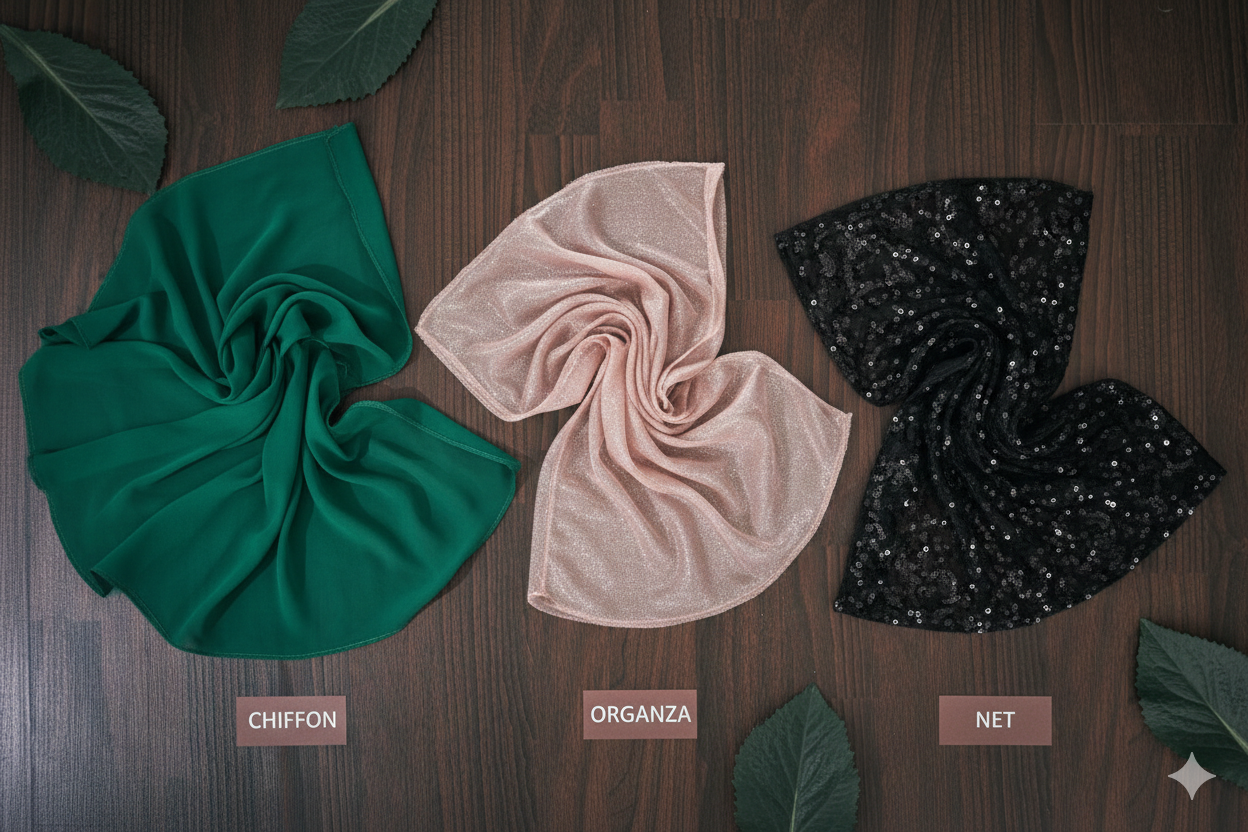
Chiffon: Imagine soft clouds or flowing water—that’s chiffon’s aesthetic. It moves gracefully, catches light subtly, and creates romantic silhouettes.
Organza: Think crisp paper or structured architecture—organza creates defined shapes, catches light dramatically, and makes bold statements.
Net: Picture ethereal mesh or a delicate honeycomb—net adds texture through its holes, creates volume efficiently, and serves multiple purposes.
Climate and Comfort Considerations
Hot Weather and Summer Events
Best Choice: Chiffon (Winner) > Soft Net > Organza
Why Chiffon Wins:
- Lightweight and highly breathable
- Air circulates freely through the fabric
- Doesn’t trap heat against body
- Comfortable for outdoor events
- Multiple layers still feel light
Soft Net Second:
- Holes allow excellent air circulation
- Very lightweight
- Comfortable in heat
- Avoids stiff net varieties
Organza Last:
- Stiffness reduces breathability
- Can feel warm and uncomfortable
- Less air circulation
- Better for air-conditioned venues
Tips for Hot Weather:
- Choose lighter colors (reflect heat)
- Opt for silk or natural fibers if budget allows
- Keep layers minimal
- Ensure proper lining (moisture-wicking)
- Consider venue (outdoor vs indoor AC)
Cold Weather and Winter Events
Best Choice: Organza (layered) > Chiffon (layered) > Net
Why Organza Works:
- Multiple layers create air pockets for insulation
- Structure creates space between layers
- Can be paired with heavier base fabrics
- Indoor events (usually heated) suit organza well
Chiffon Also Good:
- Layers beautifully for warmth
- Can be paired with velvet or silk linings
- Comfortable with indoor heating
- Soft against skin with warm layers
Net Considerations:
- Holes reduce insulation properties
- Better as decorative element, not primary fabric
- Works well as overlay over warm fabrics
Tips for Cold Weather:
- Layer multiple fabrics
- Use warm linings (silk, satin, velvet)
- Consider fabric combinations
- Plan for venue temperature
- Add shawls or jackets
Humid Climates
Best Choice: Soft Net > Chiffon > Organza
Why Net Wins:
- Holes prevent fabric from sticking to skin
- Excellent air circulation
- Dries quickly if damp
- Doesn’t cling uncomfortably
Chiffon Works:
- Lightweight prevents excessive clinging
- Natural fibers (silk) are better than polyester
- Breathable enough for comfort
Organza Challenges:
- Can feel stifling in humidity
- May cling when dampened by perspiration
- Less comfortable in very humid conditions
Body Type and Flattering Choices
Petite Frame
Best Fabrics: Chiffon > Soft Net > Organza (used carefully)
Why These Work:
- Chiffon: Doesn’t overwhelm smaller frames, creates flow without bulk
- Soft Net: Adds volume without stiffness that could dwarf petite builds
- Organza: Can be used but avoid excessive volume
Styling Tips:
- Avoid very stiff organza that creates too much volume
- Choose flowing chiffon for elongating effect
- Use net in moderation for volume
- Opt for lighter colors to avoid visual heaviness
- Keep embellishments proportional
Best Silhouettes:
- A-line shapes in chiffon
- Fitted with minimal chiffon overlays
- Avoid ball gown volumes in organza
- Vertical panels in any fabric
Tall Frame
Best Fabrics: All three work beautifully
Why These Work:
- Organza: Tall frames carry dramatic volume well
- Chiffon: Creates elegant, flowing looks
- Net: Can use stiffer varieties for structure
Styling Tips:
- Embrace dramatic organza designs
- Flowing chiffon enhances height gracefully
- Can carry heavy embellished net
- All fabric types are flattering
- Experiment with volume and structure
Best Silhouettes:
- Ball gowns in organza
- Long flowing chiffon pieces
- Structured net overlays
- Dramatic lengths and volumes
Curvy/Plus Size
Best Fabrics: Soft Chiffon > Soft Net > Stiff Organza (avoid)
Why These Work:
- Chiffon: Skims rather than clings, creates graceful flow, forgiving drape
- Soft Net: Adds structure without stiffness, creates elegant volume
- Avoid Stiff Organza: Can add unwanted volume
Styling Tips:
- Choose flowing chiffon for graceful silhouettes
- Avoid very stiff fabrics that add bulk
- Use soft net for comfortable structure
- Focus on drape and flow rather than volume
- Strategic lining prevents transparency issues
Best Silhouettes:
- A-line chiffon skirts
- Empire waist in flowing fabrics
- Vertical paneling in any fabric
- Strategic ruching in chiffon
- Avoid extreme organza volumes
Athletic/Straight Frame
Best Fabrics: Organza > Net > Chiffon
Why These Work:
- Organza: Creates curves through volume and structure
- Net: Adds dimension and fullness
- Chiffon: Still works but doesn’t add shape
Styling Tips:
- Use organza to create volume and curves
- Layer net for dimension
- Structured fabrics add femininity
- Add embellishments for visual interest
- Focus on creating shape through fabric choice
Best Silhouettes:
- Ball gowns with organza volume
- Ruffles and tiers in stiff net
- Fitted tops with voluminous skirts
- Peplum styles in structured fabrics
Event-Specific Fabric Recommendations
Wedding Events
Bride:
- Lehenga: Organza (structure) with chiffon dupatta (drape)
- Gown: Silk organza or structured chiffon
- Veil: Soft bridal net or Russian net
- Saree: Chiffon (classic) or soft organza (modern)
Bridesmaids/Close Family:
- Formal Events: Chiffon or soft organza
- Mehendi: Soft chiffon or lightweight net
- Sangeet: Any fabric depending on outfit style
- Walima: Elegant chiffon or structured organza
Guests:
- Safe Choice: Chiffon (always appropriate)
- Modern: Organza for statement looks
- Conservative: Soft net overlays
- Comfort Priority: Chiffon or soft net
Formal Parties and Galas
Best Fabrics: Organza (drama) > Chiffon (elegance) > Shimmer Net (glamour)
Recommendations:
- Cocktail events: Chiffon for flowing dresses
- Black-tie: Organza for structure and drama
- Evening galas: Shimmer net for sparkle
- Red carpet style: Silk organza or luxury chiffon
Cultural and Religious Events
Best Fabrics: Chiffon (most versatile) > Soft Net (modest overlay) > Organza (special occasions)
Recommendations:
- Temple/Mosque visits: Soft chiffon dupattas
- Eid celebrations: Elegant chiffon or soft organza
- Cultural ceremonies: Traditional chiffon sarees
- Festival wear: Any fabric appropriate to outfit style
Professional Formal Events
Best Fabrics: Chiffon (subtle elegance) > Soft Net (professional overlay) > Organza (too dramatic)
Recommendations:
- Award ceremonies: Elegant chiffon
- Formal dinners: Understated chiffon or soft net
- Professional galas: Avoid overly dramatic organza
- Work functions: Chiffon for appropriate formality
Embellishment and Embroidery Considerations
Best Base Fabrics for Different Embellishments
Heavy Embroidery (Zari, Dabka, Stone Work): Winner: Organza > Net > Chiffon
- Organza provides stable base for heavy work
- Net handles weight well with proper backing
- Chiffon too delicate for very heavy embellishment
Light to Medium Embroidery (Thread Work, Sequins): Winner: All three work well
- Chiffon: Elegant light embroidery
- Organza: Structured embroidered panels
- Net: Classic embroidered net aesthetic
Beadwork and Pearls: Winner: Organza > Net (with backing) > Chiffon
- Organza handles weight without sagging
- Net needs stabilizer backing
- Chiffon can pull and distort
Laser Cut and Cutwork: Winner: Organza > Soft Net > Chiffon
- Organza holds cutwork edges crisply
- Net naturally complements cutwork style
- Chiffon edges may fray with cutting
Print and Dye: Winner: Chiffon (best color) > Organza > Net
- Chiffon takes dye beautifully
- Organza works well but shows sheen
- Net’s holes limit print area
Practical Considerations: Care and Maintenance
Washing and Cleaning
Chiffon:
- Silk Chiffon: Dry clean only or hand wash with extreme care
- Polyester Chiffon: Hand wash in cold water with mild detergent
- Use lingerie bag if machine washing (delicate cycle)
- Never wring; roll in towel to remove water
- Air dry flat or hang on padded hanger
- Iron on low heat with pressing cloth
Organza:
- Silk Organza: Professional dry cleaning recommended
- Polyester Organza: Can hand wash gently
- Avoid agitation (can crush stiffness)
- Air dry on hanger to maintain shape
- Iron on low-medium heat while slightly damp
- Use pressing cloth to avoid shine
Net:
- Hand wash in cold water
- Very gentle handling (holes can enlarge)
- Never wring or twist
- Air dry flat to maintain shape
- Lightly steam rather than iron
- Store flat when possible
Storage
Chiffon:
- Hang on padded hangers (prevents stretching)
- Or fold carefully with tissue paper
- Keep away from rough surfaces
- Avoid tight packing (creates wrinkles)
- Store in breathable garment bags
Organza:
- Hang to maintain structure
- Alternatively, roll rather than fold
- Store away from weight that could crush it
- Keep in cool, dry place
- Avoid plastic bags (needs air circulation)
Net:
- Can be folded carefully
- Best stored flat if possible
- Keep away from snag hazards
- Tissue paper between layers prevents catching
- Breathable storage essential
Longevity and Durability
Most Durable: Polyester Organza > Polyester Net > Polyester Chiffon > Silk varieties
Care Requirements:
- Silk fabrics: Highest maintenance, professional cleaning
- Polyester fabrics: More forgiving, easier home care
- Net: Moderate care, watch for snags
- All require gentle handling and storage
Budget Considerations
Price Comparison (Per Meter/Yard)
Budget Range ($5-15 per meter):
- Polyester chiffon: Best value for drape
- Standard polyester net: Affordable volume
- Basic polyester organza: Budget-friendly structure
Mid-Range ($15-40 per meter):
- Quality polyester chiffon: Better drape and feel
- Crystal organza: Enhanced sheen and quality
- Bridal net: Superior quality
- Silk blends: Affordable luxury
Luxury Range ($40-150+ per meter):
- Pure silk chiffon: Ultimate drape
- Silk organza: Luxury structure
- Russian net: Premium mesh
- Designer embroidered versions
Getting the Most Value
For Chiffon:
- Polyester offers best value for most applications
- Silk chiffon worth investment for special bridal pieces
- Mid-range polyester indistinguishable from expensive for most
For Organza:
- Polyester organza performs nearly as well as silk
- Silk worth it for heirloom bridal pieces
- Crystal organza good mid-range option
For Net:
- Quality varies widely—feel before buying
- Bridal net worth investment for main garments
- Standard net fine for volume layers
- Embroidered net premium but ready-to-use
Budget-Friendly Strategies
- Mix High and Low: Splurge on visible areas, save on hidden layers
- Choose Wisely: Invest in main fabric, economize on linings
- Quality Counts: Better to have less of good fabric than more of poor quality
- Consider Alternatives: Silk-polyester blends offer good compromise
- Shop Sales: Buy during festival sales for significant savings
- Online Options: Often cheaper than physical stores
- Wholesale Markets: Best prices for larger quantities
Designer and Tailor Preferences
What Designers Recommend
For Romantic Looks: Chiffon unanimously For Structured Drama: Organza preferred For Volume Creation: Net (especially for underlayers) For Embellishment: Organza or net base with chiffon overlays For Comfort: Chiffon or soft net For Photography: Organza (catches light) and chiffon (movement)
What Tailors Find Easiest
Easiest to Work With: Organza (holds shape during sewing) Most Challenging: Chiffon (slippery, shifts during sewing) Moderate Difficulty: Net (must handle holes carefully)
Tailoring Tips:
- Chiffon requires experienced tailor
- Organza beginner-friendly (relatively)
- Net needs careful pinning and cutting
- All benefit from experienced hands for formal wear
Combining Fabrics: The Best of All Worlds
Often, the best formal wear uses multiple fabrics strategically:
Winning Combinations
Organza Base + Chiffon Overlay:
- Structure from organza
- Flow and romance from chiffon
- Best of both worlds
- Popular for lehengas and gowns
Net Underskirt + Chiffon Top Layer:
- Volume from net layers
- Beautiful drape from chiffon
- Comfortable and elegant
- Classic combination
Organza Bodice + Chiffon Skirt:
- Structured top for support
- Flowing bottom for movement
- Flattering silhouette
- Professional finish
Net Sleeves + Chiffon or Organza Body:
- Modest coverage
- Textural interest
- Contemporary styling
- Versatile application
Strategic Fabric Placement
Use Organza For:
- Structured bodices and corsets
- Dramatic sleeves
- Architectural details
- Areas needing support
Use Chiffon For:
- Flowing skirts
- Romantic draping
- Soft overlays
- Comfortable dupattas
Use Net For:
- Creating volume (underskirts)
- Sheer sleeves
- Embellishment base
- Textural accents
Final Verdict: Which Fabric is Best?
The truth is, there’s no single “best” fabric—each excels in different scenarios.
Choose Chiffon When You Want:
- Romantic, flowing aesthetics
- Maximum comfort for long events
- Soft, feminine silhouettes
- Flattering drape for most body types
- Versatile fabric for various formal styles
- Classic, timeless elegance
- Hot weather events
- Comfortable dupattas
Best For: Sarees, flowing lehengas, dupattas, soft evening gowns, Mehendi outfits, comfortable formal wear
Choose Organza When You Want:
- Dramatic, structured looks
- Maximum visual impact
- Crisp, defined silhouettes
- Base for heavy embroidery
- Modern, architectural designs
- Statement-making formal wear
- Bridal lehengas with volume
- Photogenic outfits
Best For: Structured lehengas, ball gowns, formal bridal wear, statement pieces, architectural designs, modern fusion
Choose Net When You Want:
- Volume without weight
- Textural interest
- Embellishment base
- Modest overlay coverage
- Versatile layering
- Cost-effective volume
- Traditional veils
- Underlayers and structure
Best For: Petticoats/underskirts, veils, embroidered overlays, volume layers, sheer sleeves, fusion designs
The Hybrid Approach (Recommended)
For most formal occasions, especially weddings and major events, consider combining fabrics:
Ultimate Formal Outfit Formula:
- Structure: Organza or stiff net for base volume
- Beauty: Chiffon for top layers and draping
- Detail: Net for embroidered overlays or sleeves
- Comfort: Soft lining under everything
This approach gives you:
- Visual drama from organza structure
- Romantic flow from chiffon
- Textural interest from net
- Comfortable wear from proper lining
Frequently Asked Questions
Can I mix all three fabrics in one outfit?
Yes! Many stunning formal outfits strategically use all three: net for volume/underlayers, organza for structure/embellished panels, and chiffon for draping/flowing elements. This creates depth, dimension, and visual interest.
Which fabric photographs best?
Organza catches light dramatically making it very photogenic, while chiffon photographs beautifully when in movement. For still photography, organza often wins; for video or dancing shots, chiffon’s movement is stunning.
Which is most comfortable for 6+ hour events?
Chiffon, especially polyester chiffon, is most comfortable for extended wear. It’s lightweight, breathable, and soft against skin. Soft net is second, while stiff organza can become uncomfortable after several hours.
Can these fabrics be worn year-round?
Yes, all three can work in any season with proper layering and lining. Chiffon is best for summer, organza works well in temperature-controlled environments, and proper layering makes any fabric suitable for winter.
Which fabric is best for plus-size formal wear?
Flowing chiffon is generally most flattering as it skims rather than clings and creates graceful movement. Avoid very stiff organza that adds bulk. Soft net can work well for structure without stiffness.
Do I need lining with all three fabrics?
Yes, all three are sheer and require lining for modesty and proper finish. Choose lining fabric based on season: silk or cotton for breathability, satin for luxury feel, or specialized lining fabrics.
Which fabric holds embroidery best?
Organza provides the most stable base for heavy embroidery due to its stiffness. Net also works well with proper backing. Chiffon is best for lighter embroidery only.
Can beginners sew these fabrics at home?
Organza is easiest for beginners due to its structure. Chiffon is quite challenging (very slippery), and net requires careful handling. For formal wear, professional tailoring is recommended for all three.
Which fabric wrinkles least?
Polyester net wrinkles least, followed by polyester organza. Chiffon, especially silk, shows wrinkles most easily. Polyester versions of all three resist wrinkling better than silk.
How do I remove wrinkles without damaging the fabric?
Steam is safest for all three fabrics. Alternatively, iron on low heat with a pressing cloth. For chiffon and organza, iron while slightly damp. For net, light steaming is best to avoid crushing the mesh.
Conclusion: Making Your Perfect Choice
Choosing between chiffon, organza, and net for formal wear ultimately depends on your specific needs, preferences, and circumstances. Here’s a quick decision guide:
Quick Decision Framework
Answer these questions:
- What’s your priority?
- Comfort → Chiffon
- Drama → Organza
- Volume → Net
- All three → Combination
- What’s your climate?
- Hot/Humid → Chiffon or soft net
- Cold → Any (with layering)
- Moderate → Any fabric works
- What’s your body type?
- Petite → Chiffon or soft net
- Tall → Any fabric
- Curvy → Flowing chiffon
- Athletic → Organza or stiff net
- What’s your budget?
- Tight → Polyester versions of any
- Moderate → Mid-range quality
- Unlimited → Silk chiffon and organza
- What’s your event?
- Comfortable elegance → Chiffon
- Statement drama → Organza
- Traditional → Net or chiffon
- Modern → Any based on style
Final Thoughts
Remember that there’s no wrong choice—only what works best for your specific situation. Many of the most stunning formal outfits strategically combine all three fabrics, using each where it performs best.
Don’t be afraid to:
- Feel fabrics in person before deciding
- Consult with experienced tailors or designers
- Mix and match fabrics in one outfit
- Trust your instincts about comfort and style
- Invest in quality where it matters most
The perfect formal outfit makes you feel confident, comfortable, and beautiful. Whether that’s achieved through flowing chiffon, structured organza, versatile net, or a combination of all three, the choice is yours.
Now armed with comprehensive knowledge about each fabric’s characteristics, benefits, and ideal uses, you can make an informed decision that ensures you look and feel absolutely stunning at your next formal event.
Happy fabric shopping, and may your formal wear be as fabulous as you are!
About This Guide: This comprehensive comparison draws on textile science, designer insights, and practical experience to help you make the best fabric choice for your formal wear needs. Whether you’re shopping for your wedding outfit, attending a gala, or simply love formal fashion, understanding these fabrics empowers you to make confident, informed decisions.