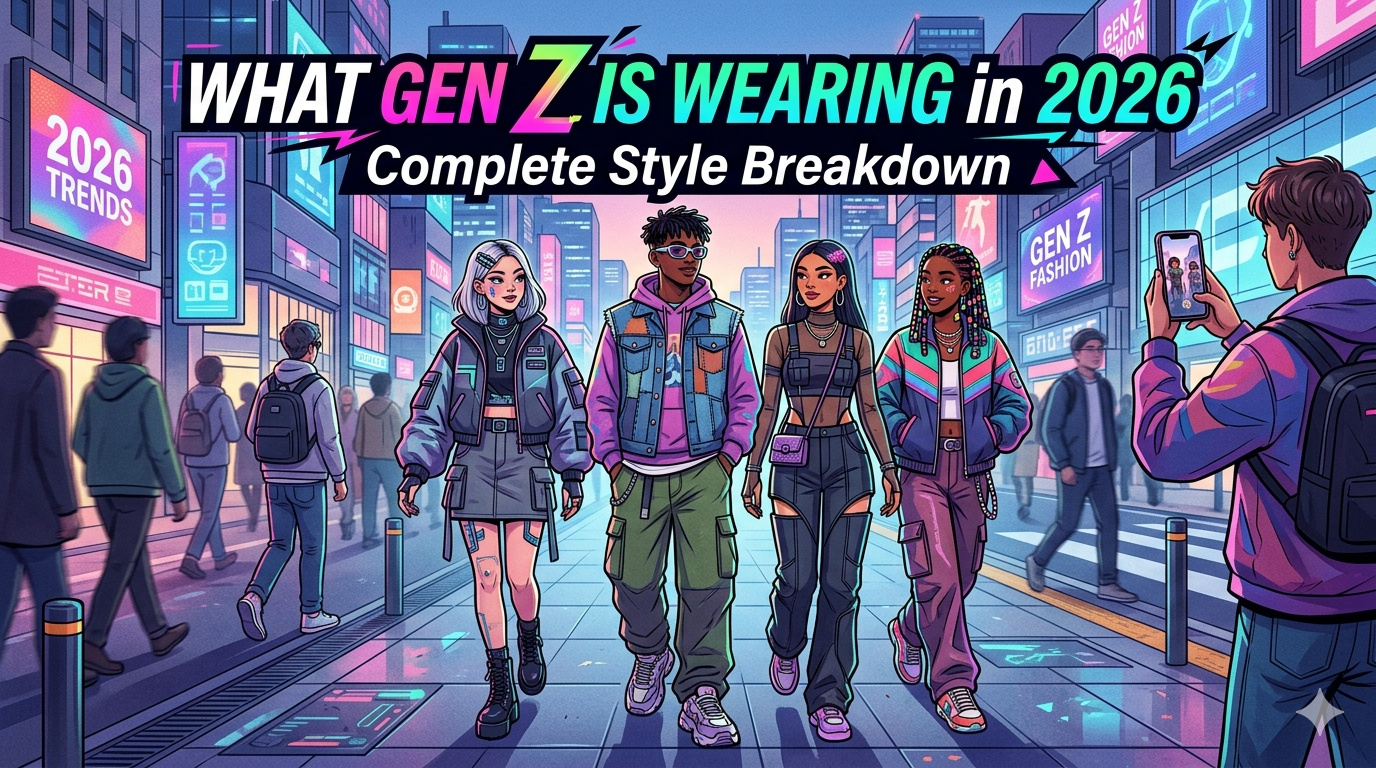
Gen Z—the generation born roughly between 1997 and 2012, now aged 14-29 in 2026—has fundamentally reshaped fashion. Unlike any generation before them, Gen Z approaches style as a form of radical self-expression, political statement, sustainability commitment, and cultural commentary. They reject fashion rules, embrace contradiction, champion inclusivity, and use clothing as a vehicle for identity exploration in ways that perplex marketers, delight independent designers, and force legacy fashion brands to completely reimagine their strategies.
In 2026, Gen Z fashion has evolved into something simultaneously more intentional and more chaotic than ever before. The aesthetic trends that dominated 2022-2024—Y2K revival, indie sleaze, coastal grandmother, dark academia—have fragmented into dozens of micro-trends that coexist, overlap, and contradict. A single Gen Z individual might dress “clean girl minimalist” on Monday, “cyber fairy grunge” on Wednesday, and “corporate maximalist” on Friday, documenting each aesthetic shift on TikTok with the same earnest commitment.
But beneath the surface chaos, clear patterns emerge. Gen Z in 2026 is characterized by: DIY customization and visible mending, extreme sustainability consciousness, gender-fluid silhouettes, tech-integrated clothing, archival and vintage obsession, comfort prioritization without sacrificing style, community-driven trend cycles (not top-down), and fashion as activism and identity signaling.
This comprehensive guide breaks down exactly what Gen Z is wearing in 2026—the specific items, brands, aesthetics, styling techniques, shopping behaviors, and cultural forces shaping their wardrobes. Whether you’re a Gen Z member seeking to understand current trends, a millennial trying to decode what’s happening, a marketer targeting this demographic, or simply fashion-curious—this deep dive provides the complete picture.
The Core Aesthetics Dominating Gen Z Fashion 2026
1. Tech-Organic Fusion
What It Is: The unexpected marriage of high-tech fabrics and natural, organic elements. Think: biodegradable sneakers with LED accents, hand-knitted sweaters with built-in wireless charging pockets, linen pants with reflective tech details.
Key Pieces:
- Solar-panel bomber jackets (actually charge devices, functional fashion)
- Mushroom leather accessories (mycelium-based, sustainable, futuristic)
- Smart fabrics that change color based on temperature/mood (novelty meets function)
- Hand-embroidered tech wear (DIY embellishments on technical garments)
- Lab-grown spider silk tops (luxury sustainable fabric gaining traction)
Why It Resonates: Gen Z refuses the nature vs. technology dichotomy. They want both: sustainable materials AND tech integration. They’re digital natives who also care deeply about climate change.
Brands Leading:
- Pangaia (bio-based materials, tech innovation)
- Vollebak (extreme tech materials, experimental)
- Re/worked tech pieces (DIY customization of technical garments)
- Small Etsy makers combining vintage and tech elements
How They Style It: Mixing high-tech sneakers (self-lacing, app-connected) with thrifted organic cotton dresses. Pairing solar-charging backpacks with hand-knitted cardigans. Contradiction is the point.
2. Corporate Chaos
What It Is: Subverting traditional corporate/office wear through exaggeration, irony, and unexpected combinations. Taking “business casual” to absurd extremes or deconstructing it entirely.
Key Pieces:
- Oversized blazers (comically large, worn as dresses or with bike shorts)
- Tie and harness combos (corporate tie worn with leather harness over basic tee)
- Tailored vests as tops (no shirt underneath, maximalist jewelry)
- Platform loafers and Mary Janes (office shoe silhouettes, extreme proportions)
- Brief-core accessories (briefcases, document holders used as fashion pieces)
Why It Resonates: Gen Z’s complicated relationship with work, capitalism, and corporate culture. Many work remotely, gig economy, or reject traditional career paths. Wearing corporate clothes as costume comments on this tension.
How They Style It: Oversized blazer + cycling shorts + chunky loafers + briefcase as clutch = ironic power suit. Perfectly tailored vest + no shirt + baggy jeans + tie worn loose = deconstructed executive.
Cultural Context: “Corporate is having a moment” on TikTok, but it’s always ironic, always subversive. Never sincere power dressing—always commenting on it.
3. Visible Mending Aesthetic
What It Is: Not just repairing clothes, but making repairs visible, decorative, and central to the garment’s aesthetic. Japanese sashiko stitching, contrasting patches, obvious darning as design element.
Key Techniques:
- Sashiko embroidery over holes and worn areas (traditional Japanese technique)
- Contrasting patches on denim (colorful, patterned, intentionally mismatched)
- Visible seam repairs with bold thread colors
- Shashiko-inspired denim (pre-repaired, ironically)
- DIY embroidery over stains (turn damage into art)
Why It Resonates: Anti-fast fashion, sustainability, DIY culture, making repair aspirational rather than shameful. Also: Gen Z grew up during/after 2008 recession and pandemic—resourcefulness is valued.
What They’re Mending: Everything. Jeans especially, but also sweaters, jackets, bags, even sneakers. The more visible the mending, the better.
Where They Learn: TikTok tutorials, YouTube sashiko guides, community repair workshops, passing skills peer-to-peer. Repair is social media content.
4. Y3K / Cyber-Minimalism
What It Is: Evolution of Y2K nostalgia into forward-looking minimalist futurism. Sleek, monochrome, architectural, with subtle tech elements. More “Jony Ive designing Matrix costumes” than “Paris Hilton 2003.”
Key Pieces:
- Monochrome tech-fabric sets (matching top/bottom, often white or black)
- Minimalist sneakers with single bold detail (reflective stripe, unusual sole)
- Architectural outerwear (structural, geometric, clean lines)
- Tiny sunglasses (still here, now even more minimal)
- Single statement jewelry piece (otherwise bare aesthetic)
Color Palette: White, black, silver, occasionally one bold accent color used sparingly.
Why It Resonates: Reaction to maximalism fatigue. Desire for simplicity in chaotic world. Tech-optimist minority within Gen Z gravitates here.
Influencers: Digital artists, tech entrepreneurs in Gen Z, those interested in design and architecture.
5. Grandma-Core Evolution (“Cottage Witch”)
What It Is: 2024’s “grandmillennial” aesthetic evolved. Now less about literal granny style, more about cozy, handmade, earthy, slightly witchy aesthetic. Think: modern cottage dweller who knows tarot.
Key Pieces:
- Hand-knitted cardigans (chunky, oversized, natural fibers)
- Prairie dresses and skirts (midi length, floral or solid earth tones)
- Clogs and Mary Janes (comfort, nostalgia, practicality)
- Embroidered details (hand-done or hand-done-looking)
- Natural fiber everything (linen, cotton, wool prioritized)
- Mushroom and plant motifs (embroidered, printed, subtle)
Color Palette: Earth tones, forest green, burnt orange, cream, brown, deep burgundy.
Why It Resonates: Comfort, sustainability, rejection of synthetic, connection to craft and handmade, cottagecore’s staying power.
How They Style It: Layered, cozy, intentionally “unprofessional.” Cardigan over prairie dress, thick socks with clogs, tote bag with mushroom embroidery.
6. Gorpcore 2.0 (Urban Hiking)
What It Is: Outdoor/hiking gear worn in cities, but evolved beyond Patagonia fleeces. Now: technical, colorful, obviously functional, mixed with vintage sportswear.
Key Pieces:
- Technical hiking pants (Arc’teryx, Salomon, worn in city)
- Trail running shoes as everyday sneakers (Hoka, Salomon, bright colors)
- Utility vests (pockets everywhere, worn over hoodies or alone)
- Carabiners as accessories (functional and decorative)
- Vintage outdoor brand fleeces (Patagonia, North Face, Columbia from 90s/00s)
Why It Resonates: Functionality, comfort, durability (anti-fast fashion), outdoor culture growing among Gen Z, climate change making outdoor gear feel relevant.
Status Symbols: Vintage Arc’teryx, rare Salomon collabs, perfectly worn-in Patagonia fleeces with patches.
7. Indie Sleaze Revival
What It Is: 2000s-2010s indie music scene aesthetic. Messy, deliberately undone, skinny jeans making controversial comeback, vintage band tees, leather jackets.
Key Pieces:
- Skinny jeans (yes, controversial, but making comeback among younger Gen Z)
- Vintage band tees (actually vintage, or perfectly distressed)
- Leather jackets (oversized or perfectly fitted)
- Ballet flats (often worn with unexpected items)
- Messy eyeliner and disheveled hair (aesthetic of “tried but make it look effortless”)
Why It Resonates: Nostalgia for pre-social-media era (even though most Gen Z didn’t live it). Romanticizing analog culture, DIY music scenes, pre-algorithm creativity.
How They Style It: Skinny black jeans + oversized vintage band tee + leather jacket + ballet flats + messy hair + smudged eyeliner = indie sleaze uniform.
Controversy: Skinny jeans vs. wide-leg debate ongoing. Younger Gen Z (born 2005+) embracing skinnies ironically; older Gen Z (millennials) mostly resistant.
8. Genderless Tailoring
What It Is: Tailored pieces designed without gender, or traditionally gendered pieces worn without regard to “intended” wearer. Not androgynous neutrality—actual gender fluidity in fashion.
Key Pieces:
- Oversized blazers (gender-neutral by virtue of size)
- Tailored vests worn by everyone, all ways
- Button-downs (oversized, cropped, tied, unbuttoned)
- Wide-leg trousers (no “men’s” or “women’s,” just shapes)
- Gender-neutral jewelry (chunky chains, signet rings, both/all genders)
Why It Resonates: Gen Z is most gender-diverse generation. Fashion as identity expression. Rejection of binary constraints. Comfort prioritization.
Brands:
- Telfar (explicitly genderless)
- Entireworld (no gendered sizing)
- Vaquera (avant-garde genderless)
- Thrift stores (ultimate gender-neutral shopping)
How They Style It: Wear whatever feels right, regardless of which “section” it came from. Men’s blazer + women’s slip dress + men’s loafers = normal outfit.
Key Wardrobe Staples Every Gen Z Closet Has in 2026
Tops
1. Oversized Graphic Tees
- Vintage band tees (Nirvana, Sonic Youth, The Cure – even if they don’t know the music)
- Internet culture references (memes, niche jokes, extremely online humor)
- DIY bleached/tie-dyed (customization is key)
- Small indie brand tees (supporting artists directly)
- Ironic corporate tees (wearing Amazon Prime logo ironically)
2. Baby Tees
- Tight, cropped (showing midriff casually)
- Long-sleeved versions (layered under everything)
- With graphics or plain (both work)
- Thrifted Abercrombie from 2005 (unironically cool now)
3. Oversized Blazers
- Vintage from thrift (90s oversized, structured shoulders)
- Dad’s/uncle’s/thrift score (authenticity matters)
- Worn as dress with belt
- Worn over everything (dresses, hoodies, even other jackets)
4. Knit Cardigans
- Chunky, oversized (grandma-core influence)
- Hand-knitted (or Etsy hand-knitted-looking)
- Neutral or earth tones (cream, brown, forest green)
- Visible repair patches welcomed
5. Crop Tops
- Everything is cropped (DIY crop existing tees)
- Knitwear crops (cardigan crops, sweater crops)
- Tank top crops (simple, layerable)
- Paired with high-waisted everything (balance the crop)
Bottoms
1. Wide-Leg Jeans
- Light wash, baggy (90s silhouette)
- Vintage Levi’s or thrifted (authenticity important)
- Customized (embroidered, patched, painted)
- Puddle at ankles or cropped (both acceptable)
2. Cargo Pants/Parachute Pants
- Utility pockets everywhere (functional fashion)
- Oversized fit (comfort and proportion)
- Neutral colors (black, olive, tan) or bright (orange, lime)
- Drawstring closures (adjustable, comfortable)
3. Midi Skirts
- Slip skirts (satin, bias-cut, versatile)
- Denim midi (A-line or straight)
- Knit skirts (comfortable, cozy)
- Paired with chunky shoes (proportion play)
4. Bike Shorts / Leggings
- Under oversized pieces (blazers, long tees, dresses)
- Athleisure influence (comfort prioritized)
- Black, neutral, or bold patterns (depends on outfit)
5. The Skinny Jean Question
- Younger Gen Z (born 2005+): Bringing them back, worn ironically then sincerely
- Older Gen Z (born 1997-2004): Mostly resistant, wide-leg loyalists
- Verdict: Niche comeback happening, controversial, not universal
Footwear
1. Chunky Sneakers
- New Balance 530, 550, 574 (dad shoe aesthetic)
- Nike Dunks (still going strong, now vintage)
- Salomon trail runners (gorpcore crossover)
- Platform Converse (height + nostalgia)
- Asics Gel-Kayano (comfort meets cool)
2. Mary Janes / Platform Loafers
- Chunky platform versions (height obsession)
- Dr. Martens Mary Janes (edgy + sweet)
- Vintage-inspired (grandma-core influence)
- Worn with socks (white crew socks most common)
3. Clogs
- Birkenstock Boston clogs (ultimate comfort, status symbol)
- Crocs (yes, still, unironically)
- Wooden clogs (cottage-core extreme)
- Year-round (with socks in winter)
4. Ballet Flats
- Mesh ballet flats (Miu Miu influence persisting)
- Vintage leather (thrifted, worn-in)
- Worn with everything (even athletic wear)
5. Hiking/Trail Boots
- Salomon boots (technical, colorful)
- Vintage hiking boots (actually used, broken-in)
- Worn in cities (gorpcore urban setting)
Outerwear
1. Vintage Fleece
- Patagonia from 90s/00s (peak status item)
- North Face fleeces (authentic vintage)
- Colorful, oversized (not sleek)
- Thrifted, worn (perfect condition less cool)
2. Oversized Leather Jacket
- Vintage motorcycle jacket (real leather, worn-in)
- Dad’s jacket from 80s (inherited best)
- Oversized fit essential (not fitted)
3. Puffer Jacket
- Oversized, cropped, or long (extremes, no in-between)
- Bright colors (lime, orange, pink) or neutral
- North Face, Patagonia (vintage or new)
4. Technical Outerwear
- Arc’teryx shells (if you can afford/find)
- Gorpcore brands (Salomon, Helly Hansen)
- Functional, worn functionally (not just aesthetic)
Accessories
1. Tote Bags
- Canvas totes (Baggu, or local bookstore merch)
- Reusable grocery bags as purse (anti-fashion fashion)
- Branded from indie shops (supporting small businesses)
2. Tiny Sunglasses
- Matrix-style (Y3K aesthetic)
- Vintage 90s tiny frames (thrifted)
- Functional + ironic (know they don’t protect eyes well, don’t care)
3. Jewelry
- Chunky silver jewelry (rings, chains, cuffs)
- Handmade/artisan pieces (Etsy, local makers)
- Nostalgic pieces (puka shells, hemp necklaces coming back)
- Layered delicate necklaces (or single statement piece – extremes)
4. Hair Accessories
- Claw clips (still going strong)
- Bandanas, headscarves (90s revival)
- Messy buns with accessories (intentionally undone)
5. Phone Cases / Tech Accessories
- Beaded phone straps (Y2K nostalgia)
- Highly personalized (stickers, charms)
- Eco-friendly materials (biodegradable cases)
The Brands Gen Z Is Actually Buying in 2026
Affordable Fast Fashion (Guilt-Ridden but Real)
Shein – Still massive despite sustainability concerns
- Gen Z knows it’s problematic
- Still shops it (budget constraints real)
- Justifies with “I’ll wear it forever” (usually doesn’t)
- Trend testing ground (buy to see if like style before investing)
H&M, Zara, Forever 21 – Legacy fast fashion
- Less cool than 5 years ago
- Still practical for basics
- Conscious collections (greenwashing but Gen Z tries)
Affordable Sustainable / Ethical
Depop, Poshmark, ThredUp, Vinted – Secondhand platforms
- Primary shopping method for many Gen Z
- Sustainable + unique + affordable
- Treasure hunting aspect (gamified shopping)
- Selling as well as buying (circular economy)
Etsy – Supporting indie makers
- Handmade items
- Customization
- Vintage finds
- Supporting small businesses (values-aligned)
Reformation – Sustainable (ish) trendy
- Expensive for Gen Z but aspirational
- Known sustainable practices
- Trendy, Instagram-worthy
- Special occasion purchases
Streetwear / Sneaker Brands
Nike, Adidas – Classic sportswear
- Vintage preferred (90s/00s)
- Specific models (Dunks, Superstars)
- Thrifted when possible
New Balance – Dad shoe king
- 530, 550, 574 most popular
- Comfortable + cool
- Affordable-ish
Stüssy, Carhartt – Streetwear staples
- Heritage workwear (Carhartt)
- Skate culture (Stüssy)
- Vintage versions status symbols
Corteiz, Hellstar, Sp5der – New streetwear
- Hype drops
- Limited availability
- Status items for younger Gen Z
- Instagram/TikTok driven
Outdoor / Technical
Patagonia, North Face, Arc’teryx – Gorpcore holy trinity
- Vintage fleeces (Patagonia, North Face)
- Technical shells (Arc’teryx if affordable)
- Status + sustainability
Salomon, Hoka – Running/hiking shoes
- Technical performance
- Chunky, colorful
- Urban hiking crossover
Designer / Luxury (Aspirational)
Telfar – Accessible luxury
- Genderless
- “Not for you, for everyone” ethos
- Bag drops create hype
- Attainable for some Gen Z
Miu Miu – Luxury trendsetter
- Ballet flats influence
- Mini skirts
- Expensive but trend-setting
Vintage Designer – Thrifted luxury
- Prada sport from 90s
- Vintage Margiela
- Designer thrifting status symbol
- The Real Real, Vestiaire Collective
Indie / Small Brands
Hundreds of micro-brands
- Found on Instagram, TikTok
- Limited drops
- Direct-to-consumer
- Community built around brand
- Examples change constantly (that’s the point)
Gen Z Brand Loyalty Reality
Not loyal to brands – Loyal to values
- Will switch brands if sustainability improves elsewhere
- Cancel brands over political stances
- Support small brands over legacy
- Buying secondhand means brand matters less
How Gen Z Shops in 2026
Online Dominates
Primary Channels:
- TikTok Shop – In-app purchasing now normal
- Instagram Shopping – Browse, buy, seamless
- Depop/Poshmark – Secondhand primary for many
- Brand Direct Sites – Cutting out middlemen
- Physical stores – Occasional, experiential
The TikTok Influence
TikTok Made Me Buy It:
- Hashtag with billions of views
- Peer recommendations > influencer ads
- Trend cycles driven by TikTok (days, not seasons)
- “Haul” culture (try-on hauls, Shein hauls, thrift hauls)
Micro-trends Spread Instantly:
- Wednesday Addams aesthetic (overnight, then dead in weeks)
- Specific products go viral (strawberry dress 2.0, 3.0, 4.0…)
- Fast trend adoption and abandonment
Values-Based Shopping (In Theory)
What Gen Z Says They Value:
- Sustainability
- Ethical labor practices
- Small business support
- Transparent supply chains
- Carbon neutrality
Reality:
- Budget constraints often override values
- Shein still dominates sales
- Greenwashing works on them more than they admit
- Good intentions, practical limitations
- Secondhand as compromise (sustainable-ish, affordable)
The Dupe Culture
Dupe = Not Fake, Just Similar:
- Finding affordable versions of luxury items
- #Dupe TikToks massive
- No shame in dupes (transparency about it)
- Amazon dupes, Shein dupes, Target dupes
Status Signaling Shift:
- Knowing where to find good dupes = savvy
- Spending full price = sometimes seen as wasteful
- “I got it for $15” flex (not “I paid $1,500”)
Color Palettes and Patterns in 2026
Dominant Colors
Neutrals as Base:
- Black (always)
- Cream/beige (minimalist influence)
- Brown (earth tone dominance)
- Gray (utilitarian)
Accent Colors:
- Forest green (cottagecore/sustainability associations)
- Burnt orange/rust (70s influence)
- Burgundy/wine (moody, rich)
- Bright lime/neon green (Y2K throwback, used sparingly)
- Baby pink (soft, contrasted with hard elements)
Patterns
Trending Patterns:
- Stripes (always safe)
- Floral (prairie/cottage influence, small-scale)
- Camo (utility aesthetic, often vintage)
- Plaid/flannel (grunge/90s revival)
- Abstract/geometric (Y3K minimalism)
Avoiding:
- Animal print (cheetah, leopard – very dated)
- Tie-dye (overdone 2020-2022, now passé)
The DIY and Customization Movement
Why Customization Matters
Self-Expression:
- Mass-produced but made unique
- Personal stamp on fast fashion
- Creative outlet
- Anti-conformity (even while following trends)
Common DIY Techniques
1. Bleaching:
- Bleach patterns on black clothes
- Distressing denim
- Creating one-of-kind pieces from thrift finds
2. Embroidery:
- Hand-embroidered flowers, mushrooms, initials
- Covering stains or holes
- Adding personality to plain items
3. Patches:
- Iron-on or sewn patches
- Band patches, political patches, cute patches
- Visible mending patches (sashiko)
4. Painting:
- Fabric paint on jeans, jackets
- Custom designs
- Reviving old items
5. Dyeing:
- Natural dyes (sustainable)
- Rit dye transformations
- Fixing faded items
6. Distressing:
- Cutting, fraying, ripping
- Making new look vintage
- Ultimate DIY flex: perfectly distressed jeans
7. Cropping:
- Turning oversized into cropped
- T-shirt transformations
- Creating proportions
Where They Learn
- TikTok tutorials (primary source)
- YouTube deep dives (detailed techniques)
- Pinterest inspiration (visual ideas)
- Community workshops (in-person skill sharing)
- Peer-to-peer (friends teaching friends)
Gen Z Fashion by Age Cohort
Younger Gen Z (Born 2005-2012, Ages 14-21 in 2026)
Characteristics:
- More experimental
- Faster trend adoption
- TikTok-native
- Less brand loyal
- More likely to try “controversial” trends (skinny jeans return)
Typical Wardrobe:
- Fast fashion + thrift mix
- Very online aesthetics (cyber, Y3K)
- Parent-funded or retail jobs budget
- School appropriate but pushing boundaries
Middle Gen Z (Born 2000-2004, Ages 22-26 in 2026)
Characteristics:
- Peak trend-setters
- Early career/college
- More sustainable conscious (in practice, not just theory)
- Developed personal style
- Influential on younger cohort
Typical Wardrobe:
- Investment pieces + thrift
- Established aesthetic identity
- Professional wardrobe developing
- Quality over quantity (ideally)
Older Gen Z (Born 1997-1999, Ages 27-29 in 2026)
Characteristics:
- Millennial-adjacent
- More refined style
- Career established
- Higher budget
- Less likely to follow micro-trends
Typical Wardrobe:
- Mix high/low more strategically
- Professional pieces important
- Vintage investment pieces
- Timeless with trend accents
Regional Variations in Gen Z Style
Coastal Cities (NYC, LA, SF, Miami)
More:
- Experimental
- Fashion-forward
- Designer and indie brand focused
- Trend-setting rather than following
Less:
- Traditional
- Conservative
- Mall brand reliant
Southern/Midwest/Rural
More:
- Practical
- Slower trend adoption
- Mall and online shopping
- Regional style (Western wear in Texas, etc.)
Less:
- Avant-garde
- Expensive indie brands
- Extreme experimentation
Note: Social media democratizes fashion, so regional differences less pronounced than previous generations.
What Gen Z Is NOT Wearing in 2026
Dead Trends
Millennial Staples:
- ❌ Skinny jeans (mostly, contested)
- ❌ Side part hair (center part dominates)
- ❌ Instagram baddie makeup (heavy contour out)
Dated 2020-2022:
- ❌ Tie-dye everything (overdone)
- ❌ Neon bike shorts (too specific to pandemic era)
- ❌ House dress/cottagecore maximalism (evolved, not dead, but different)
Never Cool:
- ❌ Graphic tees with words (unless ironic/vintage)
- ❌ Chevron patterns (millennial nightmare)
- ❌ Uggs (unless rare vintage resurgence)
Style Rules Gen Z Rejects
- ❌ “Don’t wear white after Labor Day” (arbitrary rules ignored)
- ❌ “Match your metals” (mix gold and silver freely)
- ❌ “Age-appropriate dressing” (wear what you want)
- ❌ “Dress for your body type” (all bodies wear all styles)
- ❌ “Fashion should be uncomfortable” (comfort is priority)
The Future: Where Gen Z Fashion Is Heading
Emerging Trends for Late 2026-2027
1. Biotech Fashion:
- Lab-grown materials (spider silk, mushroom leather scaling up)
- Bacteria-dyed fabrics
- Self-healing fabrics
- Fashion as science
2. Hyper-Local Production:
- Neighborhood designers
- Local fiber, local production
- Anti-globalization fashion
- Community-specific aesthetics
3. Digital-Physical Blur:
- AR try-on becoming standard
- Digital fashion for online presence (buy clothes for avatars)
- NFT fashion (controversial but growing)
- Virtual wardrobes
4. Repair Economy:
- Professional repair cafes mainstream
- Repair as status symbol
- Brands offering lifetime repair services
- “Repaired by” labels (like designer labels)
5. Post-Aesthetic:
- Rejection of named aesthetics
- True personal style (not following trends)
- Algorithmic exhaustion leading to authenticity
- Counter-TikTok fashion movement
Long-Term Shifts
Sustainability Will Win (Eventually):
- Regulations forcing fashion industry change
- Gen Z gaining purchasing power
- Secondhand normalizing completely
- Renting/borrowing models expanding
Gender-Neutral Future:
- Continued erosion of gendered fashion
- Major brands eliminating gendered sections
- Sizing systems changing
Tech Integration:
- Clothes that do things (charge phones, monitor health, change color)
- Functional becoming fashionable
- Wearable tech that’s actually wearable
Conclusion: Understanding Gen Z Fashion
Gen Z fashion in 2026 is a fascinating paradox: highly curated yet authentic, trend-driven yet individual, online yet IRL, sustainable in values yet practically fast fashion, unified in rejection of fashion rules yet fragmented into countless micro-trends.
Key Insights
What Defines Gen Z Style:
- ✓ Individuality within community
- ✓ Sustainability as aspiration (if not always reality)
- ✓ Comfort without sacrificing style
- ✓ Gender fluidity
- ✓ DIY and customization
- ✓ Vintage and thrifted legitimacy
- ✓ Tech integration
- ✓ Values-based (or values-signaling) consumption
- ✓ Rejection of fashion authority
- ✓ Extremely online aesthetic development
What Brands Need to Know:
- Gen Z isn’t loyal to you, they’re loyal to values
- Authenticity matters (greenwashing will be called out)
- Community builds brands faster than advertising
- TikTok virality is unpredictable and temporary
- Secondhand is primary competitor, not other brands
- Transparency in production necessary
- Inclusivity (size, gender, representation) non-negotiable
What Marketers Should Remember:
- Gen Z can smell inauthenticity
- Peer influence > celebrity influence
- User-generated content > professional campaigns
- Values alignment > aspirational lifestyles
- Accessibility matters (price, sizing, availability)
The Big Picture
Gen Z is dressing for a world they’re trying to create: more sustainable, more inclusive, more authentic, more connected (digitally and IRL), more creative, and more resistant to top-down control. Their fashion choices are both deeply personal and intensely political, individual expression and community signaling.
Whether the oversized blazer-bike shorts combo makes sense to you is irrelevant. It makes sense to them, and they’re not asking for permission.
Welcome to Gen Z fashion in 2026. It’s chaotic, contradictory, creative, and completely reshaping what fashion means.
About This Guide: This comprehensive breakdown combines trend analysis, cultural insight, shopping behavior, and style guidance to decode what Gen Z is wearing in 2026. From specific items to broader cultural forces, this guide captures the complexity and creativity of Gen Z fashion.