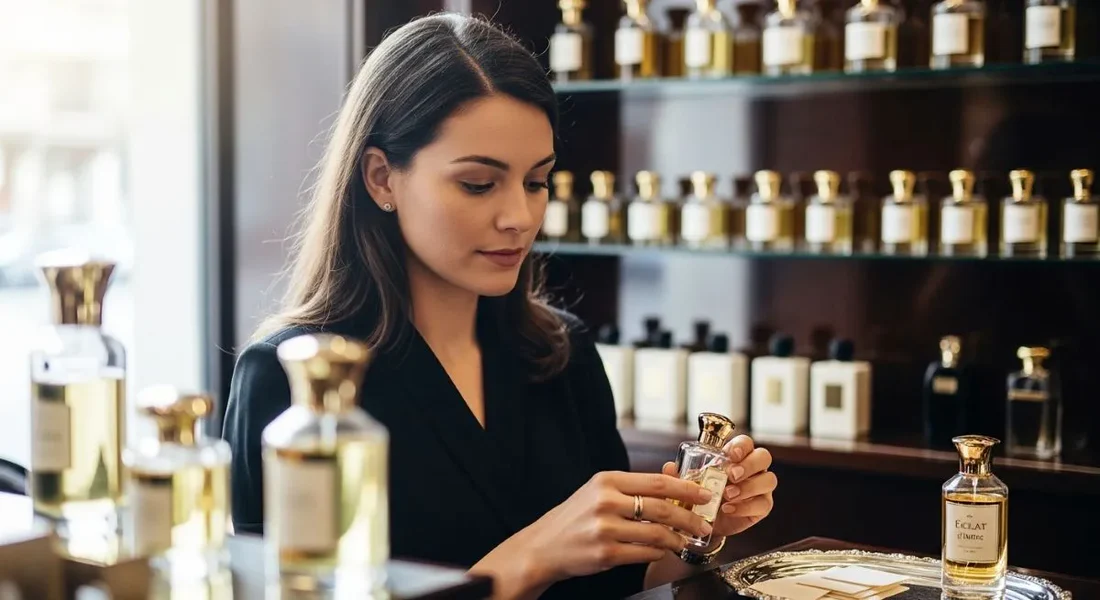
Walking into a fragrance store or browsing perfumes online, you’ve likely encountered confusing abbreviations like EDT, EDP, Parfum, or Eau de Cologne. These aren’t just fancy French labels—they represent fundamentally different types of fragrances with varying concentrations, longevity, and price points. Understanding these differences is crucial for choosing the right fragrance for your needs and getting the best value for your money.
But what exactly do these terms mean? How do EDT, EDP, and Parfum differ in terms of concentration, lasting power, and cost? Which concentration is right for different occasions, seasons, and preferences? This comprehensive guide answers all your questions about perfume concentrations, breaking down the differences between fragrance types, explaining how concentration affects performance and price, providing guidance on choosing the right concentration for your needs, and offering tips for making your fragrance last longer.
Whether you’re a fragrance enthusiast looking to expand your knowledge or a beginner trying to make sense of perfume terminology, this guide will help you navigate the world of fragrance concentrations with confidence.
Understanding Perfume Concentration
Before diving into specific types, let’s understand what “concentration” means in perfumery.
What Is Perfume Concentration?
Perfume concentration refers to the percentage of aromatic compounds (the actual fragrance oils) in a perfume formula. The rest of the formula consists primarily of alcohol and water, which act as solvents to disperse the fragrance.
The Basic Formula:
- Aromatic compounds/oils: The actual scent (varies by concentration)
- Alcohol: Usually ethanol, carries and diffuses the scent
- Water: Dilutes the formula and helps with blending
- Fixatives: Help the scent last longer (optional)
Why Concentration Matters: Higher concentration means more fragrance oil, fewer diluting agents, stronger initial scent (projection), longer-lasting wear (longevity), higher price point, and more intense, less diffusive scent.
Lower concentration means less fragrance oil, more alcohol and water, lighter initial scent, shorter wear time, lower price point, and more diffusive, airy scent.
The Fragrance Pyramid
Understanding concentration also requires knowing how fragrances are structured. Most perfumes follow a three-tier structure called the fragrance pyramid:
Top Notes (0-15 minutes): The first impression, lightest and most volatile. Common top notes include citrus (lemon, bergamot), light fruits, herbs (basil, mint), and aldehydes.
Heart/Middle Notes (15 minutes – 3 hours): The core character of the fragrance. Common heart notes include florals (rose, jasmine, lavender), spices (cinnamon, cardamom), and fruity notes (peach, berry).
Base Notes (3+ hours): The foundation that provides depth and longevity. Common base notes include woods (sandalwood, cedar), resins (amber, benzoin), musks, and vanilla.
Higher concentration perfumes showcase all three layers more distinctly and last through all phases longer. Lower concentrations may emphasize top notes more and fade before base notes fully develop.
The Perfume Concentration Hierarchy
Fragrances are categorized by concentration levels, from weakest to strongest.
1. Eau Fraîche (1-3% Concentration)
Concentration: 1-3% aromatic compounds Longevity: 1-2 hours Characteristics: Extremely light and refreshing, mostly water-based rather than alcohol-based, very subtle scent, quick evaporation
Best For:
- Immediate refreshment
- Very hot weather
- Those sensitive to alcohol
- Layering under stronger fragrances
- Post-workout or sports use
Examples: Body mists, some facial mists, cooling sprays
Price Point: Generally the most affordable option
Notes: Eau Fraîche is often not considered “true” perfume but rather a scented body product. It won’t last through a workday and needs frequent reapplication.
2. Eau de Cologne (EDC) (2-5% Concentration)
Concentration: 2-5% aromatic compounds Longevity: 2-3 hours Characteristics: Light and fresh, higher alcohol content, citrus-focused traditionally, inexpensive, good for layering
History: Originally from Cologne, Germany (hence the name), traditionally featured citrus and herb notes.
Best For:
- Hot weather and summer months
- Daytime wear
- Office environments where strong scents aren’t appropriate
- Those who prefer subtle fragrances
- Frequent reapplication throughout the day
- Budget-conscious buyers
Examples:
- Traditional colognes (4711 Original Eau de Cologne)
- Many men’s “splashes”
- Light citrus fragrances
- Some classic barbershop scents
Price Point: Very affordable, typically $20-60 for 100ml
Notes: Despite “cologne” being used as a general term for men’s fragrances in the US, Eau de Cologne is actually a specific concentration suitable for all genders.
3. Eau de Toilette (EDT) (5-15% Concentration)
Concentration: 5-15% aromatic compounds (typically 8-12%) Longevity: 3-5 hours Characteristics: Light to moderate scent strength, good projection initially, moderate price point, versatile for daily wear, better longevity than cologne
Best For:
- Everyday wear
- Office and professional settings
- Warmer weather (spring and summer)
- Daytime occasions
- Those who prefer lighter fragrances
- Budget-conscious fragrance lovers who want decent performance
- Testing a new scent before investing in stronger concentration
Examples:
- Chanel Chance Eau Tendre EDT
- Dolce & Gabbana Light Blue EDT
- Dior Sauvage EDT
- Viktor & Rolf Flowerbomb EDT (also comes in EDP)
- Calvin Klein CK One EDT
Price Point: Moderate, typically $60-120 for 50-100ml
Application Tips:
- Apply to pulse points (wrists, neck, behind ears)
- May need midday reapplication for all-day wear
- Can be more generous with application than stronger concentrations
Notes: EDT is the most common concentration for designer fragrances and offers the best balance of performance and price for many people.
4. Eau de Parfum (EDP) (15-20% Concentration)
Concentration: 15-20% aromatic compounds (typically 15-18%) Longevity: 5-8 hours Characteristics: Strong initial projection, notable longevity, richer, more complex scent development, higher price point, well-balanced across all fragrance notes, suitable for all-day wear with one application
Best For:
- All-day wear (morning to evening)
- Professional settings where you want subtle but lasting presence
- Cooler weather (fall and winter)
- Evening occasions and events
- Those who want value (longer wear means less product used)
- Complex fragrances where you want to experience all notes fully
- Signature scents for daily wear
Examples:
- Chanel Coco Mademoiselle EDP
- Tom Ford Black Orchid EDP
- Yves Saint Laurent Black Opium EDP
- Dior J’adore EDP
- Giorgio Armani Acqua di Giò Profumo EDP
Price Point: Higher, typically $100-200 for 50-100ml
Application Tips:
- Less is more—EDP projects strongly
- 2-4 sprays typically sufficient
- Focus on pulse points
- One morning application usually lasts full day
- Be mindful in enclosed spaces (can be overwhelming if over-applied)
Notes: EDP has become increasingly popular as the “standard” for many fragrance houses, especially in the niche and luxury markets. It offers excellent performance without the extreme intensity of pure parfum.
5. Parfum/Extrait de Parfum (20-40% Concentration)
Concentration: 20-40% aromatic compounds (typically 20-30%) Longevity: 8-12+ hours (sometimes 24+ hours) Characteristics: Highest concentration of fragrance oils, longest-lasting, most expensive, richest and most nuanced scent, close to skin rather than projecting far, luxurious and intense, often comes in smaller bottles
Alternative Names:
- Pure Parfum
- Extrait de Parfum
- Perfume Extract
- Simply “Parfum”
Best For:
- Special occasions and important events
- Cold weather (when scent doesn’t project as much naturally)
- Those who want maximum longevity
- Intimate settings (parfum stays close to skin)
- Fragrance connoisseurs who appreciate complexity
- When you want to make an investment in a signature scent
- Evening wear and formal occasions
Examples:
- Chanel No. 5 Parfum
- Creed Aventus Parfum
- Tom Ford Private Blend Collection (many available in Parfum)
- Maison Francis Kurkdjian Baccarat Rouge 540 Extrait
- Guerlain Shalimar Parfum
Price Point: Premium, typically $200-500+ for 30-50ml (smaller bottles due to concentration)
Application Tips:
- Tiny amount goes a long way (1-2 dabs or sprays)
- Apply to pulse points or even clothing (test first)
- Scent develops slowly and intimately on skin
- One application can last 24+ hours
- Less projection but more longevity than EDP
- Can be dabbed rather than sprayed
Notes: Parfum is the most luxurious and traditional form of fragrance. Many classic perfumes were originally created as parfums and later diluted for EDT/EDP versions. The parfum concentration often reveals the “truest” version of the perfumer’s vision.
6. Perfume Oil/Attar (15-40% Concentration, Oil-Based)
Concentration: 15-40% aromatic compounds in oil base (not alcohol) Longevity: 6-12+ hours Characteristics: Oil-based instead of alcohol-based, no alcohol means different evaporation pattern, very close to skin, concentrated and long-lasting, often used in Middle Eastern perfumery, gentle on sensitive skin
Best For:
- Those with alcohol sensitivities
- Dry skin (oil provides moisturizing benefit)
- Layering with other fragrances
- Personal, intimate scent experiences
- Travel (no alcohol, no restrictions)
- Cultural preferences (traditional in many cultures)
Examples:
- Arabian attars and oils
- Roll-on perfume oils
- Many indie and natural perfume brands
- Solid perfumes (oil-based)
Price Point: Varies widely, $20-300+ depending on ingredients
Application:
- Typically dabbed or rolled on pulse points
- Very small amount needed
- Warms with body heat and releases scent
- Doesn’t project far but lasts very long
Notes: Perfume oils develop differently than alcohol-based fragrances because oil evaporates more slowly and doesn’t “lift” off the skin the way alcohol does.
EDT vs EDP vs Parfum: Direct Comparison
Let’s directly compare the three most common concentrations.
Concentration Levels
EDT: 5-15% (typically 8-12%) EDP: 15-20% (typically 15-18%) Parfum: 20-40% (typically 20-30%)
What This Means: Parfum has 2-4x more actual fragrance oil than EDT, and about 1.5-2x more than EDP.
Longevity
EDT: 3-5 hours
- Top notes: 15-30 minutes
- Heart notes: 1-2 hours
- Base notes: 1-3 hours
EDP: 5-8 hours
- Top notes: 30-60 minutes
- Heart notes: 2-4 hours
- Base notes: 3-6 hours
Parfum: 8-12+ hours (often 24+ hours)
- Top notes: 1-2 hours
- Heart notes: 4-8 hours
- Base notes: 6-12+ hours
Factors Affecting Longevity:
- Skin type (dry skin doesn’t hold scent as long)
- Climate (heat makes fragrance evaporate faster)
- Application method
- Specific fragrance composition
- Individual body chemistry
Projection (Sillage)
Projection refers to how far from your body the scent radiates. Sillage (pronounced see-YAHJ) refers to the scent trail you leave.
EDT:
- Strong initial projection (1-2 hours)
- Moderate sillage
- Others can smell it within arm’s length initially
- Becomes skin scent within 2-3 hours
EDP:
- Very strong initial projection (2-4 hours)
- Strong sillage
- Others can smell it from several feet away initially
- Remains noticeable at arm’s length for 4-6 hours
- Becomes skin scent after 6-8 hours
Parfum:
- Moderate to low projection (stays close to skin)
- Minimal sillage
- Intimate scent experience
- Others notice it only when very close
- Designed to be discovered rather than announced
The Paradox: Higher concentration doesn’t always mean stronger projection. Parfum projects less than EDP initially but lasts much longer. It’s designed for intimate wear.
Scent Development
EDT:
- Emphasizes top notes more
- Develops quickly
- Base notes may not fully emerge before fading
- Lighter, more linear experience
- Great for showcasing bright, fresh notes
EDP:
- Balanced development across all notes
- Full fragrance pyramid experience
- Top notes last longer
- Heart and base notes more prominent
- Complex evolution over hours
Parfum:
- Slowest, richest development
- Top notes subtle and long-lasting
- Heart and base notes dominate
- Most complex and nuanced
- Scent continues evolving throughout the day
- Often smells different than EDT/EDP of same fragrance
Price Comparison
For the same fragrance:
EDT (100ml): $80-120 EDP (75ml): $120-180 Parfum (50ml): $250-400+
Price Per ml:
- EDT: ~$0.80-1.20/ml
- EDP: ~$1.60-2.40/ml
- Parfum: ~$5-8+/ml
But Consider:
- EDT: 4-5 sprays needed, reapply once daily = ~0.8ml per day
- EDP: 2-3 sprays, no reapplication = ~0.4ml per day
- Parfum: 1-2 dabs, lasts multiple days = ~0.1ml per day
Cost Per Wear:
- EDT: ~$0.64-0.96 per day
- EDP: ~$0.64-0.96 per day
- Parfum: ~$0.50-0.80 per day
The Value Proposition: While parfum costs more per ml, you use much less, potentially making it similar or better value than EDT for daily wear.
Application Differences
EDT:
- 4-6 sprays depending on concentration and fragrance
- Pulse points plus clothing
- Reapply after 3-4 hours if needed
- Can be more generous
EDP:
- 2-4 sprays
- Pulse points (wrists, neck, behind ears)
- One application typically sufficient
- Less is more
Parfum:
- 1-2 dabs or sprays
- Selected pulse points only
- Sometimes applied to clothing or hair
- Tiny amount provides full experience
Seasonal Considerations
EDT:
- Excellent for spring and summer
- Hot weather makes it evaporate faster, which is fine given lighter concentration
- Refreshing in heat
- Won’t be overwhelming when you’re sweating
EDP:
- Versatile for all seasons
- Best in fall and spring
- Can work in summer if applied lightly
- Perfect for winter when you want projection
Parfum:
- Ideal for fall and winter
- Cold weather means less natural evaporation
- Stays close to skin, perfect for intimate cold-weather settings
- Can be too intense in hot weather
Occasion Suitability
EDT:
- Everyday office wear
- Casual daytime activities
- Brunch or lunch dates
- Running errands
- Gym (light, fresh scents)
- Travel (when you want something light and easy)
EDP:
- Professional settings
- All-day events
- Dinner dates
- Evening social events
- Weddings and celebrations
- Theater or concerts
- Daily signature scent
Parfum:
- Special occasions
- Romantic dates
- Formal events (galas, black tie)
- Important meetings or presentations
- When you want a luxurious experience
- Cold weather outings
- Intimate gatherings
The Same Fragrance in Different Concentrations
Many popular fragrances are available in multiple concentrations. Does the scent change?
Reformulation Differences
When a fragrance house creates different concentrations of the same fragrance, they often adjust the formula, not just dilute it. This means EDT, EDP, and Parfum of the “same” fragrance can smell noticeably different.
Common Differences:
EDT Version:
- Emphasizes lighter, fresher notes
- More citrus or aromatic top notes
- Brighter, more immediate impact
- Simpler, more linear composition
EDP Version:
- More balanced across all notes
- Richer middle notes
- Enhanced base notes
- More complexity
Parfum Version:
- Deepest, richest interpretation
- Subdued top notes
- Dominant heart and base notes
- Most complex and nuanced
- Sometimes completely different character
Example: Chanel Coco Mademoiselle
EDT: Bright, fresh, emphasizes citrus and patchouli, lighter and more office-appropriate, springy and youthful
EDP: Richer, more rose and jasmine, warmer and more sensual, better longevity, fuller expression
Parfum: Deep, sophisticated, minimal citrus, heavy rose and vanilla, luxurious and intense, completely different character from EDT
Example: Dior Sauvage
EDT: Fresh, pepper-dominant, citrus-forward, lighter and more versatile, better for warm weather
EDP: Deeper vanilla and tonka, warmer and sweeter, better projection and longevity, richer overall
Parfum: Sandalwood-dominant, least sharp, warmest and most refined, intimate and sophisticated
The Lesson: Don’t assume different concentrations smell identical. Always test before buying if possible.
How to Choose the Right Concentration
Selecting the best concentration depends on multiple factors.
Consider Your Lifestyle
Office Worker in Professional Environment:
- EDP for signature scent (lasts all day, appropriate strength)
- EDT for summer months or conservative offices
- Avoid parfum (may project too strongly in enclosed spaces)
Stay-at-Home or Casual Work:
- Any concentration works
- EDP offers best value for daily wear
- Parfum for special moments at home
Frequent Traveler:
- EDT or EDP in moderate sizes (easier for TSA compliance)
- Consider perfume oils (no alcohol restrictions)
- Travel-sized EDP offers best performance-to-size ratio
Active Lifestyle (Gym, Outdoors):
- EDT or Eau Fraîche
- Light, fresh scents that don’t overwhelm
- Easy reapplication after workouts
Consider Your Budget
Tight Budget ($50-100):
- Focus on EDT from designer brands
- Explore drugstore fragrances (often EDT or EDC)
- Look for sales and discounters
- Consider decants of expensive fragrances
Moderate Budget ($100-200):
- EDP from designer brands
- EDT from niche brands
- Mix of concentrations for variety
Flexible Budget ($200+):
- EDP from niche brands
- Parfum for signature scent
- Collection of concentrations for different occasions
- Limited editions and exclusives
Consider the Season
Spring:
- EDT or EDP
- Fresh, floral, green scents
- Moderate projection appropriate
Summer:
- EDT or EDC
- Light, citrus, aquatic scents
- Lower concentration prevents overwhelming heat
Fall:
- EDP or Parfum
- Spicy, woody, gourmand scents
- Higher concentration carries through cooler air
Winter:
- EDP or Parfum
- Deep, rich, warm scents
- Cold air means scent doesn’t project naturally, so higher concentration helps
Consider Your Skin Type
Dry Skin:
- Higher concentrations last better
- Parfum or perfume oils work well
- Moisturize before applying any fragrance
- Consider layering with matching body products
Oily Skin:
- All concentrations work well
- EDT may be sufficient as oils help fragrance last
- Be careful with over-application
Sensitive Skin:
- Perfume oils (alcohol-free)
- Lower concentrations (less irritation)
- Test on small area first
- Spray on clothing instead of skin
Consider Your Preference
If You Prefer:
Subtle Scents:
- Start with EDT
- Apply sparingly even with lower concentrations
- Choose fresh, clean fragrances
Strong Scents:
- EDP or Parfum
- Bold, statement fragrances
- Don’t be afraid of intensity
Variety and Layering:
- Collection of EDTs (more affordable to collect)
- Mix concentrations for different occasions
- Explore layering multiple scents
Signature Scent Investment:
- EDP for daily wear
- Parfum for the ultimate expression
- Buy larger sizes for better value
Tips for Making Fragrance Last Longer
Regardless of concentration, you can maximize longevity with proper application.
Preparation
Moisturize First: Fragrance evaporates quickly on dry skin. Apply unscented or matching lotion before perfume. Vaseline on pulse points creates a base for fragrance. Well-moisturized skin holds scent 30-50% longer.
Apply to Pulse Points: Heat helps diffuse fragrance. Key pulse points include inner wrists, neck sides, behind ears, inside elbows, behind knees, and chest (décolletage).
Don’t Rub Wrists Together: This is a common mistake that breaks down fragrance molecules. Spray and let dry naturally. Rubbing generates heat that can alter the scent.
Application Techniques
Spray from 6-8 Inches Away: This ensures even distribution. Too close and you waste product. Too far and fragrance dissipates before reaching skin.
Layer Your Fragrance: Use matching shower gel, body lotion, and hair mist. This creates multiple layers that last longer together. Not all fragrances have full lines, but many designer scents do.
Apply to Hair: Hair holds scent very well. Spray on brush and run through hair, OR spray lightly on hair directly (alcohol can dry hair, so use sparingly). Hair fragrance follows you and projects well.
Consider Clothing: Fabric holds scent longer than skin. Spray on inside of jacket, scarf, or collar. Test on inconspicuous area first (can stain delicate fabrics). Natural fibers (cotton, wool) hold scent better than synthetics.
Storage
Keep Away from Light: UV light degrades fragrance. Store in boxes or drawers. Avoid displaying on sunny windowsills.
Maintain Stable Temperature: Heat accelerates deterioration. Don’t store in bathrooms (temperature fluctuates). Bedroom dresser or closet is ideal.
Keep Bottles Closed: Exposure to air oxidizes fragrance. Always replace cap after use. Consider decanting only what you’ll use soon.
Avoid Shaking: Shaking introduces air bubbles and can alter fragrance. Handle gently.
Timing
Apply to Clean Skin: Shower or bathe before applying fragrance. Clean skin provides best canvas. Body oils and odors can interfere with scent.
Apply Before Getting Dressed: Let fragrance dry before clothing touches it. This prevents staining and allows proper development.
Reapply Strategically: For EDT, reapply after 3-4 hours if needed. For EDP, rarely needed with proper application. Parfum typically doesn’t need reapplication.
Common Misconceptions About Perfume Concentrations
Let’s debunk some myths.
Myth 1: “Higher Concentration Always Smells Stronger”
Reality: Higher concentration lasts longer but doesn’t always project more. Parfum often has less projection than EDP because it’s designed to stay close to skin. Strength and longevity are different qualities.
Myth 2: “EDT/EDP/Parfum of the Same Fragrance Smell Identical”
Reality: Formulations often differ significantly. Higher concentrations emphasize different notes. The experience can be quite different across concentrations.
Myth 3: “Parfum Is Always Better”
Reality: “Better” depends on your needs. Parfum is too intense for some situations. EDT is perfect for many occasions. The “best” concentration depends on context, preference, and use case.
Myth 4: “More Expensive Means Better Quality”
Reality: Price reflects concentration, brand prestige, ingredients, and marketing—not necessarily quality. A well-made EDT can be superior to a poorly composed parfum. Some niche EDPs outperform designer parfums.
Myth 5: “You Can Make Your Own EDP by Mixing EDT with Parfum”
Reality: Fragrance composition is complex chemistry. Simply mixing concentrations doesn’t create proper formulation. Different concentrations have different ingredient ratios and formulations.
Myth 6: “Natural/Organic Fragrances Last Longer”
Reality: Longevity depends on molecules, not whether they’re natural or synthetic. Many synthetic molecules last longer than natural ones. Natural doesn’t automatically mean better or longer-lasting.
Myth 7: “All EDPs Are 15% Concentration”
Reality: Concentration ranges vary. One brand’s EDP might be 15%, another’s 18%. There’s no universal standard, just general ranges. The name is a guideline, not a precise formula.
Myth 8: “Women Should Wear Parfum, Men Should Wear Cologne”
Reality: Concentration has nothing to do with gender. “Cologne” in the US often refers to men’s fragrances generally, but Eau de Cologne is a specific concentration suitable for everyone. Choose based on preference, not gender stereotypes.
Fragrance Shopping Guide
How to Test Concentrations
In Store:
- Spray on Paper Blotter First:
- Get initial impression
- Note top notes
- Narrow options
- Test on Skin:
- Apply to inner wrist
- One scent per wrist maximum
- Wait at least 30 minutes
- Notice how it develops
- Live With It:
- Smell after 1 hour, 3 hours, 6 hours
- Notice how it interacts with your chemistry
- Consider if you still like it throughout the day
- Compare Concentrations:
- Test EDT on one wrist, EDP on the other
- Notice differences in development and longevity
- Decide which you prefer
Online Shopping:
- Read detailed reviews mentioning concentration
- Look for longevity ratings
- Check fragrance communities (Fragrantica, Basenotes)
- Order samples or decants first (many services available)
- Understand return policies
Decants and Samples
Benefits of Sampling:
- Test before committing to full bottle
- Experience fragrance over time
- Compare concentrations affordably
- Build collection without huge investment
Where to Get Samples:
- Department store fragrance counters (often free with purchase)
- Subscription services (Scentbird, Scentbox)
- Decant sellers on Reddit r/fragranceswap
- Specialty decant websites
- Direct from some niche brands
Sample Sizes:
- 1-2ml: Enough for 3-5 wears
- 5ml: Enough for 2-3 weeks of testing
- 10ml: Great for travel or extended testing
When to Buy Which Concentration
Buy EDT When:
- You want an affordable entry into a fragrance
- You prefer lighter, fresher scents
- You’re buying for warm weather
- You want something for casual daily wear
- You like variety and want multiple scents affordably
Buy EDP When:
- You want a signature scent for daily wear
- You need all-day performance with one application
- You want the best balance of performance and price
- You’re buying a complex fragrance you want to experience fully
- You want versatility across seasons
Buy Parfum When:
- You’re investing in a special signature scent
- You want maximum longevity
- You’re buying for special occasions
- You appreciate the luxury and complexity
- You want the truest expression of the perfumer’s vision
- You prefer intimate, skin-close fragrances
Building a Fragrance Wardrobe
Starter Collection (3-5 Fragrances):
- 1 fresh EDT for summer/casual (citrus, aquatic)
- 1 floral EDP for spring/professional (rose, jasmine)
- 1 woody/spicy EDP for fall/evening (sandalwood, spice)
- 1 warm EDP for winter (vanilla, amber)
- Optional: 1 parfum for special occasions
Intermediate Collection (6-10 Fragrances):
- Add seasonal variations
- Explore different concentrations of favorites
- Include day/night options for each season
- Add niche or special occasion scents
Advanced Collection (10+ Fragrances):
- Multiple concentrations of signature scents
- Vintage or rare parfums
- Full seasonal rotations
- Experimental and artistic fragrances
- Parfums for very special occasions
The Future of Fragrance Concentrations
Perfume industry trends are evolving concentration offerings.
Current Trends
Intense/Intensive Versions: Many brands now offer “Intense,” “Intensive,” or “Absolu” versions sitting between EDP and Parfum (typically 18-25% concentration). These bridge the gap and offer slightly higher concentration at lower price than parfum.
Elixir Concentrations: Some brands (like Dior) have introduced “Elixir” concentrations, often 25-30%, providing near-parfum performance at slightly lower price.
Extrait Popularity: Growing interest in pure parfum/extrait concentrations as fragrance enthusiasts seek quality and performance. Niche brands leading this trend with more parfum offerings.
Sustainable Concentrations: Some brands exploring concentrated refill systems. Higher concentration in smaller refillable formats reduces packaging waste.
Innovation in Formulation
Molecular Encapsulation: New technology allows fragrance molecules to be encapsulated and released slowly, extending longevity even in lower concentrations.
Hybrid Formulations: Blending alcohol and oil bases to achieve unique performance characteristics.
Alcohol-Free Options: Growing market for alcohol-free perfume oils and creams, especially for sensitive skin and cultural preferences.
Frequently Asked Questions
Can I dilute my parfum to make EDP? While technically possible, it’s not recommended. Professional formulations balance ingredients precisely. Simple dilution with alcohol won’t replicate proper EDP formulation and may smell unbalanced or harsh.
Do concentrations affect how a fragrance smells on different people? Yes and no. Individual body chemistry affects all fragrances regardless of concentration. However, higher concentrations may be more resistant to chemical variation because there’s more fragrance oil to “override” subtle chemistry differences.
How do I know what concentration I’m buying? Check the label or description, which should state EDT, EDP, Parfum, etc. If unclear, higher price often indicates higher concentration. Check ml size—parfums typically come in smaller bottles (15-50ml) versus EDT/EDP (50-100ml+).
Is vintage perfume stronger? Often yes. Older formulations sometimes had higher concentrations, and perfume ingredients have changed due to regulations. Some vintage parfums are significantly stronger than modern reformulations.
Can I mix different concentrations? You can layer different concentrations of the same fragrance, but they may smell different due to formulation changes. Layering EDT under EDP can create interesting effects, but they won’t simply “average out.”
Why don’t all fragrances come in all concentrations? Cost, market demand, and creative vision determine availability. Some fragrances are designed for specific concentrations. Niche brands may only offer EDP or Parfum. Mass-market brands focus on EDT for affordability.
Do concentration rules apply to essential oils marketed as perfume? Essential oil “perfumes” are different from traditional alcohol-based perfumery. They’re typically oil-based with very high “concentration” but behave differently. They often last long but project little, similar to parfum but not identical.
How long does perfume last in the bottle? Properly stored, EDT and EDP last 3-5 years, Parfum can last 5-10+ years due to higher oil content and less alcohol oxidation. However, all fragrances eventually degrade.
Conclusion
Understanding perfume concentrations transforms fragrance shopping from confusing to confident. EDT, EDP, and Parfum aren’t just marketing terms—they represent fundamentally different fragrance experiences with distinct characteristics, performance, and prices.
Key Takeaways:
Concentration Hierarchy:
- Eau Fraîche (1-3%): Lightest, 1-2 hours
- Eau de Cologne (2-5%): Light, 2-3 hours
- Eau de Toilette (5-15%): Moderate, 3-5 hours
- Eau de Parfum (15-20%): Strong, 5-8 hours
- Parfum (20-40%): Strongest, 8-12+ hours
Main Differences:
- Higher concentration = more fragrance oil, longer lasting, higher price
- EDT: Fresh, affordable, shorter wear, good for daily use
- EDP: Balanced, versatile, all-day wear, best value for many
- Parfum: Luxurious, longest-lasting, intimate, special occasions
Choosing the Right Concentration:
- Consider lifestyle, budget, season, and occasion
- EDT for casual, warm weather, office environments
- EDP for signature scents, all-day wear, versatility
- Parfum for luxury, special occasions, maximum longevity
Remember:
- Same fragrance in different concentrations often smells different
- Higher concentration doesn’t always mean stronger projection
- Proper application and storage maximize any concentration
- Sample before committing to expensive purchases
- Build a wardrobe with multiple concentrations for versatility
Whether you choose the affordable freshness of EDT, the versatile performance of EDP, or the luxurious intensity of Parfum, understanding concentrations helps you select fragrances that match your needs, preferences, and budget. The “best” concentration isn’t universal—it’s the one that works for your life, your style, and your occasions.
Armed with this knowledge, you can confidently navigate fragrance counters, make informed purchases, and build a collection that brings you joy every day—whether that’s the bright burst of your morning EDT, the sophisticated embrace of your signature EDP, or the intimate luxury of your special occasion parfum.
Last Updated: February 2026
Pro Tip: When exploring new fragrances, start with EDT or small EDP to test compatibility with your chemistry, then invest in larger EDP or parfum of scents you love. This approach builds your collection thoughtfully while minimizing risk of expensive mistakes.