In the world of fashion, lifestyle, and cultural aesthetics, two terms have dominated conversations in recent years: “old money aesthetic” and “quiet luxury.” While they’re often used interchangeably, these concepts are actually distinct—though related—approaches to wealth, style, and social status. Understanding the difference between old money aesthetic and quiet luxury can help you appreciate the nuances of each and decide which (if either) resonates with your personal style.
This comprehensive guide breaks down everything you need to know about old money aesthetic versus quiet luxury, including their origins and cultural contexts, defining characteristics and values, visual markers and style elements, key differences and overlaps, how to incorporate each into your life, criticisms and controversies, and the future of both movements.
Whether you’re drawn to the patrician elegance of old money or the understated refinement of quiet luxury, this guide will help you understand what sets them apart and what they share.
Defining Old Money Aesthetic
The old money aesthetic is a style and lifestyle approach inspired by families with generational wealth—those whose fortunes were established generations ago rather than recently earned.
What Is Old Money Aesthetic?
Old money aesthetic refers to the visual style, cultural values, and lifestyle associated with families who have maintained wealth across multiple generations (typically at least three or more). It’s characterized by understated elegance, traditional values, emphasis on heritage and lineage, quality over ostentation, and cultivation of taste through education and exposure.
The aesthetic romanticizes the lifestyle of established wealthy families, particularly those associated with American East Coast society (think the Kennedys, Vanderbilts, or Astors) and European aristocracy (British nobility, Italian counts, French haute bourgeoisie).
Historical and Cultural Context
Old money aesthetic draws from actual historical social classes and their associated styles, particularly Anglo-American WASP (White Anglo-Saxon Protestant) culture, European aristocracy and landed gentry, the American Gilded Age and its aftermath, British country house culture, and prep school and Ivy League traditions.
These groups developed distinctive styles that signaled membership in exclusive social circles while adhering to codes of restraint and “appropriate” behavior for their class.
Core Values of Old Money Aesthetic
Heritage and Lineage: Family history, genealogy, and connections matter deeply. Heirlooms and inherited items carry significance beyond monetary value.
Education and Cultivation: Emphasis on classical education, cultural literacy, travel, and refined tastes. Knowledge of art, literature, music, and history is expected.
Discretion and Restraint: Avoiding flashiness or ostentation. “Money talks, wealth whispers.” Not needing to prove your status because it’s assumed.
Tradition and Timelessness: Preference for classic styles over trends. Maintaining family traditions and customs. Respect for established institutions and social hierarchies.
Quality and Longevity: Investing in well-made items that last decades. “Buy once, buy well.” Repairing rather than replacing. Viewing possessions as long-term investments.
Social Responsibility: Noblesse oblige—the idea that privilege entails responsibility. Philanthropy and civic engagement. Supporting cultural institutions and education.
Visual Markers of Old Money Aesthetic
Fashion:
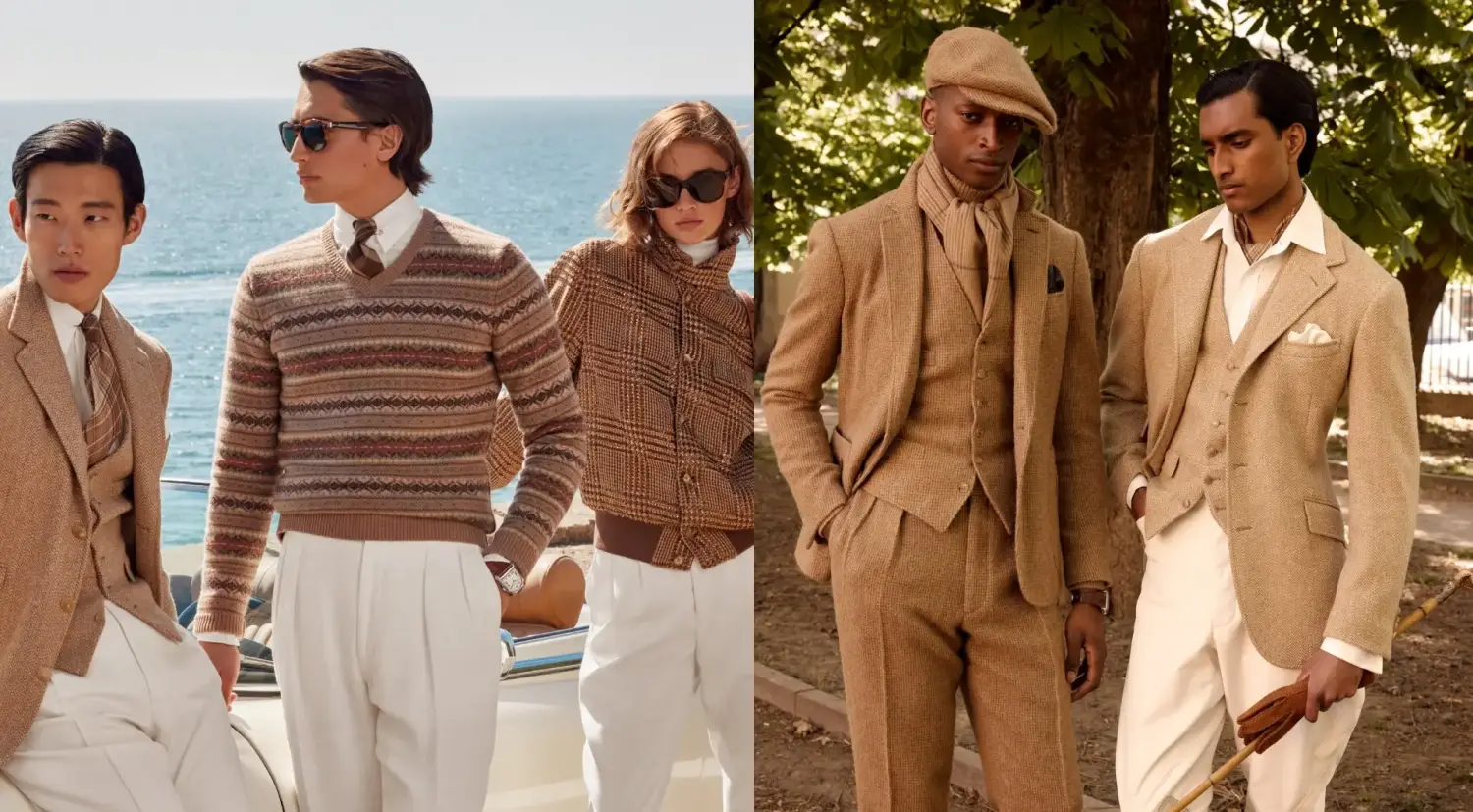
- Classic, timeless pieces (navy blazers, cable-knit sweaters, oxford shirts)
- Neutral color palettes (navy, cream, tan, forest green, burgundy)
- Natural fabrics (cotton, wool, cashmere, linen, silk)
- Preppy staples (polo shirts, khakis, boat shoes, pearls)
- Equestrian and nautical influences (riding boots, striped shirts)
- Minimal logos or branding
- Slightly worn or “broken-in” appearance
- Tailored but not overly fitted
Accessories:
- Inherited jewelry (family heirlooms, signet rings, pearl strands)
- Classic watches (often inherited) rather than flashy timepieces
- Leather goods that improve with age (well-worn briefcases, patina’d belts)
- Minimal, understated bags
- Quality sunglasses without obvious branding
Lifestyle and Environments:
- Historic homes or estates
- Family compounds (especially waterfront or countryside)
- Traditional architecture (Colonial, Georgian, Victorian)
- Antiques and inherited furniture
- Libraries with leather-bound books
- Formal dining rooms
- Gardens and grounds
- Sports facilities (tennis courts, stables)
Activities and Interests:
- Traditional sports (tennis, golf, sailing, horseback riding, polo)
- Cultural pursuits (museum visits, opera, classical music)
- Reading and literary discussion
- Collecting (art, books, wine)
- Maintaining family traditions (annual gatherings, holiday rituals)
- Philanthropy and board memberships
Cultural References: Films like “The Philadelphia Story,” “Gosford Park,” “A Room with a View,” TV shows including “Downton Abbey,” “The Crown,” “Succession” (in part), books such as F. Scott Fitzgerald novels, Edith Wharton works, and prep school and Ivy League settings.
Defining Quiet Luxury
Quiet luxury is a more recent concept that emphasizes extreme quality and craftsmanship without obvious branding or flashiness.
What Is Quiet Luxury?
Quiet luxury (also called stealth wealth) is an approach to consumption and style that prioritizes exceptional quality, craftsmanship, and exclusivity while deliberately avoiding logos, branding, and obvious displays of wealth. It’s characterized by expertly tailored garments, luxurious materials, impeccable craftsmanship, minimal or no visible branding, understated color palettes, and “if you know, you know” exclusivity.
While old money aesthetic draws from historical social classes, quiet luxury is more about contemporary design philosophy and consumption patterns among the ultra-wealthy.
Origins and Rise
Quiet luxury as a defined concept emerged in the 2000s-2010s but gained mainstream recognition in the early 2020s, particularly following the success of HBO’s “Succession” (2018-2023), which showcased the wardrobes of ultra-wealthy characters dressed in expensive but unbranded clothing.
The trend represents a shift from the logo-heavy luxury of the 1990s-2010s (when conspicuous consumption and visible branding dominated) to a more refined approach where true luxury insiders signal status through quality and fit rather than logos.
Core Values of Quiet Luxury
Quality Above All: Emphasis on the finest materials, expert craftsmanship, attention to detail, construction techniques, and durability and longevity.
Discretion and Insider Knowledge: Wealth that doesn’t need to announce itself. Recognition only from those “in the know.” Exclusivity through subtlety rather than branding.
Timelessness: Investment pieces that transcend trends. Classic silhouettes and neutral palettes. Pieces that remain relevant for decades.
Craftsmanship and Artisanship: Appreciation for skilled makers. Understanding of production techniques. Valuing hand-crafted over mass-produced.
Authenticity and Substance: Real luxury rather than aspirational luxury. Substance over surface. Genuine quality rather than status signaling.
Sustainability and Thoughtful Consumption: Buying less but better. Long-term thinking about purchases. Quality reducing need for replacement.
Visual Markers of Quiet Luxury
Fashion:
- Perfectly tailored garments (fit is paramount)
- Luxurious fabrics (cashmere, silk, fine wool, premium cotton)
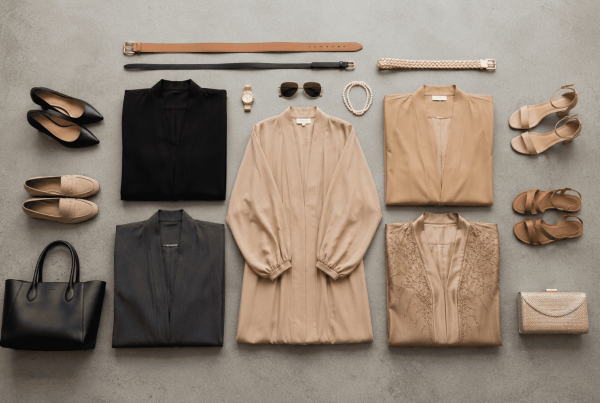
- Neutral color palette (black, navy, white, cream, camel, gray)
- Clean, minimalist silhouettes
- Impeccable construction (French seams, hand-stitching, reinforced stress points)
- No visible logos or branding
- Elevated basics (the perfect white shirt, impeccable trousers)
- Monochromatic or tonal dressing
Key Brands Associated with Quiet Luxury:
- The Row (Mary-Kate and Ashley Olsen’s label—the quintessential quiet luxury brand)
- Loro Piana (Italian luxury known for fabrics and no-logo aesthetic)
- Brunello Cucinelli (Italian brand emphasizing craftsmanship and ethics)
- Bottega Veneta (especially under Daniel Lee’s creative direction)
- Hermès (when worn without obvious logos)
- Jil Sander (minimalist precision)
- Max Mara (especially coats)
- Khaite (American luxury minimalism)
Accessories:
- Leather goods in exceptional quality without logos (Bottega Veneta’s intrecciato weave)
- Simple, elegant watches (understated luxury timepieces)
- Minimal jewelry in precious metals
- Designer pieces recognizable only to insiders
- Shoes with perfect construction and fit
Lifestyle and Environments:
- Modern, minimalist interiors
- High-end contemporary design
- Custom everything (tailored to exact specifications)
- Technology seamlessly integrated
- Invisible luxury (heated floors, sound systems, climate control)
- Art collections (often contemporary)
- Sleek, unbranded everything
Cultural References: “Succession” (particularly Shiv Roy’s wardrobe), Gwyneth Paltrow’s courtroom outfits (viral quiet luxury moment), Sofia Richie Grainge’s wedding aesthetic, Carolyn Bessette-Kennedy (often cited as quiet luxury icon), and the “tomato girl” aesthetic (overlap with quiet luxury).
Key Differences Between Old Money Aesthetic and Quiet Luxury
While these concepts overlap significantly, several crucial differences distinguish them.
1. Historical vs. Contemporary
Old Money Aesthetic:
- Rooted in historical social classes and generational wealth
- References specific cultural traditions (WASP culture, European aristocracy)
- Looks backward to established conventions
- Tied to specific geographic and cultural contexts
Quiet Luxury:
- Contemporary approach to luxury consumption
- Not necessarily tied to historical wealth or social class
- Future-focused in design sensibility
- More globally applicable and culturally flexible
The Difference: Old money aesthetic is inherently nostalgic and tradition-bound, while quiet luxury is modern and forward-looking.
2. Social Class vs. Design Philosophy
Old Money Aesthetic:
- Fundamentally about social class and inherited status
- Signaling membership in exclusive social circles
- Emphasis on lineage, heritage, and “breeding”
- Access determined by birth and connections
Quiet Luxury:
- Primarily a design and consumption philosophy
- About taste and discernment rather than background
- Theoretically accessible to anyone with resources
- Merit-based (appreciating quality) rather than birth-based
The Difference: Old money is about who you are (your family and background), while quiet luxury is about what you choose (your taste and consumption).
3. Tradition vs. Minimalism
Old Money Aesthetic:
- Embraces traditional elements (patterns like plaid, stripes, argyle)
- Includes decorative elements (monograms, family crests, classic prints)
- Mixes old and new (heirlooms with contemporary pieces)
- Comfortable with maximalism in some contexts (wallpapered rooms, pattern mixing)
Quiet Luxury:
- Strictly minimalist aesthetic
- Rejects ornamentation and decoration
- Clean lines and simple silhouettes
- Monochromatic and neutral palettes
- Contemporary design language
The Difference: Old money can be busy, patterned, and traditional; quiet luxury is always streamlined and minimal.
4. Heritage Items vs. New Purchases
Old Money Aesthetic:
- Values inherited possessions highly
- Heirlooms carry emotional and historical significance
- “Broken-in” quality is desirable
- Pride in items that have been in the family for generations
- Patina and wear indicate authenticity
Quiet Luxury:
- Focuses on new, impeccably made items
- Pristine condition is ideal
- Contemporary craftsmanship rather than vintage
- Fresh, clean aesthetic
- Perfect construction and finish
The Difference: Old money treasures the worn and inherited; quiet luxury prefers the new and pristine.
5. Cultural Specificity vs. Universality
Old Money Aesthetic:
- Strongly associated with Anglo-American and European cultures
- References specific cultural traditions (prep schools, country clubs, estates)
- Includes culturally specific markers (family compounds, coming-out balls, hunt clubs)
- Geographic anchors (Newport, the Hamptons, Palm Beach, English countryside)
Quiet Luxury:
- More culturally universal and globally applicable
- Not tied to specific cultural traditions
- Can be adapted to any cultural context
- Appeals to global elite without cultural specificity
The Difference: Old money is culturally specific; quiet luxury is globally generic.
6. Social Activities vs. Pure Aesthetics
Old Money Aesthetic:
- Includes specific social activities and rituals (regattas, polo matches, charity galas)
- Membership in exclusive clubs and institutions
- Social calendar of traditional events
- Emphasis on community and social connections
Quiet Luxury:
- Primarily visual and material
- Less about specific activities or social structures
- Can be entirely personal and private
- No required social component
The Difference: Old money involves social participation; quiet luxury can be solitary.
7. Acceptable Branding
Old Money Aesthetic:
- Certain heritage brands are acceptable and even expected (Ralph Lauren, Brooks Brothers, Burberry in moderation)
- Small, tasteful logos on specific items (polo player, tiny alligator)
- Brand loyalty to established houses
- Some branding signals appropriate taste
Quiet Luxury:
- Strictly no visible logos or branding
- Brand recognition should come from insiders’ knowledge of cut, fabric, or construction
- Rejection of any obvious labeling
- “If you have to ask, you can’t afford it” mentality
The Difference: Old money accepts subtle heritage branding; quiet luxury rejects all visible logos.
8. Price Point Reality
Old Money Aesthetic:
- Can be achieved at various price points
- High-low mixing is acceptable and authentic (worn Levi’s with cashmere)
- Thrifted and vintage pieces fit the aesthetic
- Some items are intentionally basic or inexpensive
- Cost-per-wear thinking
Quiet Luxury:
- Inherently expensive (true quiet luxury pieces cost thousands)
- Democratized versions miss the point (it’s about actual quality)
- Cannot be “duped” effectively
- Accessible aesthetic but inaccessible reality
The Difference: Old money aesthetic is theoretically achievable on a budget; authentic quiet luxury requires significant wealth.
Overlaps and Similarities
Despite their differences, old money aesthetic and quiet luxury share significant common ground.
Shared Characteristics
Rejection of Ostentation: Both aesthetics avoid flashiness, loud logos, and obvious wealth displays. The underlying philosophy is “wealth whispers.”
Quality and Craftsmanship: Both prioritize well-made items over trendy pieces. Investment in quality is central to both approaches.
Neutral Color Palettes: Navy, cream, tan, black, white, and gray dominate both aesthetics. Bright colors and bold patterns are generally avoided.
Timelessness Over Trends: Neither aesthetic chases fast fashion. Both value pieces that remain relevant across seasons and years.
Natural Fabrics: Cotton, wool, cashmere, linen, and silk are preferred in both aesthetics. Synthetic materials are generally avoided.
Understated Elegance: Sophistication through subtlety rather than spectacle. Refinement comes from restraint.
Tailoring and Fit: Proper fit is essential to both aesthetics. Off-the-rack items should be tailored for perfect fit.
Insider Recognition: Both rely on recognition from those “in the know” rather than mass appeal. Status is signaled to those who can read the codes.
Why They’re Often Confused
The significant overlap in visual presentation makes them easy to conflate. Both appear understated, refined, and expensive. Both reject logo-heavy fashion and obvious displays of wealth. Both emphasize quality fabrics and neutral colors. Both appeal to similar demographics (educated, affluent, culturally sophisticated).
From a distance, someone dressed in old money aesthetic and someone in quiet luxury might look nearly identical. The differences become apparent in the details, context, and cultural associations.
Who Embodies Each Aesthetic?
Looking at real-world examples helps clarify the distinction.
Old Money Aesthetic Icons
Historical Figures:
- Jacqueline Kennedy Onassis (patrician elegance, cultural refinement)
- Princess Diana (aristocratic heritage mixed with modernity)
- Carolyn Bessette-Kennedy (preppy minimalism)
- Grace Kelly (American old money marrying European royalty)
Contemporary Examples:
- Kate Middleton (British royal family, traditional aesthetic)
- The Kennedys (quintessential American old money)
- European aristocracy (various counts, dukes, and titled families)
- Prep school and Ivy League culture influencers
Fictional Characters:
- The Roy family from “Succession” (though with significant overlap with quiet luxury)
- The Crawley family from “Downton Abbey”
- Characters from Gossip Girl (Upper East Side old money)
- Various characters from Jane Austen and Edith Wharton novels
Quiet Luxury Icons
Real People:
- Sofia Richie Grainge (especially her wedding aesthetic)
- Gwyneth Paltrow (particularly her viral courtroom looks)
- Mary-Kate and Ashley Olsen (founders of The Row)
- Amal Clooney (polished, logo-less sophistication)
- Zendaya (in certain styling moments)
Fictional Characters:
- Shiv Roy from “Succession” (the ultimate quiet luxury wardrobe)
- Kendall Roy from “Succession” (minimalist, expensive basics)
- Tom Wambsgans from “Succession” (aspiring to quiet luxury)
Fashion Insiders:
- Phoebe Philo (designer who defined modern luxury minimalism)
- Jil Sander (pioneer of luxury minimalism)
- The Row designers (Mary-Kate and Ashley Olsen)
How to Incorporate Old Money Aesthetic
If you’re drawn to old money aesthetic, here’s how to authentically incorporate it.
Fashion Essentials
Build Your Foundation:
- Navy blazer (brass buttons optional)
- White oxford button-down shirts
- Cable-knit sweaters (cream, navy)
- Cashmere sweaters in classic colors
- Khaki or tan chinos
- Dark wash jeans (not distressed)
- White or navy polo shirts
- Striped shirts (Breton, Oxford stripe)
- Trench coat or classic wool coat
Add Prep Staples:
- Boat shoes or loafers
- Riding boots or ankle boots
- Tennis whites
- Equestrian-inspired pieces
- Nautical elements (anchor motifs, rope details)
Accessories:
- Pearl necklace or earrings
- Simple gold or silver jewelry
- Leather watch with classic face
- Leather belt
- Minimal handbag (structured leather)
- Silk scarf
Color Palette
Stick to traditional old money colors: navy (the foundation), white and cream, tan and camel, forest green, burgundy and wine, gray, pastels (powder blue, pale pink, mint), black (less common, more for evening).
Patterns can include thin stripes, plaid (especially tartan), argyle, houndstooth, and small florals.
Shopping Strategy
Invest in Heritage Brands:
- Ralph Lauren (especially Purple Label, Polo Ralph Lauren)
- Brooks Brothers
- J.Crew (for accessible preppy basics)
- L.L.Bean (for outdoor and casual items)
- Barbour (for outerwear)
- Sperry (boat shoes)
- Vineyard Vines (preppy casual)
Embrace Vintage and Thrift: Old money aesthetic actually works better with some worn items. Vintage blazers, inherited jewelry, and thrifted oxford shirts add authenticity.
Buy Quality Basics: Focus on well-made basics rather than trendy pieces. One excellent cashmere sweater beats five cheap ones.
Lifestyle Elements
Cultural Engagement:
- Visit museums and galleries
- Attend classical music performances
- Read classic literature
- Learn about art history and wine
- Develop refined tastes
Traditional Activities:
- Take up tennis, golf, or sailing
- Learn horseback riding
- Join a book club
- Volunteer for cultural institutions
- Support local philanthropy
Home and Environment:
- Incorporate antiques or vintage items
- Display books (actual books you read)
- Use traditional decor elements
- Create cozy, lived-in spaces
- Mix old and new thoughtfully
Mindset and Values
Remember that old money aesthetic is about more than clothing. It’s about cultivating refinement, appreciating heritage and history, valuing education and culture, practicing discretion and modesty, investing in quality and longevity, and maintaining timeless personal style.
How to Incorporate Quiet Luxury
If quiet luxury resonates more with you, here’s your approach.
Fashion Essentials
Build a Capsule of Perfection:
- The perfect white button-down shirt (impeccably tailored)
- Black trousers with perfect drape and fit
- Cashmere crewneck sweater (black, navy, or camel)
- Tailored black blazer
- High-quality jeans in dark wash
- Classic white t-shirt in premium cotton
- Simple slip dress in silk
- Perfectly cut trench coat
Focus on Fit: Every piece should fit like it was made for you. Invest heavily in tailoring. Off-the-rack should be starting point, not endpoint.
Color Palette
Quiet luxury is strictly neutral: black, white, cream and ivory, camel and tan, navy, charcoal gray, greige (gray-beige), and occasionally deep brown.
Avoid patterns almost entirely. When used, keep them subtle (tonal, barely-there texture).
Shopping Strategy
Invest in Key Brands:
- The Row (if budget allows)
- Loro Piana (especially fabrics)
- Brunello Cucinelli
- Max Mara (coats)
- Khaite
- Bottega Veneta (leather goods)
- Jil Sander
- COS (affordable accessible option)
Accessible Alternatives:
- Everlane (quality basics)
- Cuyana (fewer, better things philosophy)
- Jenni Kayne (California quiet luxury)
- Vince (elevated basics)
- Theory (tailored minimalism)
Prioritize These Investments:
- One perfect coat
- Perfectly tailored trousers
- Exceptional leather bag
- Quality cashmere sweaters
- White shirts that fit flawlessly
Quality Indicators
Learn to recognize true quality:
- Fabric weight and hand-feel
- Stitching (small, even, tight)
- Seam construction (French seams, flat-felled seams)
- Button quality and attachment
- Lining materials and construction
- Drape and movement
- Finishing details
Lifestyle Elements
Streamline and Simplify:
- Declutter your space
- Invest in quality over quantity
- Choose timeless over trendy
- Curate rather than accumulate
Develop Educated Eye:
- Learn about fabrics and construction
- Understand what makes quality
- Study design and craftsmanship
- Appreciate subtle details
Mindful Consumption:
- Buy less, buy better
- Think long-term about purchases
- Consider cost-per-wear
- Repair rather than replace
Mindset and Values
Quiet luxury is about appreciating true quality, understanding craftsmanship, valuing substance over appearance, practicing discretion, investing in longevity, and developing refined, educated taste.
The “Dupes” Debate
Both aesthetics have spawned entire industries of affordable alternatives and “dupes,” raising questions about authenticity.
Can You Achieve These Aesthetics on a Budget?
Old Money Aesthetic: More achievable at accessible price points because it values inherited/vintage items, accepts high-low mixing, focuses on classic basics available at many price points, and emphasizes “broken-in” quality (vintage works perfectly). Thrift stores, vintage shops, and accessible brands (J.Crew, Uniqlo, Everlane) can provide authentic old money aesthetic pieces.
Quiet Luxury: Much harder to achieve affordably because it’s fundamentally about actual quality and craftsmanship, not just the look. You can’t “dupe” hand-stitched seams or premium cashmere. “Quiet luxury aesthetic” (the look) is different from actual quiet luxury (the reality). Accessible brands (COS, Everlane, Uniqlo) can approximate the aesthetic but not the actual quality that defines true quiet luxury.
The Instagram Effect
Social media has democratized the visual appearance of both aesthetics, creating “affordable old money aesthetic” and “quiet luxury on a budget” content. This raises philosophical questions: If the aesthetic is about actual quality and heritage, can you achieve it with budget alternatives? Or is approximating the look while missing the substance antithetical to the values?
Different perspectives exist. Optimistic view: democratization allows more people to explore refined aesthetics and develop good taste. Cynical view: it reduces meaningful concepts to superficial trends divorced from their actual values. Practical view: do what works for your budget while aspiring to quality when possible.
Criticisms and Controversies
Both aesthetics face legitimate criticisms.
Elitism and Exclusivity
The Criticism: Both aesthetics are inherently elitist, based on wealth (inherited or earned). They create insider/outsider dynamics. They can be exclusionary and snobbish. They romanticize class inequality.
The Response: Appreciating quality and refinement doesn’t require elitism. These can be aspirational rather than exclusionary. Understanding aesthetics helps navigate culture even if you can’t fully participate.
Cultural Appropriation and Homogeneity
The Criticism: Old money aesthetic specifically romanticizes historically exclusive (often racist, sexist, classist) social structures. Both aesthetics center white, Western, upper-class perspectives. They can erase cultural diversity in fashion. They may appropriate aspects of WASP or European culture without acknowledging problematic histories.
The Response: These aesthetics can be adapted and reinterpreted culturally. Appreciation of craftsmanship and quality transcends specific cultural origins. Modern interpretations can be more inclusive than historical realities.
Sustainability Questions
The Criticism: Quiet luxury’s emphasis on new, pristine items contradicts sustainability. Old money’s consumption (even if slower) still involves privilege. Both can encourage consumption, just in different ways.
The Response: Both actually promote sustainability through quality and longevity. Buying fewer, better things reduces waste. Repairing and maintaining aligns with sustainable values. These approaches are more sustainable than fast fashion.
Performative Aesthetics
The Criticism: Social media has turned these into shallow, performative trends. People adopt the look without the values. It becomes about appearing wealthy rather than actual quality or heritage. The substance is lost in the aesthetic performance.
The Response: Aesthetic exploration can lead to deeper appreciation. Starting with appearance can develop into genuine interest in quality, craft, and culture. Even “performance” can have value in developing taste.
The Future of Old Money Aesthetic and Quiet Luxury
As we move deeper into the 2020s, both aesthetics continue evolving.
Current Trends
Old Money Aesthetic:
- Growing interest on TikTok and Instagram
- Younger generations romanticizing pre-digital lifestyles
- Resurgence of prep and Ivy style
- Vintage and thrifting alignment
- “Coastal grandmother” (related aesthetic) gaining popularity
Quiet Luxury:
- “Succession” influence continuing post-finale
- Celebrity adoption increasing visibility
- Brands doubling down on no-logo designs
- Quiet luxury becoming more mainstream (potentially contradictory)
- “Stealth wealth” as economic signaling during uncertain times
Potential Evolutions
Merging and Hybridization: The two aesthetics may continue blending, creating new hybrid approaches that combine old money heritage elements with quiet luxury minimalism.
Diversification: More culturally diverse interpretations beyond Anglo-American and European frameworks. Quiet luxury and old money concepts adapted to different cultural contexts.
Sustainability Focus: Both aesthetics emphasizing sustainability, quality, and longevity more explicitly. Marketing around anti-fast-fashion positioning.
Democratization vs. Gatekeeping: Tension between making these aesthetics accessible and maintaining their exclusive nature. Affordable versions making the look accessible while purists insist on actual quality and heritage.
Post-Logo Luxury: Continued movement away from obvious branding across luxury industry. More brands adopting “quiet luxury” approaches. The next evolution beyond minimalism.
Lasting Impact
Regardless of how these specific trends evolve, they’ve already influenced fashion toward quality over quantity, timelessness over trends, discretion over ostentation, craftsmanship appreciation, and thoughtful consumption.
These values are likely to persist even as the specific aesthetics transform.
Which Aesthetic Is Right for You?
Choosing between old money aesthetic and quiet luxury (or neither, or both!) is personal.
Choose Old Money Aesthetic If You:
- Appreciate tradition and heritage
- Love vintage and inherited items
- Enjoy cultural activities (museums, classical music)
- Prefer slightly more decorative style (patterns, details)
- Value the “broken-in” aesthetic
- Want an achievable look at various price points
- Enjoy mixing old and new
- Appreciate preppy style
Choose Quiet Luxury If You:
- Prefer strict minimalism
- Value pristine, new, perfectly-made items
- Can invest in genuine quality pieces
- Appreciate modern design
- Want absolute simplicity in style
- Enjoy insider knowledge of brands and quality
- Prefer monochromatic, neutral aesthetics
- Value cutting-edge craftsmanship
Or Combine Both By:
- Investing in quality basics (quiet luxury) while incorporating heritage items (old money)
- Maintaining minimal silhouettes (quiet luxury) in traditional colors and fabrics (old money)
- Valuing both pristine craftsmanship and worn-in authenticity
- Appreciating both modern design and historical tradition
- Focusing on quality and discretion (shared by both)
Or Reject Both By:
Remember: these are aesthetic trends, not mandatory approaches. You might prefer maximalism and bold colors, logos and brand display, trendy fast fashion, eclectic personal style, or completely different cultural aesthetics.
The best style is one that makes you feel confident and authentic.
Conclusion
Old money aesthetic and quiet luxury, while often conflated, represent distinct approaches to wealth, style, and consumption. Old money aesthetic draws from historical social classes and generational wealth, emphasizing heritage, tradition, and cultural cultivation. Quiet luxury focuses on contemporary craftsmanship and design philosophy, prioritizing quality, minimalism, and insider knowledge. Old money can incorporate patterns, inherited items, and “broken-in” charm. Quiet luxury demands pristine, perfectly tailored, logo-free simplicity.
Yet they share crucial values: rejection of ostentation and flashiness, emphasis on quality and craftsmanship, neutral color palettes, timelessness over trends, and discretion in displaying wealth.
Understanding the distinction helps you navigate luxury fashion and lifestyle content more critically, make more informed style choices, appreciate the nuances of each aesthetic, and decide which (if any) resonates with your values and preferences.
Whether you’re drawn to the patrician traditions of old money, the minimalist perfection of quiet luxury, a hybrid approach combining both, or neither, the most important thing is developing your own authentic style that reflects your values, fits your life, and makes you feel confident.
In the end, both aesthetics remind us that true style comes not from logos or trends, but from quality, discernment, and the confidence to know what works for you—even if (or especially if) no one else notices.
Key Takeaways:
- Old money aesthetic = heritage, tradition, social class, timeless prep
- Quiet luxury = craftsmanship, minimalism, quality, contemporary design
- Both reject flashiness and prioritize quality
- Old money more achievable on a budget; quiet luxury requires investment
- Neither is “better”—choose based on your values and style preferences
- Most authentic approach: develop your own refined taste regardless of labels