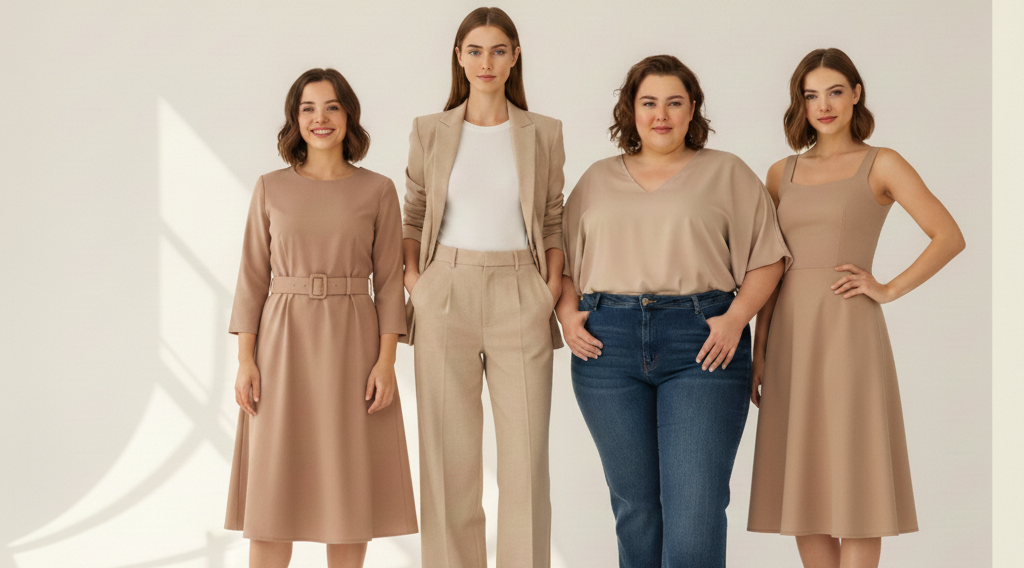
Finding clothes that make you look and feel amazing isn’t about following fleeting trends or forcing yourself into a particular style—it’s about understanding your unique body shape and choosing pieces that enhance your natural proportions. When you know how to dress for your body type, shopping becomes easier, getting dressed feels effortless, and your confidence soars.
But with so much conflicting fashion advice out there, how do you actually determine your body type? And once you know it, what should you wear (and avoid)? This comprehensive guide breaks down everything you need to know about dressing for your body type, from identifying your shape to building a wardrobe that flatters your figure perfectly.
Whether you’re a pear, apple, hourglass, rectangle, inverted triangle, or any shape in between, this guide provides practical, actionable advice for creating a wardrobe that celebrates your body exactly as it is.
Understanding Body Types: The Foundation
Before diving into specific recommendations, let’s establish what body types are and why they matter for fashion.
What Are Body Types?
Body types (also called body shapes or figure types) are categories that describe how your body proportions are distributed. They’re determined by the relationship between your shoulders, bust, waist, and hips, as well as where you tend to carry weight.
It’s important to understand that body types are descriptive tools, not judgments. No body type is better or worse than another—they’re simply different. The goal of understanding body types is to help you make informed clothing choices that create balance, proportion, and silhouettes that make you feel confident.
Why Dressing for Your Body Type Matters
Understanding your body type helps you choose clothes that create visual balance and proportion, enhance your favorite features, create the silhouette you prefer, save time and money by avoiding pieces that don’t work for your shape, build a cohesive, versatile wardrobe, and feel confident in your clothing choices.
When you dress for your body type, you’re not trying to change your shape—you’re celebrating it by choosing clothes that work with your proportions rather than against them.
Important Principles to Remember
Before we explore specific body types, keep these principles in mind:
Body types are guidelines, not rules. Fashion should be fun and personal. These recommendations are starting points, not rigid requirements. Wear what makes you feel good.
Bodies are diverse and complex. You might find you’re a combination of two body types, or that you don’t fit perfectly into any category. That’s completely normal and fine.
Your body type may change. Weight fluctuations, pregnancy, aging, and fitness can alter your proportions. Your style can evolve accordingly.
Personal style matters more than “rules.” If you love something that’s supposedly “wrong” for your body type, wear it anyway. Confidence is the best accessory.
All bodies are good bodies. The purpose of dressing for your body type is to feel confident and comfortable, not to “fix” or “hide” your body.
How to Determine Your Body Type
Identifying your body type involves assessing your proportions and where you naturally carry weight.
Measurement Method
The most accurate way to determine your body type is through measurements.
What You’ll Need:
- Flexible measuring tape
- Mirror
- Honest assessment (or a friend to help)
How to Measure:
- Shoulders: Measure across your back from one shoulder point to the other, or measure around the fullest part of your shoulders.
- Bust: Measure around the fullest part of your chest, keeping the tape parallel to the floor.
- Waist: Measure around the narrowest part of your natural waistline (usually about an inch above your belly button).
- Hips: Measure around the fullest part of your hips and buttocks, keeping the tape parallel to the floor.
Compare Your Measurements: Once you have these numbers, compare them to identify your general proportions. Which measurement is largest? Which is smallest? Are any measurements very similar?
Visual Assessment Method
You can also determine your body type by looking at your silhouette in a mirror.
Stand in front of a full-length mirror wearing fitted clothing or form-fitting undergarments. Look at your overall silhouette and ask:
- Where is my body widest? (Shoulders, bust, hips?)
- Where is my body narrowest? (Waist, hips?)
- Are my shoulders and hips roughly the same width, or is one noticeably wider?
- Do I have a defined waist, or is my torso relatively straight up and down?
- Where do I tend to gain weight first?
Common Body Types Explained
Based on your measurements and visual assessment, you likely fit into one of these primary body types:
Pear (Triangle): Hips wider than shoulders and bust, defined waist, weight carried in hips, thighs, and buttocks, smaller upper body proportionally
Apple (Round or Oval): Weight carried around the midsection, fuller bust, less defined waist, shoulders and hips relatively similar width, slimmer legs proportionally
Hourglass: Shoulders and hips roughly equal width, significantly defined waist (at least 9-10 inches smaller than hips/bust), curves in both upper and lower body, balanced proportions
Rectangle (Straight or Athletic): Shoulders, waist, and hips similar measurements, less defined waist, balanced proportions, weight distributed relatively evenly, straight up-and-down silhouette
Inverted Triangle: Shoulders and bust wider than hips, narrower lower body, athletic build, weight carried in upper body, shoulders, and arms
We’ll explore each of these in detail with specific styling recommendations.
The Pear Body Type (Triangle)
If your hips are wider than your shoulders and bust, with a defined waist, you have a pear-shaped body.
Characteristics
The pear body type typically features a smaller, narrower upper body (shoulders, bust, arms), defined waistline, fuller hips, thighs, and buttocks, weight gain primarily in lower body, and proportionally slimmer legs below the knees.
Celebrities with pear shapes include Beyoncé, Jennifer Lopez, Shakira, and Rihanna.
Styling Goals
For pear shapes, the main objectives are to balance proportions by adding visual interest to the upper body, draw attention to your waist and upper body, create a proportional look between top and bottom, and celebrate your curves while creating overall balance.
Best Clothing Choices
Tops:
- Boat necks and wide necklines (draw eyes horizontally across shoulders)
- Off-shoulder and cold-shoulder styles (broaden upper body visually)
- Embellished, patterned, or bright-colored tops (create upper body focus)
- Structured shoulders (shoulder pads, cap sleeves, puff sleeves)
- V-necks and sweetheart necklines (elongate and flatter)
- Tops with horizontal stripes on top
- Statement sleeves (bell sleeves, ruffles, volume)
Bottoms:
- Dark-colored pants and skirts (create a slimming effect)
- Straight-leg or bootcut pants (balance hips)
- Wide-leg trousers (create proportional silhouette)
- A-line skirts (skim over hips gracefully)
- High-waisted styles (define waist)
- Flat-front pants (avoid adding bulk to hips)
- Structured fabrics that hold their shape
Dresses:
- A-line silhouettes (the most flattering for pear shapes)
- Fit-and-flare dresses (emphasize waist, skim hips)
- Empire waist dresses (draw attention upward)
- Wrap dresses with defined waist
- Dresses with embellished or detailed tops
- Dark bottoms with lighter or patterned tops
Jackets and Outerwear:
- Jackets that end at the waist or above the fullest part of your hips
- Structured blazers with shoulder details
- Cropped jackets
- Jackets with embellishments on shoulders or lapels
- Belted styles that define the waist
Accessories:
- Statement necklaces (draw eyes to face and décolletage)
- Scarves and shawls (add volume to upper body)
- Bold earrings
- Structured handbags carried on the arm (not at hip level)
What to Avoid or Wear Carefully
Be Cautious With:
- Skinny jeans without an elongating top (can emphasize hip-to-shoulder disproportion)
- Cargo pants or styles with hip pockets (add bulk where you’re already fuller)
- Extremely tight pencil skirts (can cling uncomfortably)
- Horizontal stripes on bottom half
- Light-colored or embellished pants
- Tops that end at the widest part of your hips
- Spaghetti straps or very narrow necklines (can make shoulders look narrower)
Note: These are suggestions, not hard rules. If you love skinny jeans, wear them! Balance with a longer top or tunic.
Styling Examples
Casual Look: Dark bootcut jeans, bright off-shoulder top, statement earrings, wedge sandals
Work Look: Black straight-leg trousers, structured white blouse with shoulder details, tailored blazer ending at waist, pointed-toe heels
Evening Look: A-line dress with embellished bodice, fitted through waist with flowing skirt, statement necklace, strappy heels
Weekend Look: Dark wide-leg pants, striped boat-neck top, structured tote bag, ballet flats
The Apple Body Type (Round or Oval)
If you carry weight around your midsection with a fuller bust and less defined waist, you have an apple-shaped body.
Characteristics
The apple body type typically features a fuller bust and broader shoulders, weight carried in midsection and torso, less defined waistline, slimmer hips and legs proportionally, and often great legs (a major asset!).
Celebrities with apple shapes include Drew Barrymore, Queen Latifah, Rebel Wilson, and Adele.
Styling Goals
For apple shapes, focus on creating waist definition (even if subtle), drawing attention to your legs and décolletage, elongating your torso, creating vertical lines that lengthen, and balancing proportions by adding volume to lower body.
Best Clothing Choices
Tops:
- V-necks and scoop necks (elongate torso, draw attention to décolletage)
- Wrap tops (create waist definition)
- Empire waist tops (define waist just under bust)
- Tunics that skim over midsection
- Structured fabrics that don’t cling
- Vertical details (vertical stripes, button plackets, long necklaces)
- Three-quarter or long sleeves (generally more flattering than cap sleeves)
- Tops that end just below the fullest part of your stomach or at hip level
Bottoms:
- Fitted pants that show off your legs
- Bootcut or flared pants (create balance)
- High-waisted styles (provide support and structure)
- Slightly tapered or straight-leg cuts
- Skirts with volume (A-line, pleated, flared)
- Bold patterns or lighter colors on bottom (balance torso)
- Defined waistbands
Dresses:
- Empire waist dresses (most universally flattering)
- Wrap dresses (create waist definition)
- A-line silhouettes (skim over midsection)
- Fit-and-flare styles
- Dresses with vertical details or colorblocking
- Knee-length or just-above-knee hemlines (show off legs)
- Structured fabrics that hold their shape
Jackets and Outerwear:
- Long cardigans that create vertical lines
- Open-front jackets (create elongating vertical lines)
- Single-breasted blazers (avoid double-breasted which adds bulk)
- Jackets that are slightly longer, ending at hip or upper thigh
- Structured shoulders
- Avoid jackets that button or cinch at the waist
Accessories:
- Long necklaces (create vertical lines)
- Statement earrings (draw attention to face)
- Scarves worn long and draped (vertical interest)
- Belts worn loosely for definition, not tightly cinched
- Handbags that don’t hit at waist level
What to Avoid or Wear Carefully
Be Cautious With:
- Clingy, thin fabrics around midsection
- Tops that end at the fullest part of your stomach
- Horizontal stripes across torso
- Belts worn tightly at natural waist (can emphasize lack of definition)
- Boxy, shapeless tops (can make you look larger)
- High necklines that shorten the torso
- Tapered pants without balance on top
- Crop tops or midriff-baring styles
Styling Examples
Casual Look: Dark straight-leg jeans, flowing V-neck tunic, long pendant necklace, ankle boots
Work Look: High-waisted A-line skirt in bold color, structured blouse with V-neck, long cardigan, pointed-toe flats
Evening Look: Empire waist maxi dress with detailed neckline, strappy heels, statement earrings
Weekend Look: Fitted cropped pants, longer tunic-style top with vertical stripes, sneakers, crossbody bag
The Hourglass Body Type
If your shoulders and hips are roughly equal width with a significantly defined waist, you have an hourglass figure.
Characteristics
The hourglass body type features shoulders and hips of similar width, defined waist (typically 9+ inches smaller than bust/hips), balanced curves in upper and lower body, proportional weight distribution, and curves that are your defining feature.
Celebrities with hourglass shapes include Marilyn Monroe, Salma Hayek, Sofia Vergara, and Christina Hendricks.
Styling Goals
For hourglass figures, emphasize your defined waist, maintain the balance between top and bottom, choose fitted (not tight) clothing that follows your curves, avoid adding bulk or hiding your waist, and celebrate your proportions.
Best Clothing Choices
Tops:
- Fitted tops that follow your curves
- Wrap tops (emphasize waist)
- V-necks and scoop necks (flatter the bust)
- Peplum styles (emphasize waist, add interest)
- Belted styles
- Three-quarter sleeves (elegant and proportional)
- Structured fabrics that maintain shape
Bottoms:
- Pencil skirts (show off curves)
- High-waisted pants and skirts (define waist)
- Bootcut or straight-leg pants
- A-line skirts (classic and flattering)
- Fitted through hip with slight flare
- Avoid overly loose or baggy styles
Dresses:
- Wrap dresses (the hourglass uniform!)
- Fit-and-flare dresses
- Bodycon dresses (if you’re comfortable showing curves)
- Belted or defined-waist styles
- Sheath dresses
- Mermaid or fit-and-flare silhouettes
- Any dress that cinches at the waist
Jackets and Outerwear:
- Belted jackets and coats
- Fitted blazers that nip in at the waist
- Structured jackets that follow your shape
- Avoid boxy or oversized styles that hide your waist
- Jackets that end at the waist or hip
Accessories:
- Belts! Wide, medium, or thin—emphasize that waist
- Wrap scarves that can be tied to create waist definition
- Proportional accessories (not too large or too small)
- Structured handbags
What to Avoid or Wear Carefully
Be Cautious With:
- Shapeless, boxy clothing (hides your best feature—your waist)
- Overly baggy or loose fits (can make you look larger)
- High necklines paired with pencil skirts (can be matronly)
- Drop-waist styles (completely contrary to your natural shape)
- Horizontal stripes across the widest parts
- Excessive layering that adds bulk
- Anything that conceals your waist
Styling Examples
Casual Look: High-waisted jeans, fitted V-neck tee, wide belt, ankle boots, structured crossbody bag
Work Look: Pencil skirt, fitted blouse tucked in, tailored blazer with waist definition, heels
Evening Look: Wrap dress in bold color or print, strappy heels, clutch, statement earrings
Weekend Look: Fit-and-flare dress, denim jacket (can be belted), sneakers or sandals
The Rectangle Body Type (Straight or Athletic)
If your shoulders, waist, and hips are similar measurements with minimal waist definition, you have a rectangle body type.
Characteristics
The rectangle body type features shoulders, waist, and hips of similar width, minimal waist definition, straight up-and-down silhouette, athletic or boyish build, even weight distribution, and often slender overall appearance.
Celebrities with rectangle shapes include Cameron Diaz, Anne Hathaway, Natalie Portman, and Keira Knightley.
Styling Goals
For rectangle shapes, create the illusion of curves and waist definition, add dimension to your silhouette, break up the vertical line of your torso, maintain proportion, and create visual interest at the waist.
Best Clothing Choices
Tops:
- Peplum tops (create waist definition and hip curves)
- Belted tops
- Tops with horizontal details at bust or hip
- Ruffles and volume (add curves)
- Embellishments and textures (create dimension)
- Layered looks (add visual interest)
- Cropped tops (if comfortable—great for showing a toned midriff)
Bottoms:
- Pants with details at the hips (pockets, pleats, patterns)
- Wide-leg trousers (create curves at hip)
- Bootcut or flared pants (add volume to lower body)
- Skirts with volume (pleated, A-line, tiered)
- Low-rise or mid-rise pants (can be more flattering than high-rise)
- Textured or patterned bottoms
Dresses:
- Fit-and-flare dresses (create curves)
- Drop-waist styles (can work well on rectangles)
- Tiered or ruffled dresses (add dimension)
- Colorblocking dresses (create visual curves)
- Shift dresses (work with your natural shape)
- Belted dresses (create waist definition)
Jackets and Outerwear:
- Belted jackets and coats (cinch at waist to create definition)
- Peplum jackets
- Cropped jackets
- Jackets with waist details or panels
- Structured pieces that nip in at waist
- Avoid completely straight, boxy cuts
Accessories:
- Belts are your best friend! Wear them over dresses, cardigans, coats
- Wide or medium-width belts (create waist definition)
- Hip belts (worn low, create curves)
- Statement jewelry (creates visual interest)
What to Avoid or Wear Carefully
Be Cautious With:
- Completely shapeless, straight silhouettes (accentuate lack of curves)
- Empire waists (can make you look pregnant)
- Very long, straight tunics without definition
- Column dresses without belts or structure
- Overly simple, unadorned styles
- Too many vertical lines without horizontal breaks
Styling Examples
Casual Look: Bootcut jeans with embellished pockets, fitted tee, belted cardigan, boots
Work Look: Wide-leg trousers, peplum blouse, structured blazer, heels, statement necklace
Evening Look: Fit-and-flare dress with belt at waist, clutch, heels, chandelier earrings
Weekend Look: Flowy tiered skirt, crop top (or fitted tee tucked in), sandals, hip belt
The Inverted Triangle Body Type
If your shoulders and bust are broader than your hips, you have an inverted triangle body type.
Characteristics
The inverted triangle body type features shoulders wider than hips, fuller bust and broader back, athletic upper body, narrower hips and slimmer legs, weight carried in upper body (shoulders, arms, bust), and often great legs.
Celebrities with inverted triangle shapes include Renée Zellweger, Naomi Campbell, Demi Moore, and Angelina Jolie.
Styling Goals
For inverted triangles, balance proportions by minimizing broad shoulders, add volume and interest to lower body, create waist definition, draw attention downward, and show off your great legs.
Best Clothing Choices
Tops:
- V-necks (minimize broad shoulders, elongate)
- Scoop necks and U-necks
- Wrap tops (create waist definition)
- Dark or solid colors on top
- Minimal shoulder details (avoid shoulder pads, epaulettes)
- Raglan sleeves (soften shoulder line)
- Halter tops (elongate neck and minimize shoulders)
- Vertical details (stripes, seams, buttons)
Bottoms:
- Wide-leg pants (balance shoulders)
- Bootcut or flared pants
- Brightly colored or patterned bottoms
- Skirts with volume (A-line, pleated, full)
- Details at hips (pockets, pleats, embellishments)
- Light colors on bottom
- High-waisted styles (create curves)
Dresses:
- A-line dresses (balance proportions)
- Fit-and-flare styles
- Dresses with detailed or voluminous skirts
- Empire waist can work
- V-neck or halter necklines
- Dark tops with lighter or patterned skirts
- Avoid highly structured shoulders
Jackets and Outerwear:
- Unstructured blazers without shoulder pads
- Jackets that end at hip or mid-thigh (draw eyes down)
- Open-front cardigans (create vertical lines)
- Single-breasted styles
- Minimal shoulder details
- Belted styles (create waist definition)
Accessories:
- Long necklaces (create vertical lines)
- Scarves worn long (elongate)
- Statement shoes (draw eyes down)
- Interesting handbags (create lower-body focal point)
- Hip belts (create curves at hips)
What to Avoid or Wear Carefully
Be Cautious With:
- Boat necks (widen shoulders)
- Shoulder pads and structured shoulders
- Cap sleeves (emphasize broad shoulders)
- Epaulettes and shoulder details
- Horizontal stripes on top
- Very tight, tapered pants (emphasize shoulder-to-hip disproportion)
- Embellished or detailed tops
- Strapless styles (can make shoulders look wider)
Styling Examples
Casual Look: Dark V-neck top, wide-leg pants in bold color, statement earrings, wedges
Work Look: Simple dark blouse with V-neck, A-line skirt with pattern or texture, unstructured blazer, heels
Evening Look: Halter dress with full skirt, statement shoes, clutch, long earrings
Weekend Look: Dark fitted tee, bootcut jeans with embellished pockets, colorful sneakers, casual tote
Universal Styling Principles for All Body Types
Regardless of your specific body type, certain principles apply to everyone.
Proportion and Balance
The goal of dressing well is creating visual balance and proportion. This means if you’re emphasizing one area, balance it elsewhere. If wearing a voluminous top, pair with fitted bottoms (and vice versa). If wearing a bold print on top, keep bottoms simple. Create visual interest without overwhelming your frame.
Fit Is Everything
The single most important factor in looking good is proper fit. Clothes that fit well flatter any body type, while even the most expensive designer piece looks bad if it doesn’t fit properly.
Key Fit Principles:
- Shoulders should align with your actual shoulder line (not drooping down your arms)
- Waistbands should sit comfortably without digging in or gaping
- Sleeves should end at your wrist bone or where intended
- Pants should break slightly at the shoe or be cropped intentionally
- Fabrics should skim your body without being too tight or too loose
- Seams should lie flat and smooth
Invest in Tailoring: Even inexpensive clothes look expensive when tailored. Common alterations include hemming pants and sleeves, taking in or letting out waists, adjusting shoulder seams, and tapering legs or sleeves.
Fabric Matters
Different fabrics work better for different body types and purposes. Structured fabrics (cotton twill, wool, heavy silk, ponte knit) hold their shape, create smooth lines, and are flattering for most body types. Flowing fabrics (jersey, rayon, lightweight silk, chiffon) drape beautifully, create movement, and can skim over areas you want to de-emphasize. Stretchy fabrics (elastane blends, spandex, stretch denim) provide comfort and conform to your shape, but choose quality fabrics that have good recovery.
Avoid very thin or clingy fabrics unless you want a body-conscious look, and be cautious with overly stiff fabrics that don’t move with your body.
Color and Pattern Strategy
Colors:
- Dark colors recede and minimize (black, navy, charcoal, deep purple)
- Light colors advance and emphasize (white, pastels, beige, light gray)
- Bright colors draw attention
- Use color strategically to highlight areas you love and minimize areas you’re less confident about
Patterns:
- Vertical patterns elongate and slim
- Horizontal patterns widen and shorten
- Large prints can overwhelm petite frames; small prints can look busy on larger frames
- Strategic print placement draws attention where you want it
- Colorblocking can create curves or definition where needed
Create Vertical Lines
Vertical lines elongate the body and create a slimming effect for all body types. Ways to create vertical lines include long necklaces, open cardigans and jackets, vertical stripes, monochromatic dressing (head-to-toe one color), V-necklines, vertical seams and panels, and long scarves worn draped.
Strategic Layering
Layering adds dimension, visual interest, and allows you to create flattering silhouettes. Effective layering includes long cardigan over fitted dress, blazer over blouse and pants, vest over shirt, statement jacket over simple outfit, and scarf or wrap to add texture and interest.
Keep proportions in mind: fitted under loose, or loose under fitted—avoid bulky-on-bulky.
Undergarments Make or Break an Outfit
Proper foundation garments transform how clothes fit and look. Invest in a well-fitted bra (most people wear the wrong size—get professionally fitted). Quality shapewear can smooth lines if desired (but isn’t necessary). Seamless underwear prevents visible lines. The right foundations create a smooth base for clothes to hang properly.
Confidence Is Key
The most important styling principle: wear what makes you feel confident and comfortable. If you feel good in an outfit, it shows. Confidence is more attractive than following any “rule” about body types.
Building a Body Type-Friendly Wardrobe
Once you understand your body type, use this knowledge to build a versatile, flattering wardrobe.
Wardrobe Essentials for Every Body Type
While specifics vary by body type, everyone needs certain basics:
Tops:
- White button-down shirt (tailored to fit your body)
- Black or navy blazer (structured appropriately for your shape)
- 3-4 well-fitting t-shirts in neutral colors
- 2-3 blouses or tops appropriate for your style and body type
- Casual sweaters or cardigans
- One statement top
Bottoms:
- 2-3 pairs of jeans in cuts that flatter your shape
- Black pants (style appropriate for your body type)
- One neutral skirt
- One dress pant in another neutral color
Dresses:
- Little black dress in a silhouette that flatters you
- Casual day dress
- One dress for special occasions
Outerwear:
- All-purpose coat
- Casual jacket or cardigan
- Blazer
Shoes:
- Black heels or dressy flats
- Neutral everyday shoes
- Casual sneakers or boots
- One statement pair
Accessories:
- Belt(s) appropriate for your body type
- Versatile handbag
- Statement jewelry pieces
- Classic watch
Customize Based on Your Body Type
Adapt these essentials to your specific shape. For pears, choose wide-leg or bootcut jeans, boat-neck tops, and A-line dresses. Apples should select empire waist dresses, V-neck tops, and bootcut pants. Hourglasses look for wrap dresses, fitted blazers, and high-waisted jeans. Rectangles choose peplum tops, embellished jeans, and fit-and-flare dresses. Inverted triangles opt for A-line skirts, V-neck tops, and wide-leg pants.
Smart Shopping Strategies
Know Your Measurements: Keep a note in your phone with your bust, waist, hip, and inseam measurements. This helps with online shopping.
Try Before You Buy: Sizes vary wildly between brands. Always try things on and don’t get hung up on the number—buy what fits, regardless of size.
Build Around Basics: Invest in quality basics that fit well, then add trendy pieces affordably.
Quality Over Quantity: Fewer well-made pieces that fit perfectly beat a closet full of cheap clothes that don’t flatter.
Shop for Your Actual Life: Buy clothes for the life you actually live, not an imagined version. If you work from home, you need more casual pieces. If you have formal events weekly, invest there.
Consider Cost Per Wear: A $200 coat worn 100 times costs $2 per wear. A $50 dress worn once costs $50 per wear. Think about value, not just price.
Styling Tips Beyond Body Type
While body type is important, other factors influence how you should dress.
Height Considerations
Petite (5’4″ and under):
- Avoid overwhelming prints and oversized pieces
- Choose cropped jackets and pants
- Create vertical lines
- Monochromatic dressing elongates
- Avoid ankle straps (can shorten legs)
- Fitted styles generally more flattering
Tall (5’8″ and above):
- Can carry longer hemlines and maxi styles
- Can wear bold prints and patterns
- Horizontal details can create proportion
- Don’t be afraid of volume
- Embrace your height with heels or flats—both work
Average Height (5’4″-5’8″):
- Most clothing is designed for you
- You have the most flexibility
- Focus primarily on body type rather than height
Age and Life Stage
Your style should evolve with you. What worked in your 20s may not feel right in your 40s, and that’s perfectly normal. Adapt your style while staying true to your personal aesthetic. Quality often becomes more important than trendiness. Comfort becomes increasingly valuable. You develop stronger preferences and personal style.
Personal Style Preferences
Body type guidelines are starting points, but your personal style preferences matter equally. Love boho style? Adapt it to your body type. Prefer minimalist aesthetics? Choose simple, well-fitted pieces for your shape. Classic style? Invest in timeless pieces that flatter. Trendy style? Incorporate trends in ways that work for your proportions.
The best-dressed people aren’t necessarily following body type rules—they’re confidently wearing what they love in ways that work for their bodies.
Common Styling Mistakes to Avoid
Certain mistakes are common across all body types.
Wearing the Wrong Size
Wearing too-small clothes because you don’t want to accept your size or wearing too-large clothes thinking they’re more flattering leads to ill-fitting, unflattering results. Wear the size that fits your body now, not the size you wish you were or used to be. Sizes vary wildly between brands—don’t get attached to a number.
Hiding Your Body in Oversized Clothes
While oversized can be a deliberate style choice, wearing excessively large clothes thinking they hide your body usually has the opposite effect. Instead, choose pieces that skim your body, define your shape strategically, and fit well in shoulders and across the back.
Following Trends That Don’t Suit You
Not every trend will work for every body type or personal style. It’s okay to skip trends that don’t flatter you. Adapt trends to suit your body rather than wearing them exactly as shown. Choose timeless styles over fleeting trends for staple pieces.
Neglecting Proportions
Creating imbalanced proportions (like very loose top with very loose bottom) results in shapeless silhouettes. Balance fitted with loose. Break up your silhouette with waist definition or layering. Consider overall proportion from head to toe.
Forgetting About Undergarments
Visible bra straps, panty lines, and poorly fitted foundation garments ruin even beautiful outfits. Invest in quality undergarments appropriate for your outfits. Get professionally fitted for bras. Use seamless underwear under fitted clothes. Remember that foundations are the base of any outfit.
Frequently Asked Questions
Can my body type change? Yes, body type can shift with significant weight changes, pregnancy, aging, and fitness routines. Your bone structure remains constant, but where you carry weight can change. Reassess periodically, especially after major life changes.
What if I’m between two body types? Many people are combinations or don’t fit perfectly into one category. Take what works from each relevant body type and experiment to find what flatters you best. The categories are guidelines, not rigid boxes.
Do I have to follow these rules exactly? Absolutely not! These are guidelines to help you make informed choices, not rigid rules you must follow. If you love something that’s “wrong” for your body type, wear it confidently anyway.
How do I dress when I’m trying to lose or gain weight? Dress for your body as it is now, not as you hope it will be. Buy clothes that fit comfortably at your current size. Feeling good in your clothes now improves confidence and self-image. You can update your wardrobe gradually as your body changes.
What about plus-size body types? All body types exist across all sizes. The same principles apply whether you’re a size 2 or 22. The key is understanding your proportions and choosing clothes that flatter your specific shape at your current size.
Should men follow body type guidelines too? Yes! While body type fashion advice is often targeted toward women, men benefit equally from understanding their proportions and choosing clothes that flatter their build. The same basic principles apply.
How much should I spend on clothes? There’s no right answer. Focus on cost per wear and quality rather than absolute price. Invest more in pieces you’ll wear frequently and less on trendy items. Build your wardrobe gradually with pieces that fit well and make you feel confident.
What if I can’t afford to replace my whole wardrobe? You don’t need to! Start with one or two well-fitting pieces that work for your body type. Build gradually over time. Thrift stores and sales can provide budget-friendly options. Even one or two perfect pieces make a difference.
Conclusion
Learning how to dress for your body type isn’t about conforming to restrictive rules or changing your body—it’s about understanding your unique proportions and making informed choices that help you look and feel your best. Whether you’re a pear celebrating your curves with A-line skirts and statement necklaces, an apple emphasizing your legs with empire waists and V-necks, an hourglass defining your waist with belts and wrap dresses, a rectangle creating dimension with peplum tops and textured fabrics, or an inverted triangle balancing your shoulders with wide-leg pants and halter necklines, the goal is the same: confidence and comfort in your own skin.
Remember these key takeaways: Fit is more important than following any body type “rule.” Confidence is your best accessory—wear what makes you feel good. Body type guidelines are starting points, not restrictions. Personal style matters just as much as proportions. Invest in quality basics that fit well and flatter your shape. Don’t be afraid to experiment and break “rules” to find what works for you. Your body is unique and beautiful exactly as it is.
Fashion should be fun, empowering, and expressive. Use your understanding of body types as a tool to make shopping easier and dressing more enjoyable, but never let it limit your creativity or self-expression. The best-dressed person in any room isn’t necessarily the one following every styling rule—it’s the one who feels confident, comfortable, and authentically themselves.
So take these guidelines, try what resonates with you, ignore what doesn’t, and build a wardrobe that makes you feel like the best version of yourself every single day.
Last Updated: February 2026
Additional Resources:
- Get professionally fitted for bras at department stores or specialty boutiques
- Use Pinterest to create inspiration boards for your body type
- Follow style influencers who share your body type for real-world styling ideas
- Consider a personal stylist consultation for personalized guidance
- Join online communities focused on body-positive fashion
Remember: These are guidelines to help you, not rules to restrict you. The most important thing is wearing what makes you feel confident and comfortable!